Deyaneria on May 4th, 2011

 I found so much information on Flax. The processing to make this plant spinnable is really quite labor intensive. There are 3 more steps taken to make flax spinnable, threshing, retting, and dressing.

Tool for threshing flax

The tool above reminds me of my hackle or wool combs.

Threshing is the process of removing the seeds from the rest of the plant. As noted in the last post, the threshing could be done in the field by a machine, or in another process, a description of which follows:

The process is divided into two parts: the first part is intended for the farmer, or flax-grower, to bring the flax into a fit state for general or common purposes. This is performed by three machines: one for threshing out the seed, one for breaking and separating the straw (stem) from the fiber, and one for further separating the broken straw and matter from the fiber. In some cases the farmers thrash out the seed in their own mill and therefore, in such cases, the first machine will be unnecessary.

The second part of the process is intended for the manufacturer to bring the flax into a state for the very finest purposes, such as lace, cambric, damask, and very fine linen. This second part is performed by the refining machine only.

The threshing process would be conducted as follows:

  • Take the flax in small bundles, as it comes from the field or stack, and holding it in the left hand, put the seed end between the threshing machine and the bed or block against which the machine is to strike; then take the handle of the machine in the right hand, and move the machine backward and forward, to strike on the flax, until the seed is all threshed out.
  • Take the flax in small handfuls in the left hand, spread it flat between the third and little finger, with the seed end downwards, and the root-end above, as near the hand as possible.
  • Put the handful between the beater of the breaking machine, and beat it gently till the three or four inches, which have been under the operation of the machine, appear to be soft.
  • Remove the flax a little higher in the hand, so as to let the soft part of the flax rest upon the little finger, and continue to beat it till all is soft, and the wood is separated from the fiber, keeping the left hand close to the block and the flax as flat upon the block as possible
  • The other end of the flax is then to be turned, and the end which has been beaten is to be wrapped round the little finger, the root end flat, and beaten in the machine till the wood is separated, exactly in the same way as the other end was beaten.

 Retting is the process of rotting away the inner stalk, leaving the outer fibers intact. At this point there is still straw, or coarse fibers, remaining. To remove these the flax is “broken,” the straw is broken up into small, short bits, while the actual fiber is left unharmed, then “scutched,” where the straw is scraped away from the fiber, and then pulled through “hackles,” which act like combs and comb the straw out of the fiber.

There are several methods of retting flax. It can be retted in a pond, stream, field or a tank. When the retting is complete the bundles of flax feel soft and slimy, and quite a few fibers are standing out from the stalks. When wrapped around a finger the inner woody part springs away from the fibers.

Pond retting is the fastest. It consists of placing the flax in a pool of water which will not evaporate. It generally takes place in a shallow pool which will warm up dramatically in the sun; the process may take from only a couple days to a couple weeks. Pond retted flax is traditionally considered lower quality, possibly because the product can become dirty, and easily over-retts, damaging the fiber. This form of retting also produces quite an odor.

Stream retting is similar to pool retting, but the flax is submerged in bundles in a stream or river. This generally takes longer than pond retting, normally by two or three weeks, but the end product is less likely to be dirty, does not smell as bad and, because the water is cooler, it is less likely to be over-retted.

Both Pond and Stream retting were traditionally used less because they pollute the waters used for the process.

Field retting is laying the flax out in a large field, and allowing dew to collect on it. This process normally takes a month or more, but is generally considered to provide the highest quality flax fibers, and produces the least pollution.

Retting can also be done in a plastic trash can or any type of water tight container of wood, concrete, earthenware or plastic. Metal containers will not work, as an acid is produced when retting, and it would corrode the metal. If the water temperature is kept at 80°F, the retting process under these conditions takes 4 or 5 days. If the water is any colder then it takes longer. Scum will collect at the top and an odor is given off the same as in pond retting.

Dressing the flax is the term given to removing the straw from the fibers. Dressing consists of three steps: breaking, scutching, and heckling. The breaking breaks up the straw, then some of the straw is scraped from the fibers in the scutching process, then the fiber is pulled through heckles to remove the last bits of straw.

The dressing is done as follows:


Breaking: The process of breaking breaks up the straw into short segments. To do it, take the bundles of flax and untie them. Next, in small handfuls, put it between the beater of the breaking machine (a set of wooden blades that mesh together when the upper jaw is lowered, which look like a paper cutter but instead of having a big knife it has a blunt arm), and beat it till the three or four inches that have been beaten appear to be soft. Move the flax a little higher and continue to beat it till all is soft, and the wood is separated from the fiber. When half of the flax is broken, hold the beaten end and beat the rest in the same way as the other end was beaten, till the wood is separated.

Scutching: In order to remove some of the straw from the fiber, it helps to swing a wooden scutching knife down the fibers while they hang vertically, thus scraping the edge of the knife along the fibers and pull away pieces of the stalk. Some of the fiber will also be scutched away, this cannot be helped and is a normal part of the process.
Heckling: In this process the fiber is pulled through various different sized heckling combs or heckles. A heckle is a bed of “nails” – sharp, long-tapered, tempered, polished steel pins driven into wooden blocks at regular spacing. A good progression is from 4 pins per square inch, to 12, to 25 to 48 to 80. The first three will remove the straw, and the last two will split and polish the fibers. Some of the finer stuff that comes off in the last hackles is called “tow” and can be carded like wool and spun. It will produce a coarser yarn than the fibers pulled through the heckles because it will still have some straw in it.

 I have to say I’m really impressed now I understand why linen was so prized and is somewhat today. All of these steps have to happen before any dying or spinning can take place. I also wonder a few things I wonder if retting is as smelly as skirting and scouring a nasty fleece. I wonder what was more prized linen knittedr linen woven.

 Anyway here is how my dye job turned out.
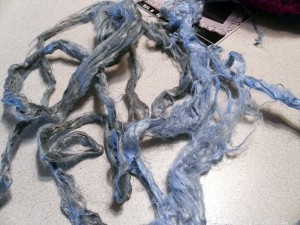
 

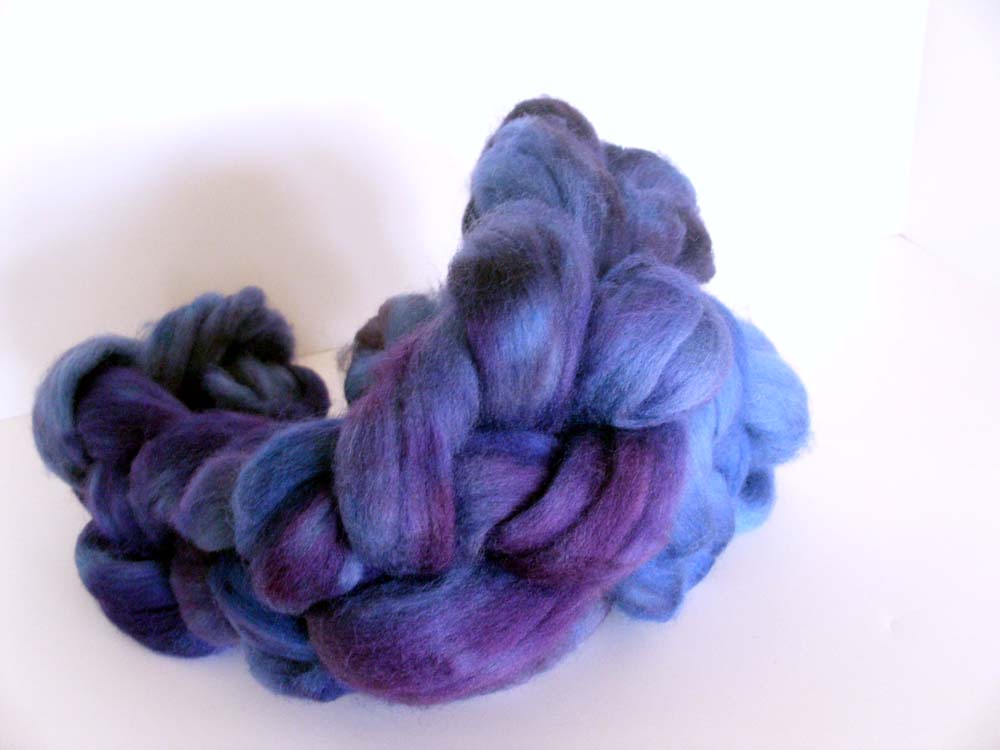
natural on left , bleached on right
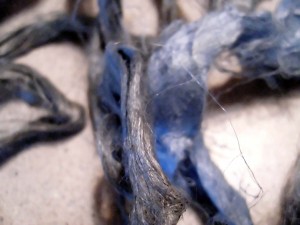
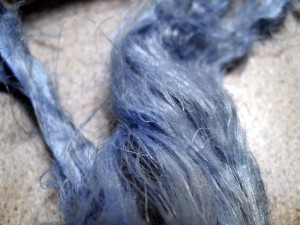
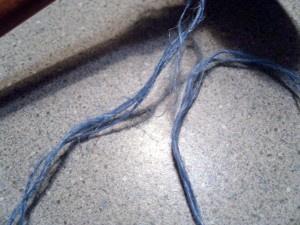
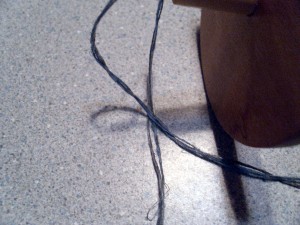
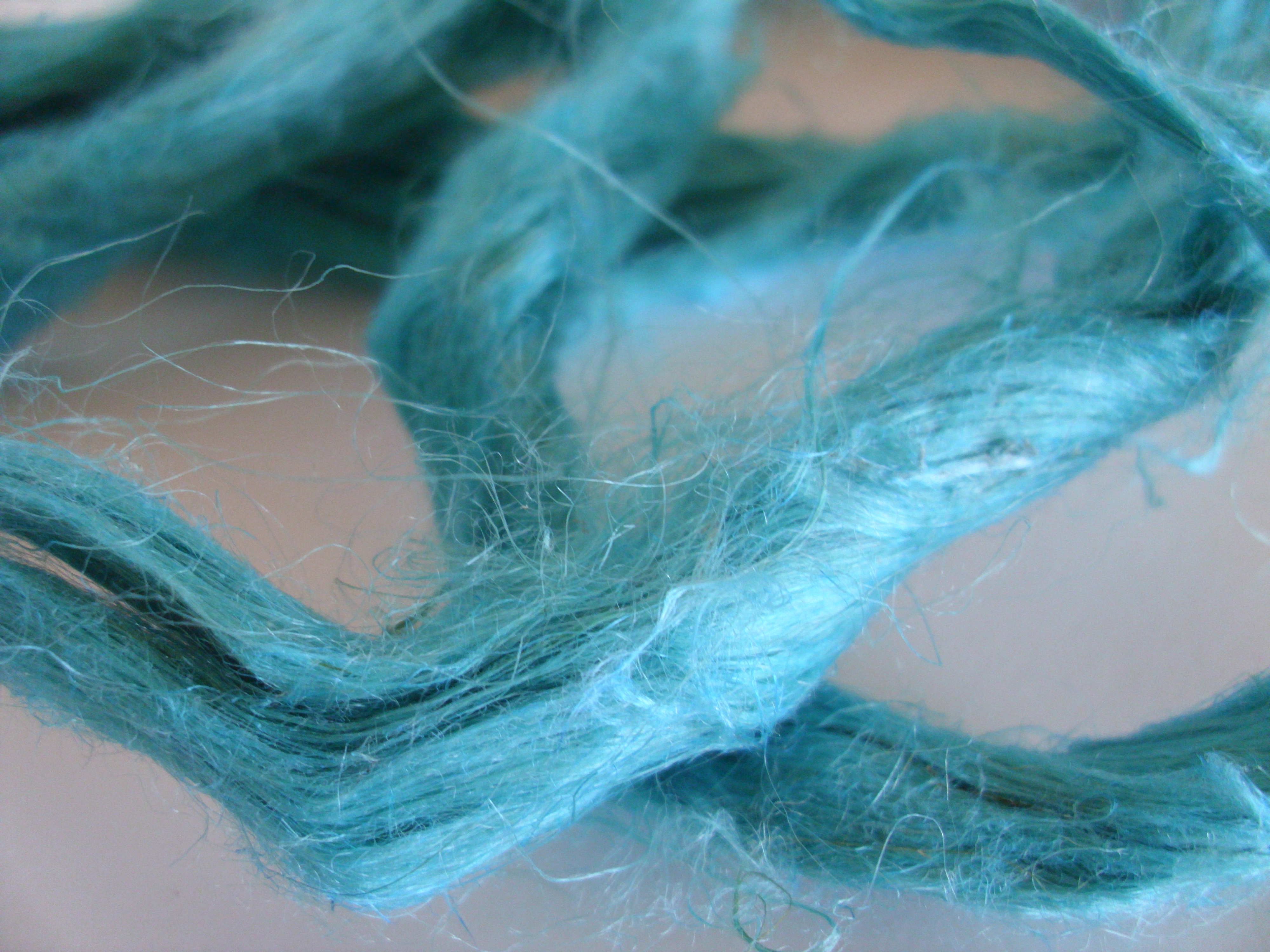
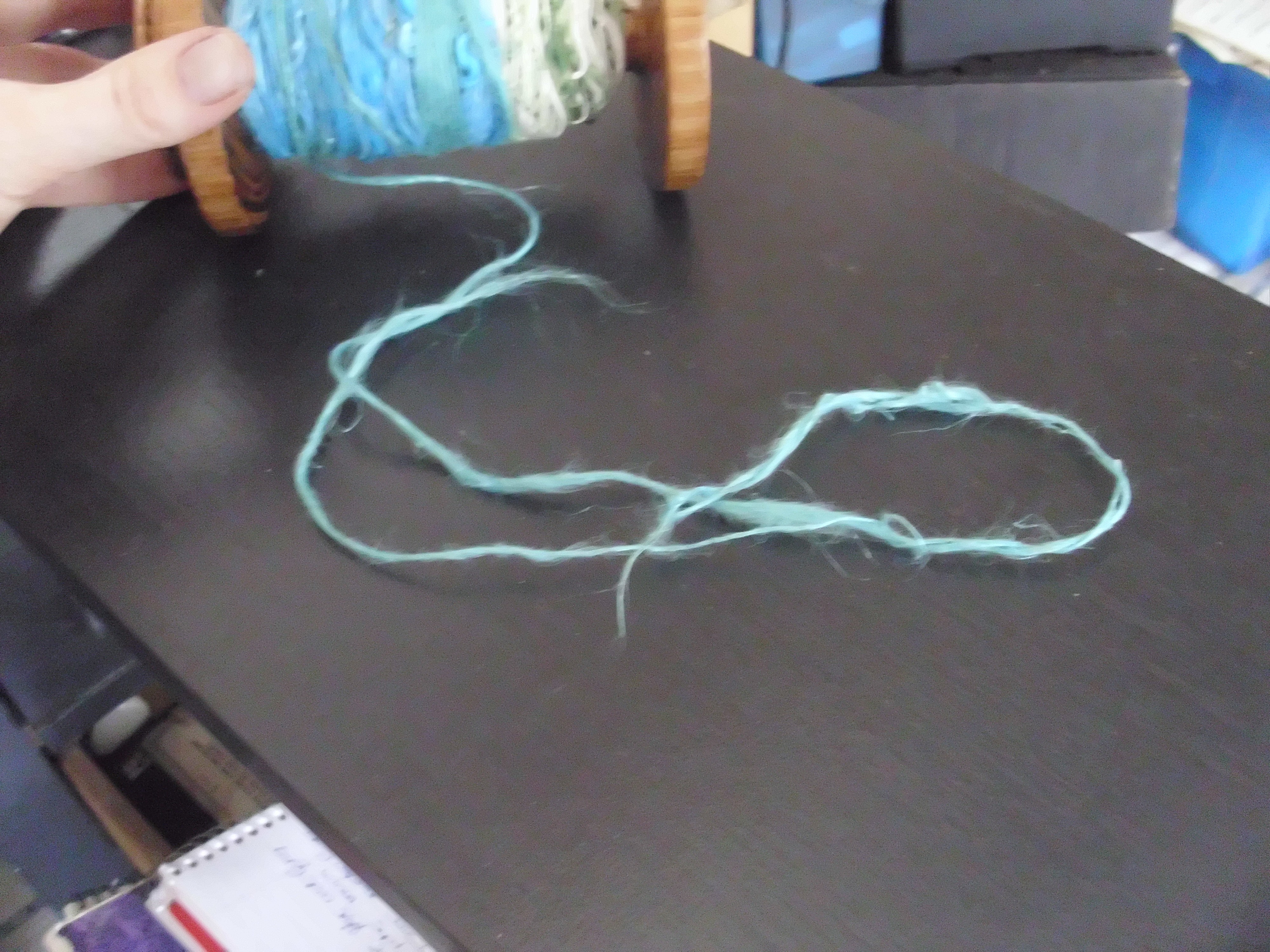
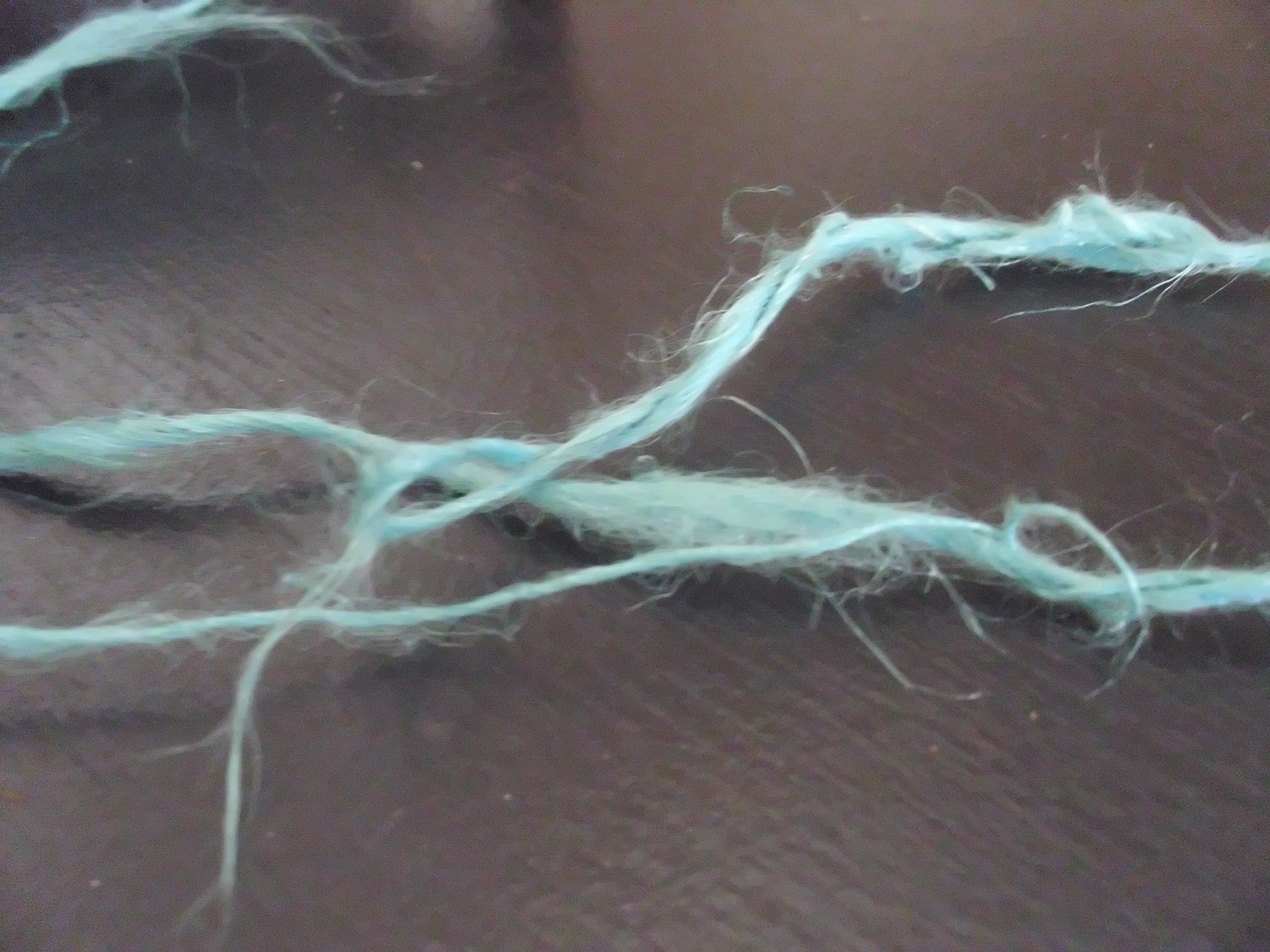
I had dyed some natural color flax and bleached flax in Cushing’s Direct Dyes color Copenhagen Blue. I love the differences in the fibers. I was wondering”how should I spin this ? Should I spin it wet or dry?” I decided to try both and see what happened. I spun the lighter blue without wetting. I spun the darker blue with wetting.
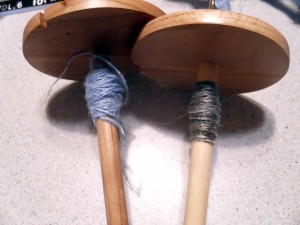
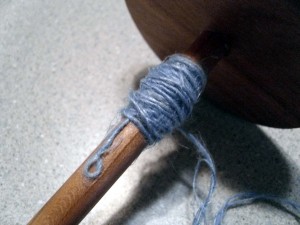
It spun about light fingering weight with moderate twist, slightly hairy.
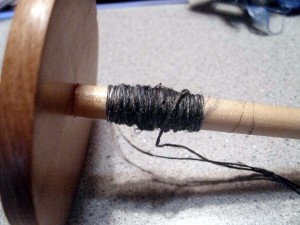
The wetted flax spun much smoother and I spun much thinner more like laceweight.  It used much less twist. An interesting comparison I like them both, I prefer the color on the bottom though (however I don’t feel the camera did it justice).

Comment below and tell me which way you like better wet spun or dry spun.
Deyaneria on May 2nd, 2011
 

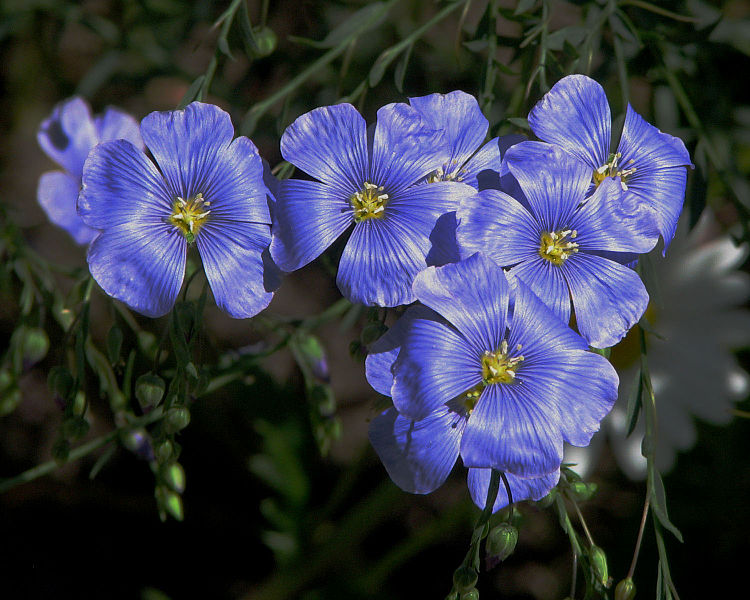
Flax (also known as common flax or linseed) (binomial name: Linum usitatissimum) is a member of the genus Linum in the family Linaceae. It is native to the region extending from the eastern Mediterranean to India and was probably first domesticated in the Fertile Crescent.

Flax Flowers


Flax fibers are amongst the oldest fiber crops in the world. The use of flax for the production of linen goes back at least to ancient Egyptian times. Dyed flax fibers found in a cave in Dzudzuana (prehistoric Georgia) have been dated to 30,000 years ago.[17] Pictures on tombs and temple walls at Thebes depict flowering flax plants. The use of flax fiber in the manufacturing of cloth in northern Europe dates back to Neolithic times. In North America, flax was introduced by the Puritans. Currently most flax produced in the USA and Canada are seed flax types for the production of linseed oil or flax seeds for human nutrition.

Flax fiber is extracted from the bast or skin of the stem of the flax plant. Flax fiber is soft, lustrous and flexible; bundles of fiber have the appearance of blonde hair, hence the description “flaxen”. It is stronger than cotton fiber but less elastic. The best grades are used for linen fabrics such as damasks, lace and sheeting. Coarser grades are used for the manufacturing of twine and rope. Flax fiber is also a raw material for the high-quality paper industry for the use of printed banknotes and rolling paper for cigarettes and tea bags. Flax mills for spinning flaxen yarn were invented by John Kendrew and Thomas Porthouse of Darlington in 1787.
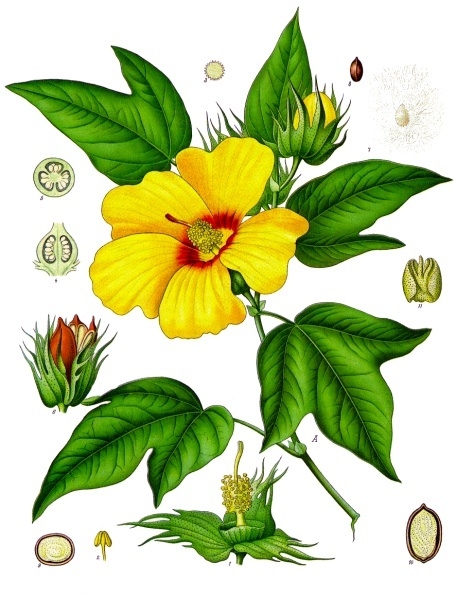
Flax Seed Capsules

Flax is harvested for fiber production after approximately 100 days, or a month after the plant flowers and two weeks after the seed capsules form. The base of the plant will begin to turn yellow. If the plant is still green the seed will not be useful, and the fiber will be underdeveloped. The fiber degrades once the plant is brown.

There are two ways to harvest flax, one involving mechanized equipment (combines), and a second method, more manual and targeted towards maximizing the fiber length.

First Method( mechanical): The mature plant is cut with mowing equipment, similar to hay harvesting, and raked into windrows. When dried sufficiently, a combine then harvests the seeds similar to wheat or oat harvesting. The amount of weeds in the straw affects its marketability, and this coupled with market prices determined whether the farmer chose to harvest the flax straw. If the flax was not harvested, it was typically burned, since the straw stalk is quite tough and decomposes slowly (i.e., not in a single season), and still being somewhat in a windrow from the harvesting process, the straw would often clog up tillage and planting equipment. It was common, in the flax growing regions of western Minnesota, to see the harvested flax straw (square) bale stacks start appearing every July, the size of some stacks being estimated at 10-15 yards wide by 50 or more yards long, and as tall as a two-story house.

Second Method (manual): The plant pulled up with the roots (not cut), so as to maximize the fiber length. After this, the flax is allowed to dry, the seeds are removed, and is then retted. Dependent upon climatic conditions, characteristics of the sown flax and fields, the flax remains on the ground between two weeks and two months for retting. As a result of alternating rain and the sun, an enzymatic action degrades the pectins which bind fibers to the straw. The farmers turn over the straw during retting to evenly rett the stalks. When the straw is retted and sufficiently dry, it is rolled up. It will then be stored by farmers before scutching to extract fibers.

Flax grown for seed is allowed to mature until the seed capsules are yellow and just starting to split; it is then harvested by combine harvester and dried to extract the seed.

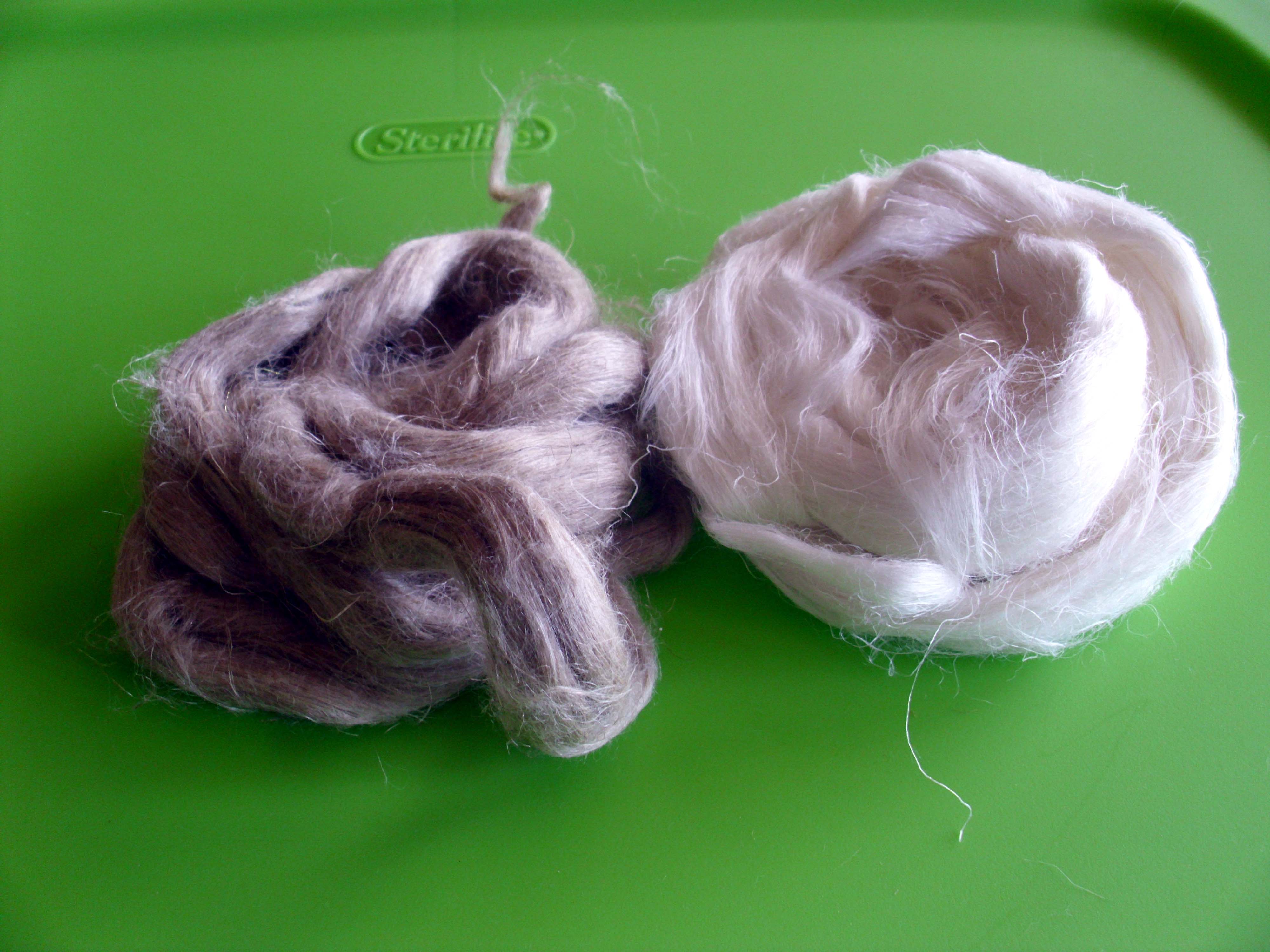
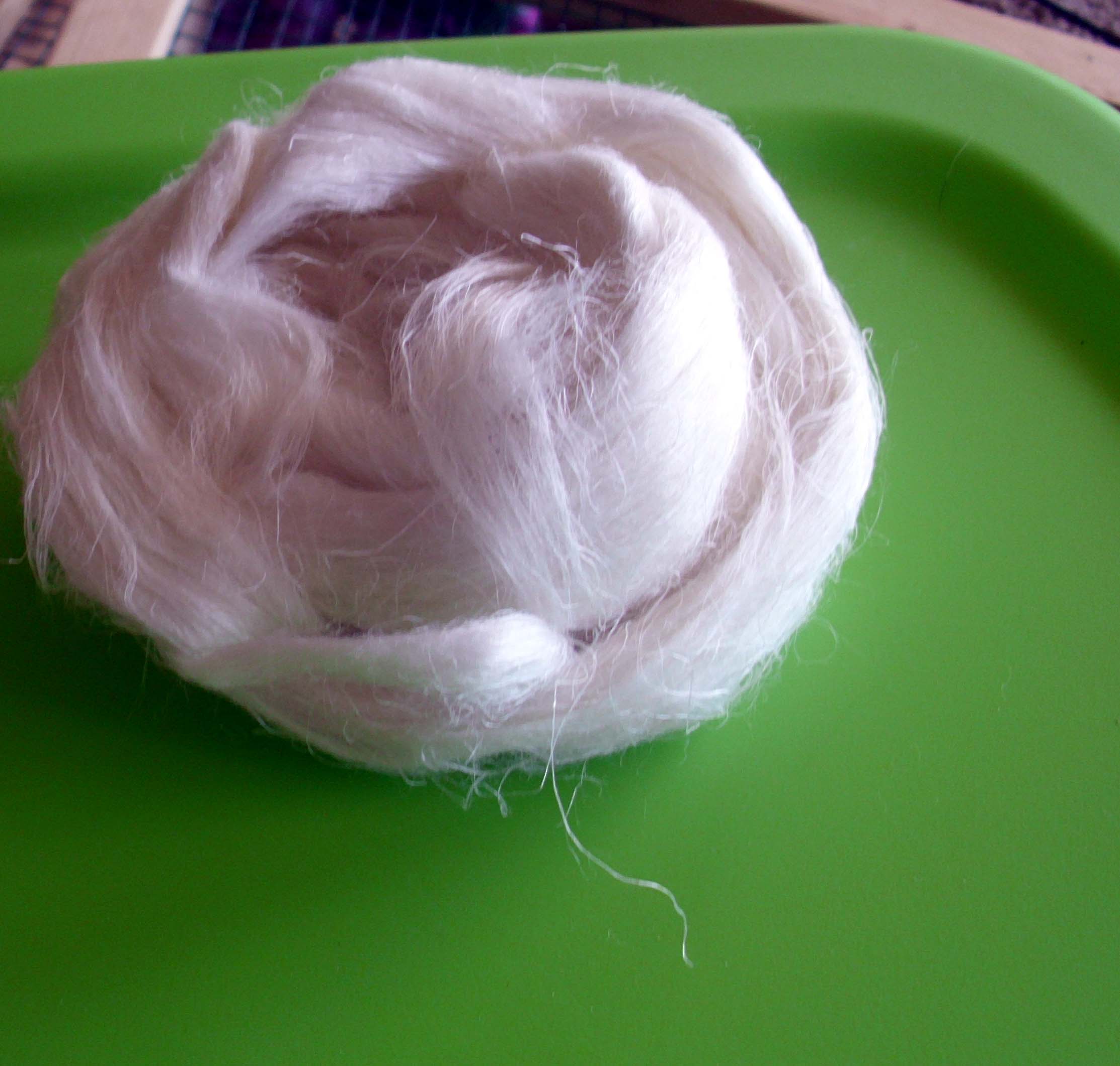
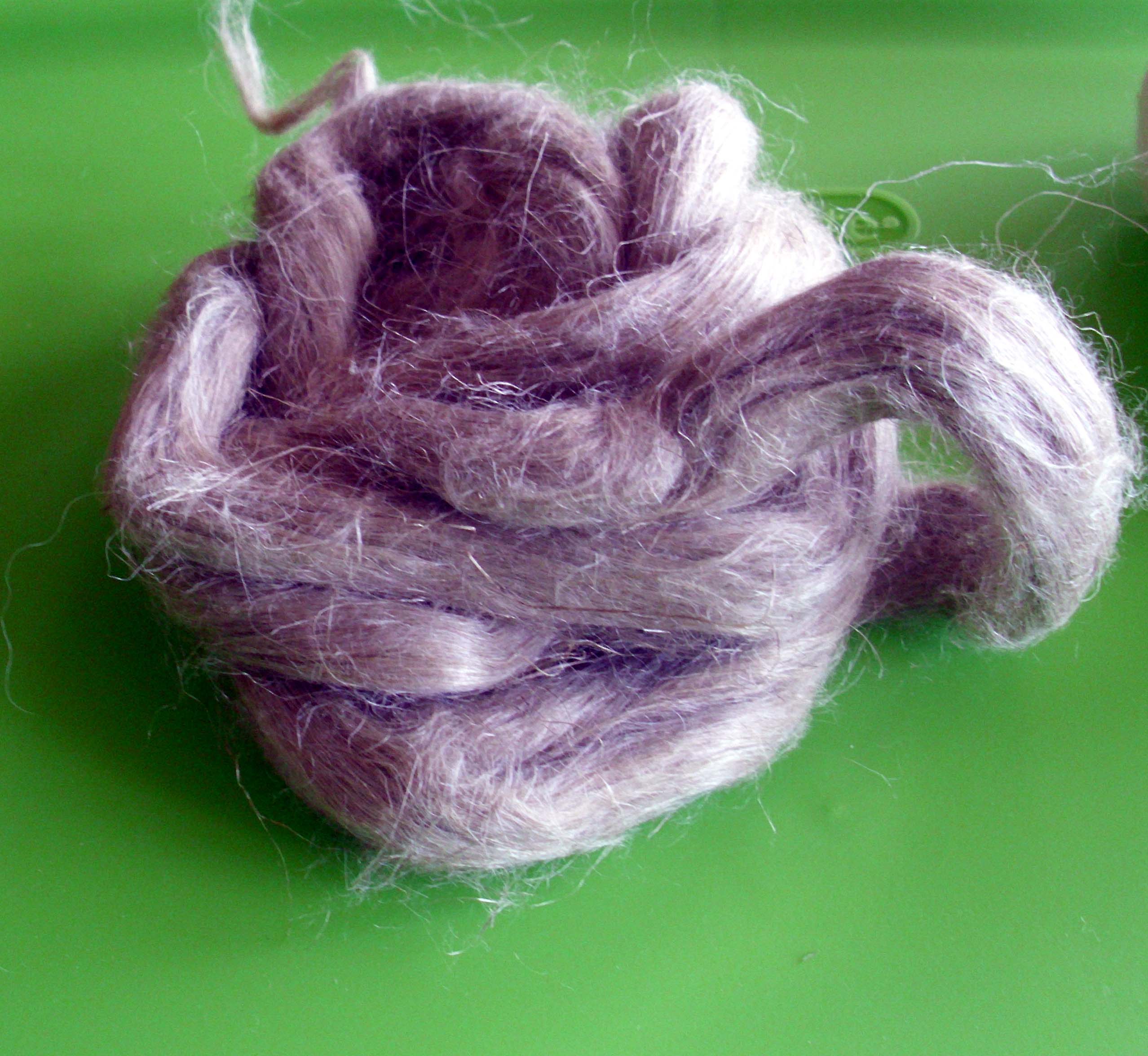
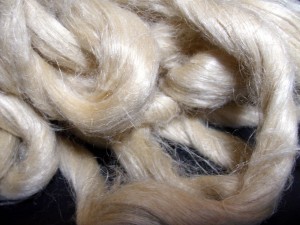
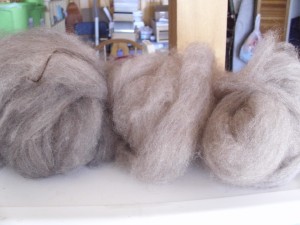
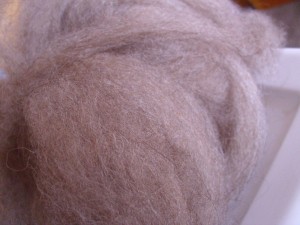
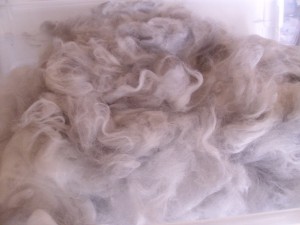
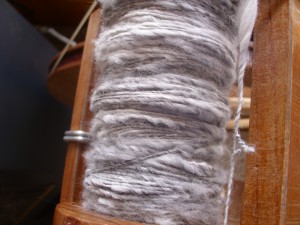
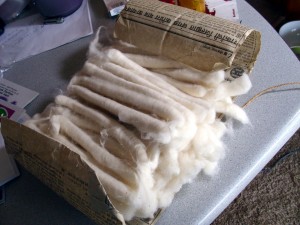
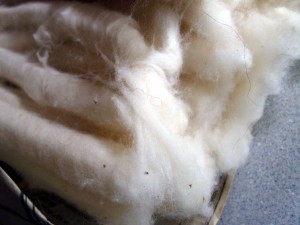
Here are a couple pics of my flax spinning fiber. I got both bleached and unbleached to see how differently they will take dye.


I can’t wait to see how this dyes up.

Deyaneria on April 29th, 2011

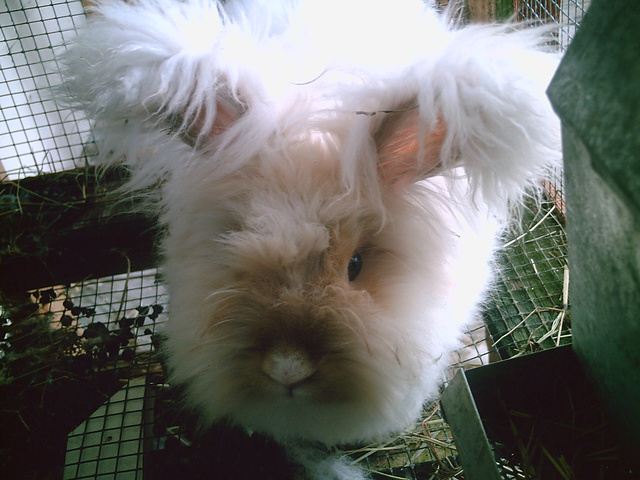
I am keeping this post short today as it is a sad day( I don’t want to cry too much). My daughter went to feed animals this morning and found our beloved Kali gone. This wasn’t  a shock it still hurts just the same. However I noticed something about Kali a long time ago. She wouldn’t run and play like the other buns would when she was in the run she just seemed content to sit. I asked the vet about such behaviour and found thru the vet and research on my own that bunnies exibiting  this behaviour usually have enlarged hearts and that her lifespan would be shorter.  Since she was already 2yrs old when I got her we could basically treat the symptoms and giver her a longer life. I will miss my Kali Kal (as I affectionately called her) , although she is no longer with us we will always remember her. Rest in Peace Kali Kal.

P.S. I almost forgot the Twitter Contest winner is Alyshatree. Thanks for all of you who played. I will be contacting the winner so she can pick her prize.

Deyaneria on April 27th, 2011

Hemp has a large variety of uses, some that even suprised me like Hemp Concrete or Hempcrete as it is called. Concrete-like blocks made with hemp and lime have been used as an insulating material for construction. Hemp jewelry, rope, paper, water purification, animal bedding, weed control and even as biofuel are just a few applications of this unique plant.

Hempcrete building

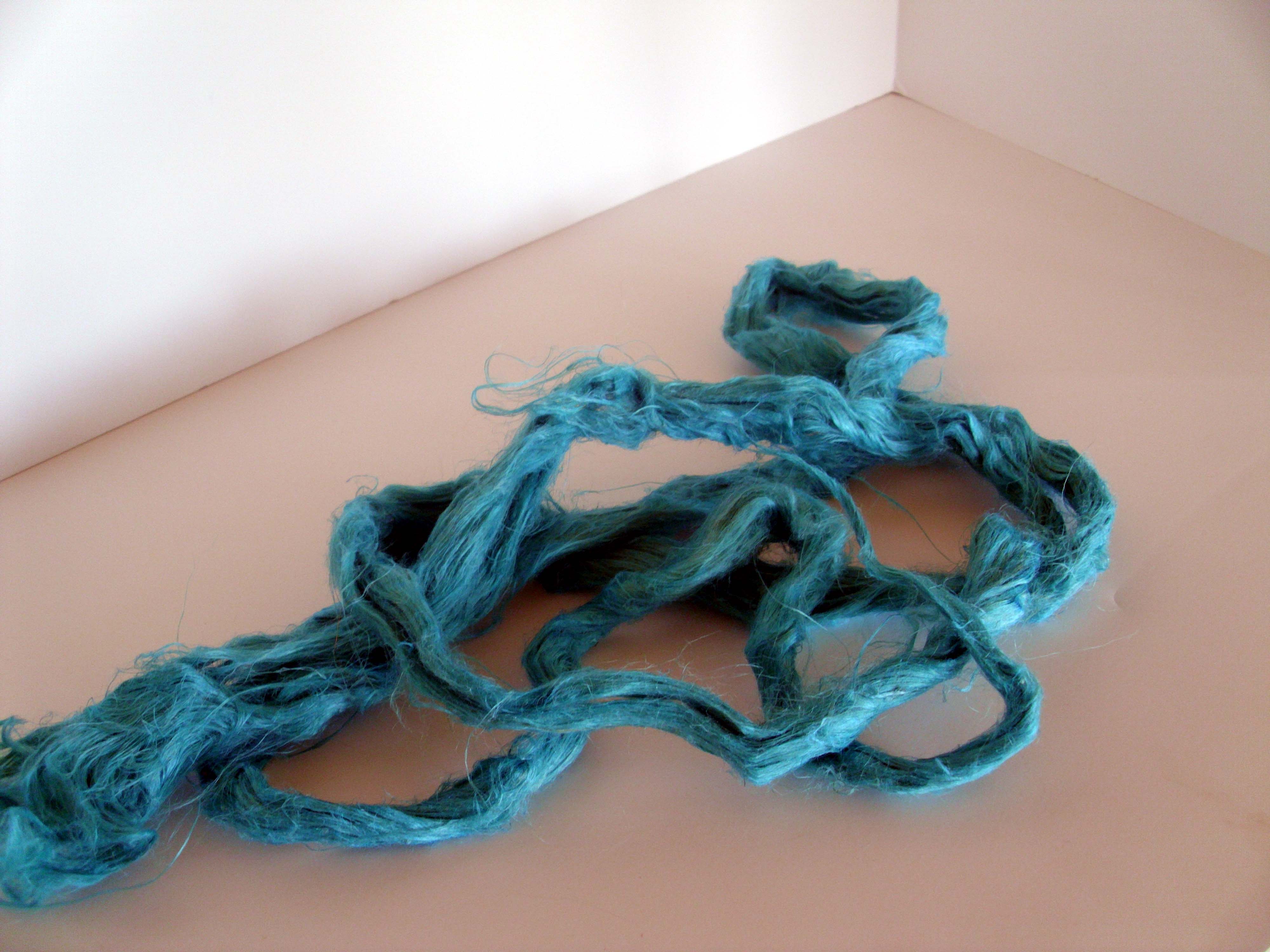
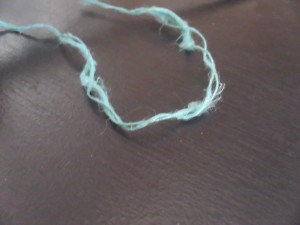
I dyed my hemp roving with turquoise color direct dyes from Cushing’s dyes. The fiber dyes beautifully. The natural golden color of the hemp gave the turqoise a richer hue.

I had some trouble spinning this fiber. It’s sticky and kept coming apart on me. I tried a few different ratios and was still having trouble so I put it on a spindle with much better results. Let me know what you think.

Spun with my wheel.

Spindle spun hemp.

I love this picture of Gabby sunbathing.

Twitter contest!!! retweet this message and be entered into a drawing for spinning fiber http://tinyurl.com/4xbd5zn winner chosen 4-29-11

Tags: , , , , , , , , , , , , , , , , , , , , ,

Deyaneria on April 25th, 2011

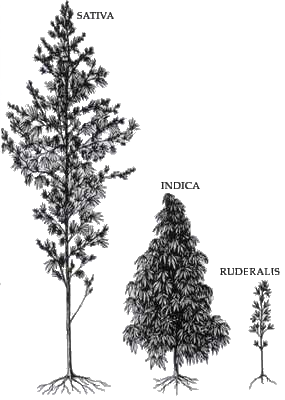
Hemp (from Old Englishhænep) is the name of the soft, durable fiber that is cultivated from plants of the Cannabisgenus.  The Cannabis Sativa is the one used for fiber in commericial fiber.

Hemp has been grown for millennia in Asia and the Middle East for its fibre. Commercial production of hemp in the West took off in the eighteenth century, but was grown in the sixteenth century in eastern England. Because of colonial and naval expansion of the era, economies needed large quantities of hemp for rope and oakum( a preparation of tarred fibre used in shipbuilding). Other important producing countries were China, North Korea, Hungary, the former Yugoslavia, Romania, Poland, France and Italy.

In Western Europe, nobody banned the cultivation of hemp in the 1930s but the commercial cultivation ceased almost anyhow in the decades after the 1930s. Hemp was simply ousted by artificial fibres.

From the 1950s to the 1980s, the Soviet Union was the world’s largest producer (3,000 km² in 1970).  Since its inception in 1931, the Hemp Breeding Department at the Institute of Bast Crops in Hlukhiv (Glukhov), Ukraine, has been one of the world’s largest centers for developing new hemp varieties, focusing on improving fiber quality, per-hectare yields.

Typical Japanese Shinto shrine with paper streamers and rope made of unprocessed hemp fiber.

In Japan, hemp was historically used as paper and a fiber crop. There is archaeological evidence cannabis was used for clothing and the seeds were eaten in Japan back to the Jōmon period (10,000 to 300 BCE). Many Kimono designs portray hemp, or asa (Japanese: 麻), as a beautiful plant. In 1948, marijuana was restricted as a narcotic drug. The ban on marijuana imposed by the United States authorities was alien to Japanese culture, as the drug had never been widely used in Japan before. Though these laws against marijuana are some of the world’s strictest, allowing five years imprisonment for possession of the drug, they exempt hemp growers, whose crop is used to make robes for Buddhist monks and loincloths for sumo wrestlers. Because marijuana use in Japan has doubled in the past decade, these “loopholes” have recently been called into question.

In modern times, hemp has been used for industrial purposes including paper, textiles, biodegradable plastics, construction, health food and fuel with modest commercial success.

The fiber is the most valuable parts of the hemp plant. It is commonly called bast, which refers to the fibers that grow on the outside of the woody interior of the plant’s stalk, and under the outer most part (the bark). Bast fibers give the plants strength. Hemp fibers can be between approximately 0.91 m (3 ft) and 4.6 m (15 ft) long, running the length of the plant. Depending on the processing used to remove the fiber from the stem, the hemp may naturally be creamy white, brown, gray, black or green.

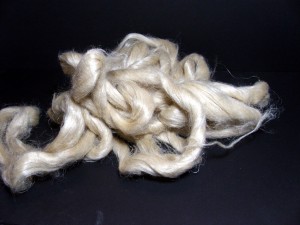
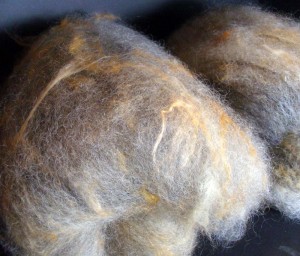
Here is my raw hemp fiber. It does feel a bit scratchy ,but not too bad. Definitely doesn’t have the softness of wool or cotton. I have felt linen and it has some of the same handle but coarser.

Remember to opt-in for the newsletter for store and farm updates. The newsletter also gives access to the Llama to Scarf/ Shawl video series.Next guess the butterfly contest will be the first week of May.

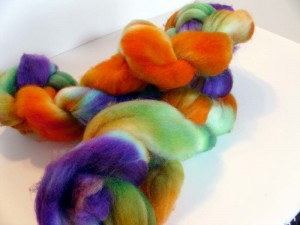
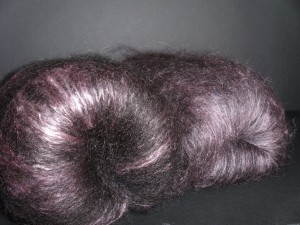
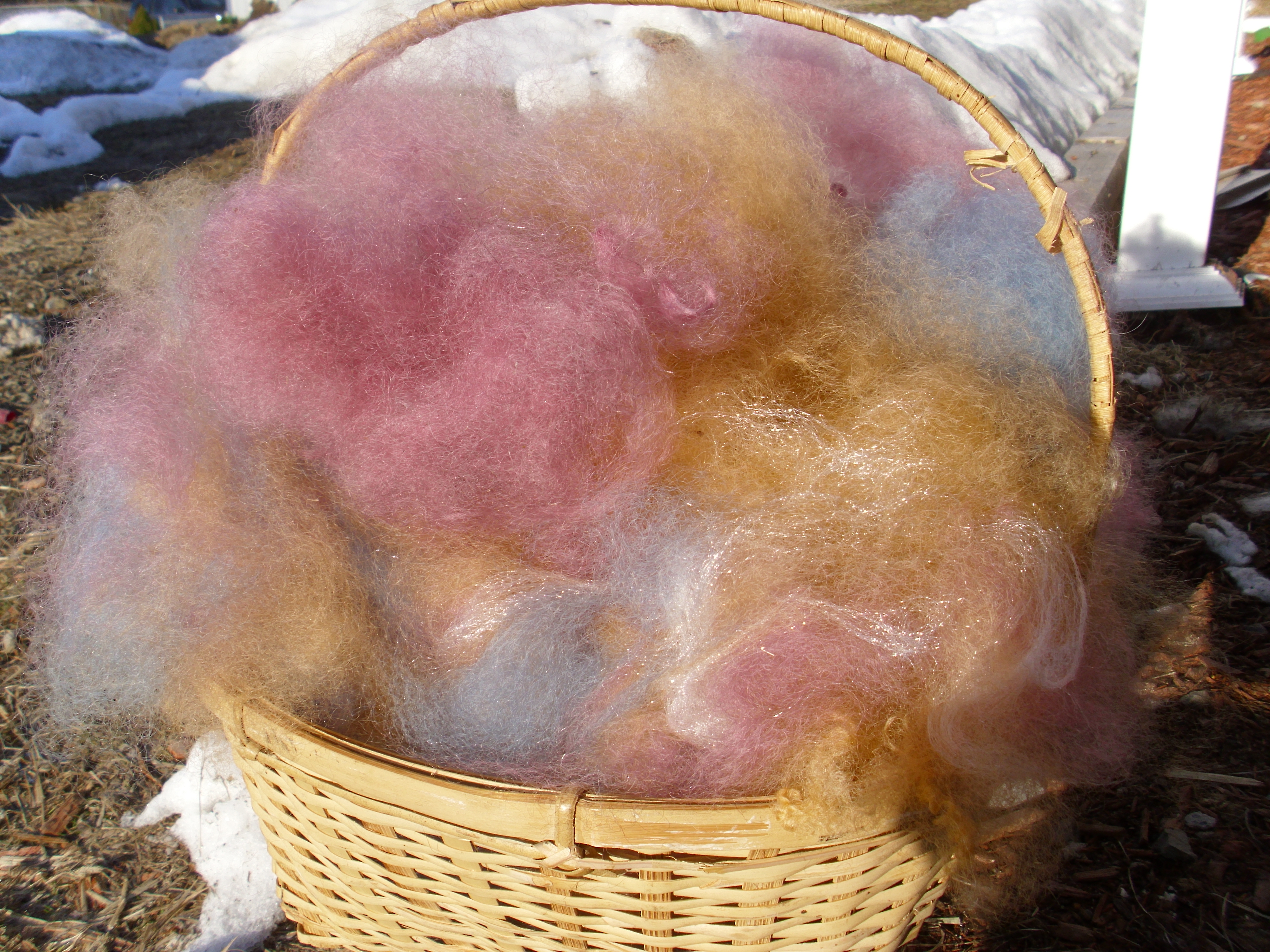
Here are few gratitious yummy fiber pics from the store.

Tags: , , , , , , , , , , , , , ,

Deyaneria on April 22nd, 2011

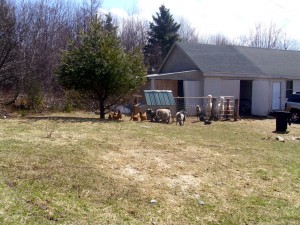
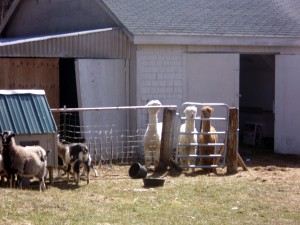
This week on the farm we had some interesting weather. Monday and Tuesday we were able to get some yard work done. The weather was really nice especially Tuesday. The work mainly consists of getting the rocks out of the lawn so my windows won’t get smashed when we mow. The lawn faces the south side of the house and we have passive solar heat so many large expensive windows. Wednesday was weird, we had sleet, hail, snow and rain all in the same day. Every hour the weather was changing. Today is just beautiful though and the animals are really enjoying it.  Correction as I’m writing this it has started to hail/snow again go figure. Wow, Amazing, the 3 sunny pics were taken at 10 am. The latest one was taken at 12:30 pm.


I also got some time to work on the baby llama fleece. As soon as the carding is done I will start spinning it.

I’ve also taken all my blue bunny combings and started spinning them. I just want to see how much yarn my blue bunny will make from one years worth of combings. I think I will make it a two ply 100% angora. This yarn will be available in the store when it is finished.

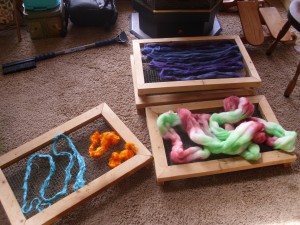
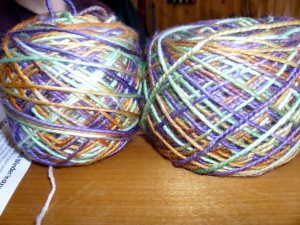
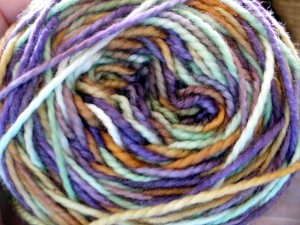
Here is a sneak peak of some roving and dyed fiber for next week’s butterfly collection colorway. Coming to the store next week.

New stuff that went into the store this week. The superwash on the left matches the sock yarn below. On the right is the new butterfly collection colorway this week Orange Falcate.

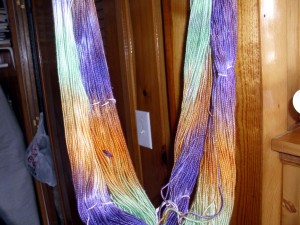
Last but certainly not least is the dyed Tilli Tomas Milan sock yarn. I love how this turnedout.

Tags: , , , , , , , , , , , , , , , , , , , , , , , , , , , , , , , ,

Deyaneria on April 20th, 2011

Here are a few more interesting facts about cotton. There are about 50 varieties of cotton but only about 4 -5 are cultivated.

Upland Cotton

Gossypium hirsutum, known as Upland Cotton or Mexican Cotton, is the most widely planted species of cotton in the United States, constituting some 95% of all cotton production and is native to Central America and possibly Mexico Worldwide, the figure is about 90% of all production for this species.(from Wikipedia)


Gossypium arboreum, commonly called tree cotton, is a species of cotton native to India and Pakistan and other tropical and subtropical regions of the Old World. There is evidence of its cultivation as long ago as 2000 BC by the Harappan civilization of the Indus Valley for the production of cotton textiles. This species of cotton was introduced into East Africa by about 2000 years ago, and was grown by the Meroe civilization in Nubia, the first cotton weavers in Africa. ( from wikipedia)

Levant Cotton

Gossypium herbaceum, also called Levant cotton, is a species of cotton native to the semi-arid regions of sub-Saharan Africa and Arabia where it still grows in the wild as a perennial shrub. It was probably first cultivated in Ethiopia or southern Arabia and from there, cultivation spread to Persia, Afghanistan, Turkey, North Africa, Spain, Ukraine, Turkestan and finally, to China. It was first cultivated in China by about 600 AD.(wikipedia)


Pima cotton (Gossypium barbadense), also known as extra long staple, South American, Creole, Sea Island, or Egyptian cotton, is a species of cotton plant. It is a tropical, frost-sensitive perennial plant that produces yellow flowers and has black seeds. It grows as a small, bushy tree and yields cotton with unusually long, silky fibers. To grow, it requires full sun and high humidity and rainfall.

There are even variations of these that manufactoring changes like shiny cotton. Shiny cotton is a processed version of the fiber that can be made into cloth resembling satin for shirts and suits. I do have sheets like this as well. However, it is hydrophobic (does not absorb water easily), which makes it unfit for use in bath and dish towels (although examples of these made from shiny cotton are seen).

The term Egyptian cotton can be confusing. The term Egyptian cotton refers to the extra long staple cotton grown in Egypt and favored for the luxury and upmarket brands worldwide. Egyptian cotton is more durable and softer than American Pima cotton, which is why it is more expensive. Pima cotton is American cotton that is grown in the southwestern states of the U.S. However not all Egyptian cotton is created equal thread count is important but the quality of the cotton and  how it is processed play a large role in the comfort and durability of the cotton. Here is a link to quick shopping guide for sheets.

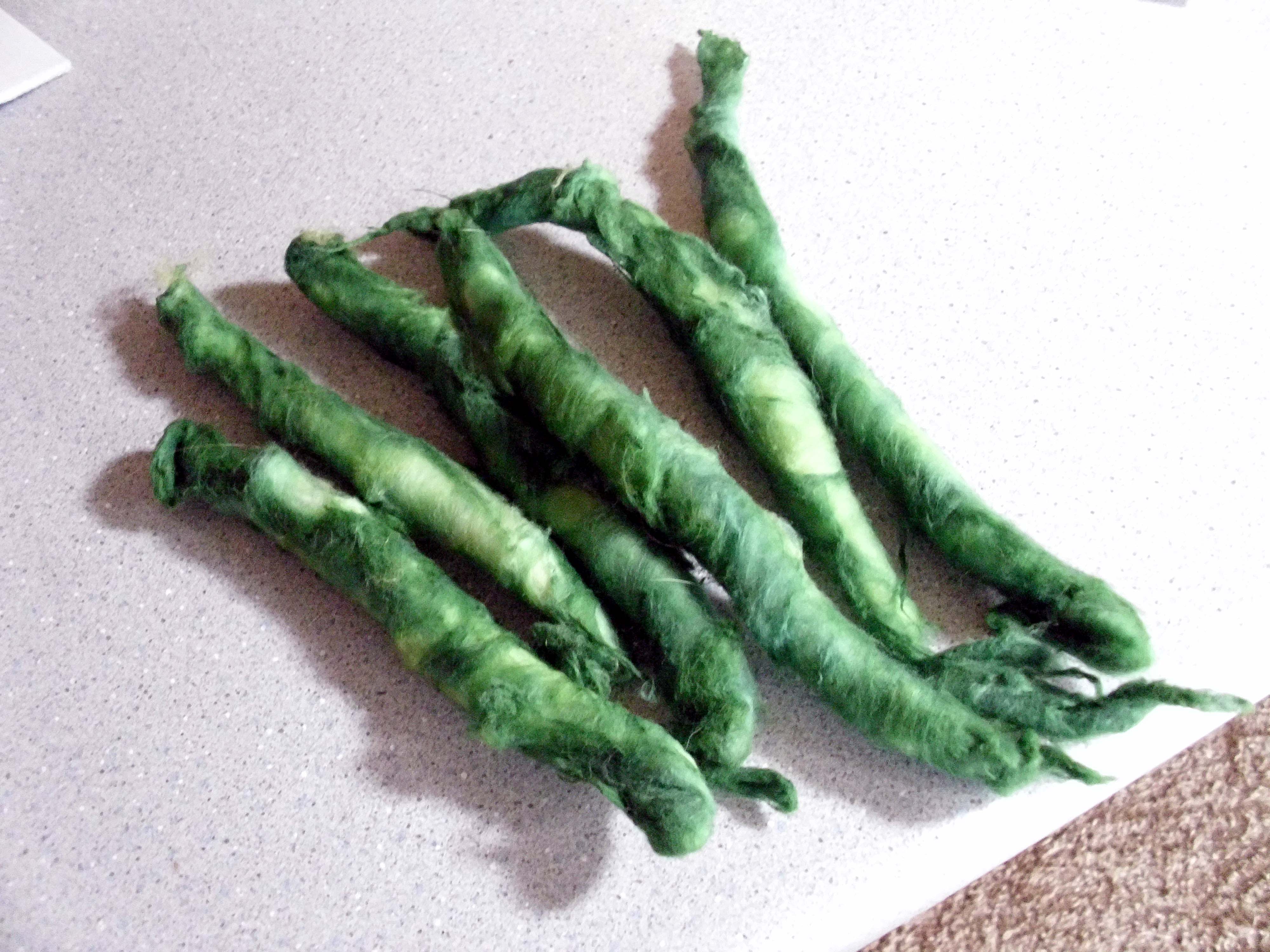
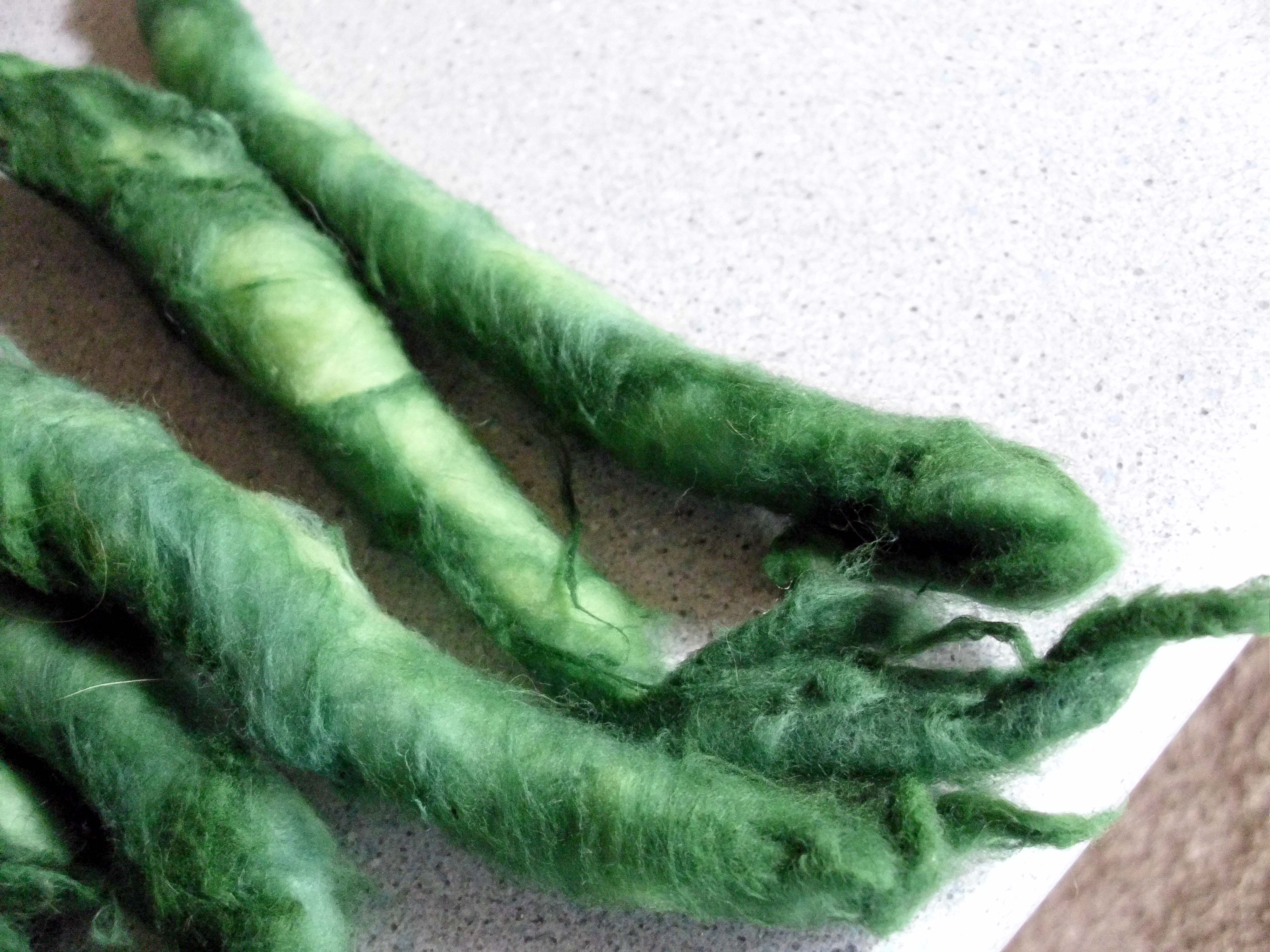
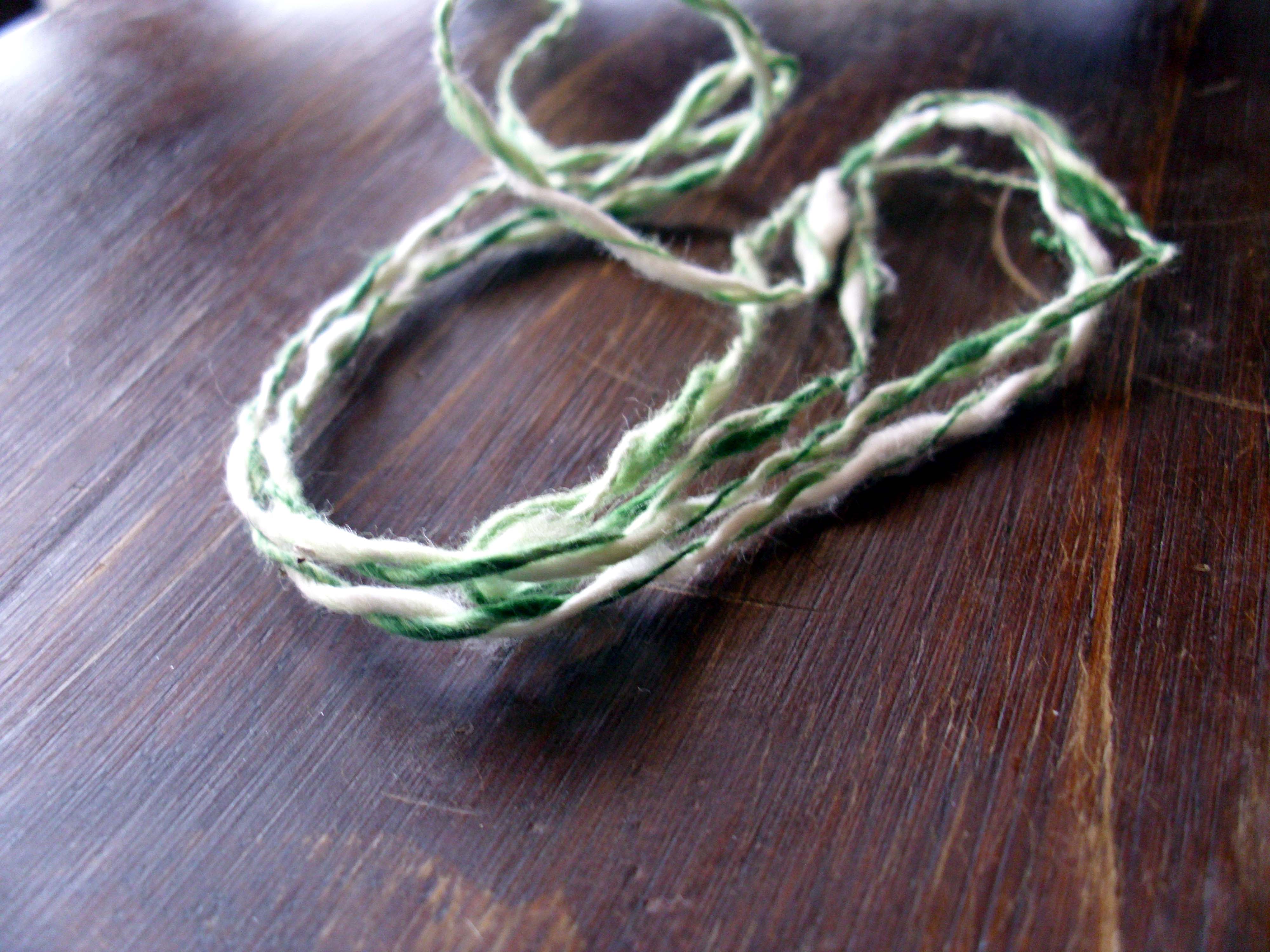
I dyed my punis in bright green direct dyes from Cushings.


Of course the dye didn’t penetrate the middle. I soaked the punis for a few hours with a bowl holding them underneath the water. Then put them in the dyepot for about 2 hours.

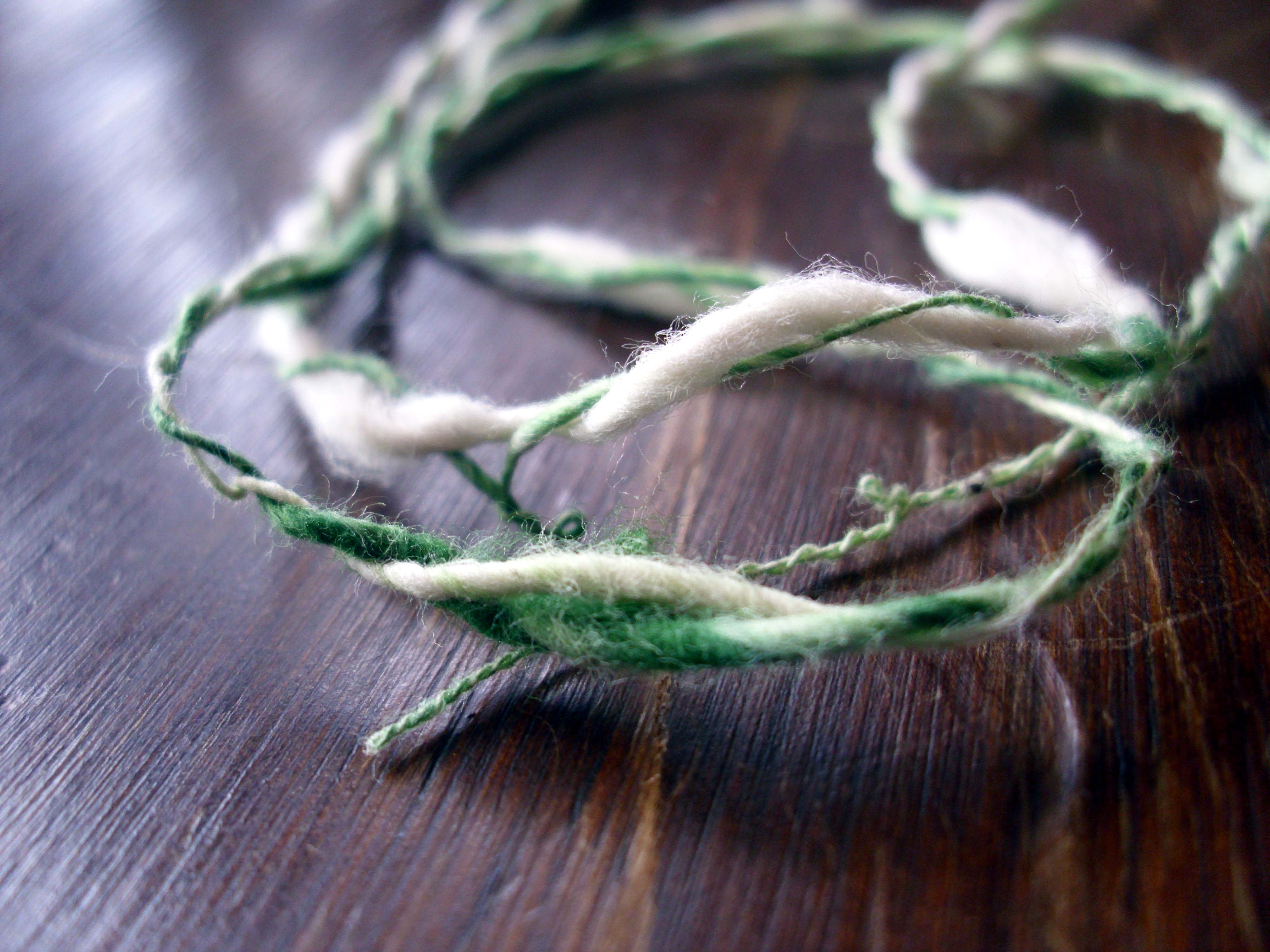
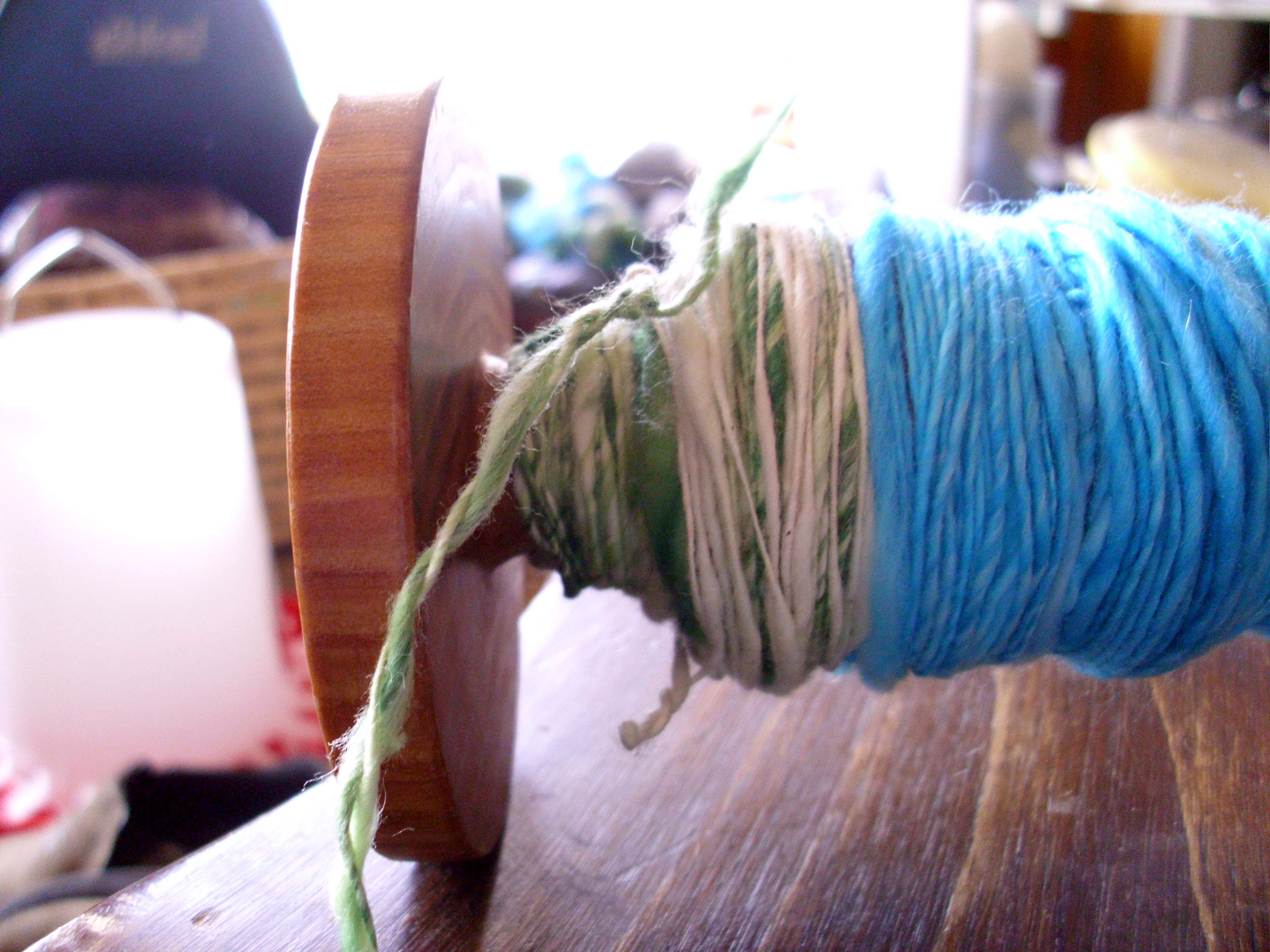
Spinning the punis was interesting as the fiber is really short. I tried 3 ways.

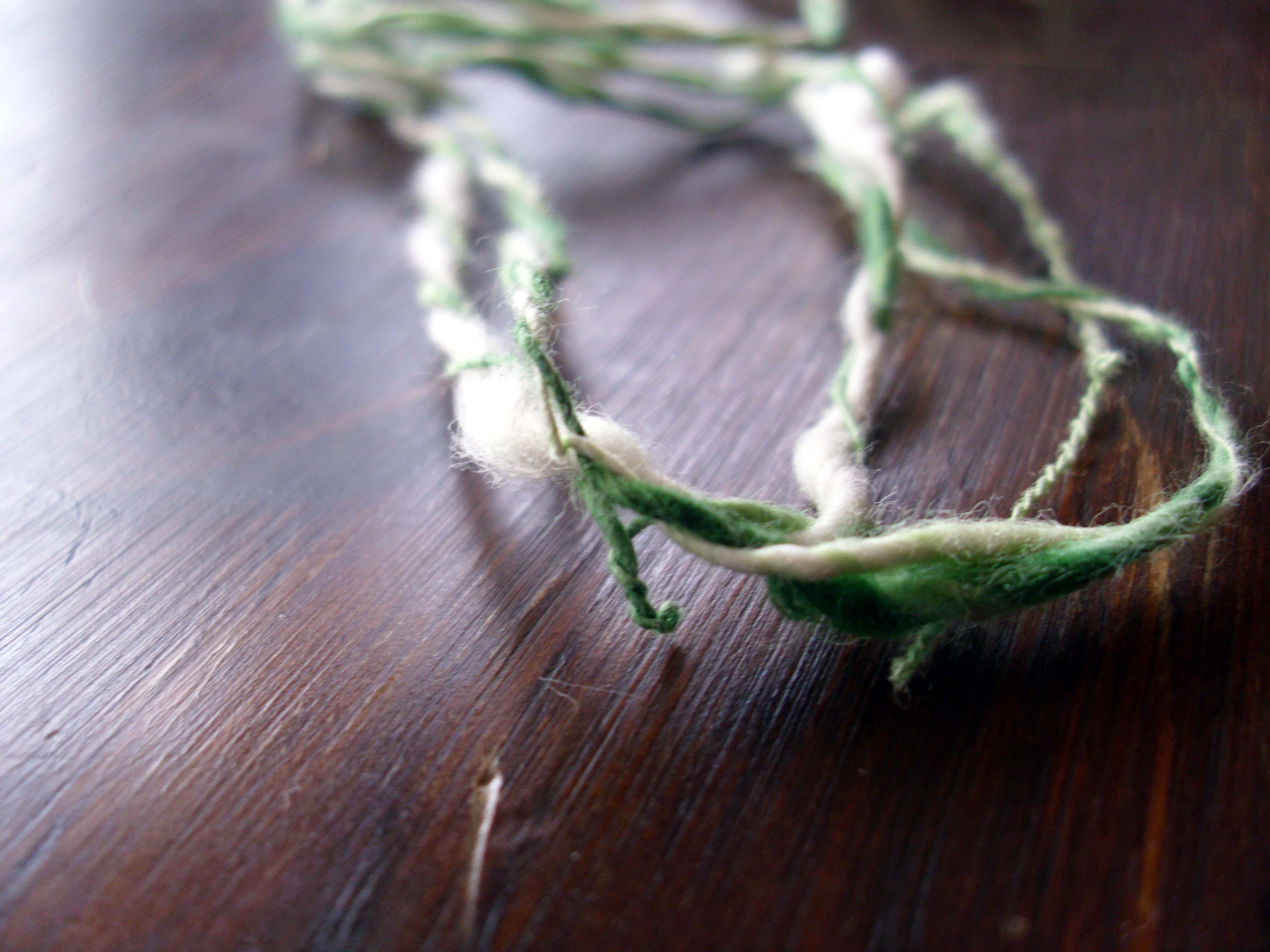
1. I spun the puni just as it was no drafting except to make a smoother yarn during spinning. That didn’t work out too well. I had quite a few breaks and alot of stopping and starting it created a super lumpy yarn. With the color all in one area.

2. I drafted out the length of the puni and spun that way. It resulted in less breakage but still really lumpy yarn. Still resulted in most of the color being altogether.

3. I unrolled the puni and then drafted mixing the dyed areas with the undyed areas. This worked alot better. The resulting yarn was more uniform and the color was blended in.


Tags: , , , , , , , , , , , , , , , ,

Deyaneria on April 19th, 2011

This content is password-protected. To view it, please enter the password below.

Tags: , , , , , , , , ,

Deyaneria on April 18th, 2011

I love me some cotton. It’s so soft against the skin. I’ve even become a bit of an sheet snob….nothing under 400 thread count….Thank you. The hubs had even found some 1200 thread counts sheets . These are soft and heavy like a blanket. I think they will last a lifetime.

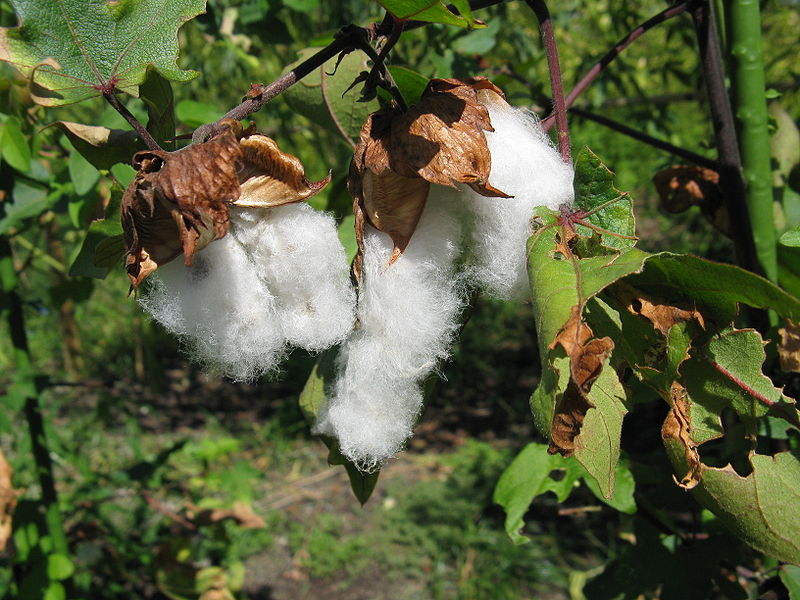
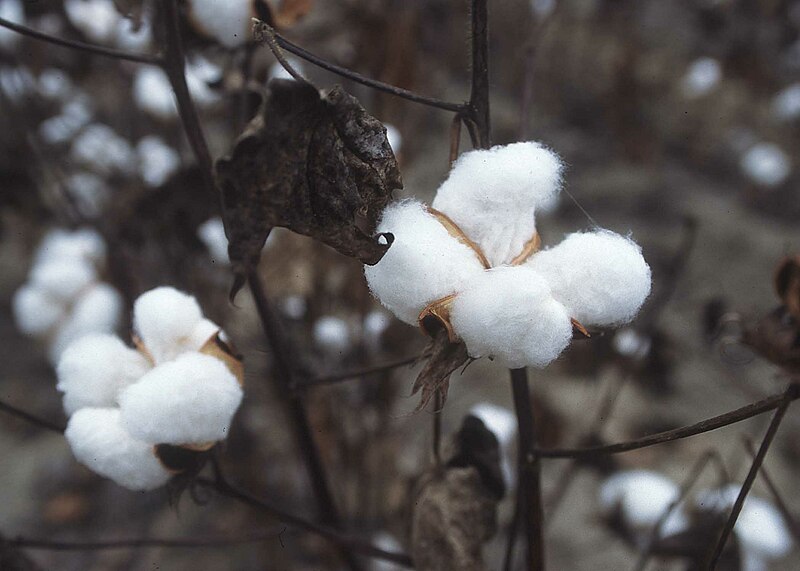
Cotton is a soft, fluffy staple fiber that grows in a boll, or protective capsule, around the seeds of cotton plants. The plant is a shrub native to tropical and subtropical regions around the world, including the Americas, Africa, India, and Pakistan. The fiber most often is spun into yarn or thread and used to make a soft, breathable textile, which is the most widely used natural-fiber cloth in clothing today.

According to the Foods and Nutrition Encyclopedia, the earliest cultivation of cotton in the Americas occurred in Mexico, some 8,000 years ago. Cotton was first cultivated in the Old World 7,000 years ago (5th–4th millennia BC), by the inhabitants of the Indus Valley Civilization. Greeks and the Arabs were not familiar with cotton until the Wars of Alexander the Great, as his contemporary Megasthenes told Seleucus I Nicator of “there being trees on which wool grows” in “Indica”. In Peru, cultivation of the indigenous cotton species Gossypium barbadense was the backbone of the development of coastal cultures.

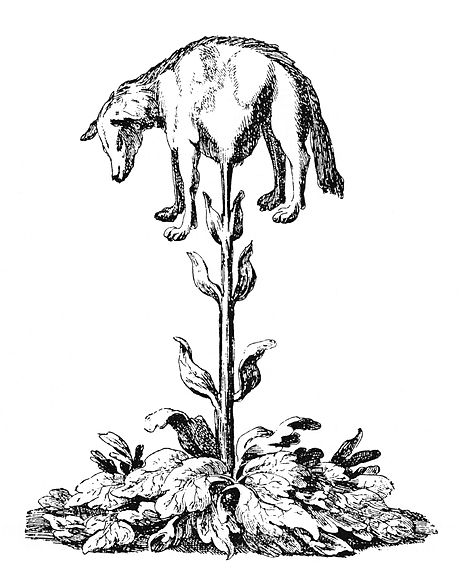
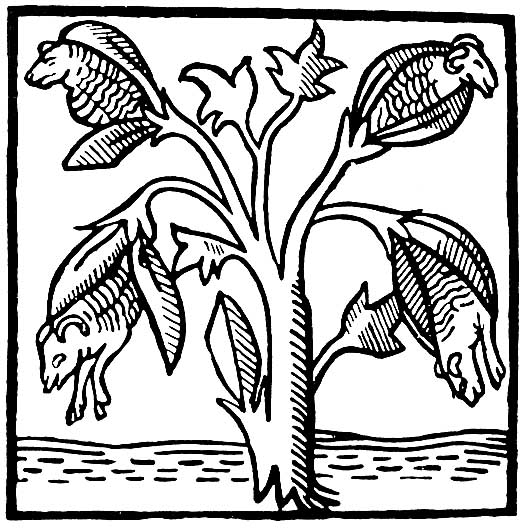
During the late medieval period, the people unfamilar with cotton in Northern Europe, had some odd beliefs of where cotton came from. John Mandeville, writing in 1350, stated as fact the now-preposterous belief: “There grew there [India] a wonderful tree which bore tiny lambs on the endes of its branches. These branches were so pliable that they bent down to allow the lambs to feed when they are hungrie.” (See Vegetable Lamb of Tartary.) This aspect is retained in the name for cotton in many European languages, such as German Baumwolle, which translates as “tree wool” (Baum means “tree”; Wolle means “wool”).

The Vegetable Lamb of Tartary


Cotton plants as imagined and drawn by John Mandeville in the 14th century

   When the Industrial Revolution hit Textiles got a great boost, machinery was built to process cotton faster and cotton became more available to the average consumer. By the 1840s, India was no longer capable of supplying the vast quantities of cotton fibers needed by mechanized British factories, while shipping bulky, low-price cotton from India to Britain was time-consuming and expensive. This, coupled with the emergence of American cotton as a superior type (due to the longer, stronger fibers of the two domesticated native American species, Gossypium hirsutum and Gossypium barbadense), encouraged British traders to purchase cotton from plantations in the United States and the Caribbean. By the mid 19th century, “King Cotton” had become the backbone of the southern American economy. In the United States, cultivating and harvesting cotton became the leading occupation of slaves.

I picked up some cotton punis to dye and spin this week.

I ordered in some fibery goodness Tilli Tomas Milan Sock Yarn. It’s 80% merino, 10% silk, 10% cashmere. I bought a natural color so I could dye it the colors I want.

I should have taken a pic. This was the only copywrite free one I could find.

I did tell the hubs that if cashmere yarn was 40-50% off the yarn diet was over I bought 2 skeins at Simply Sock Yarn . I also do read her blog regularly. You can check it out here if your interested.

Tags: , , , , , , , , , , , , , , ,

Deyaneria on April 15th, 2011

I’ve had an interesting week on the farm. I still have not gotten to de-cashmereing  Gabby(shame on me).

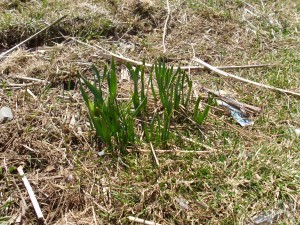
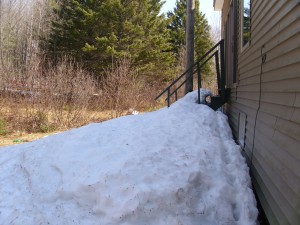
The weather is getting a bit better though. Stuff is starting to grow finally. I still have a huge snowdrift on the north side of the house though.


I did however get a bunch of fibery goodness this week. I was lucky enough to find cashmere sock yarn 40% off at Simply Sock Yarn. I got a natural color so I could dye it. Pictures will be up next week.

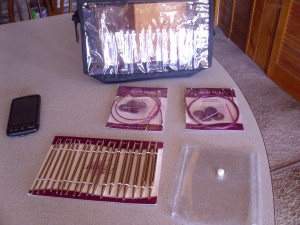
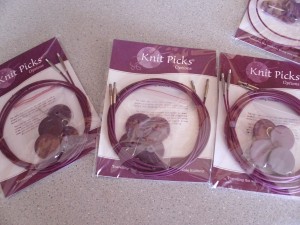
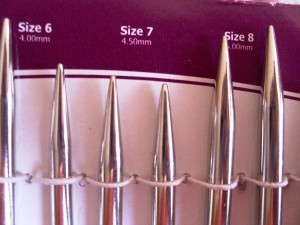
I got a secret item this week I didn’t tell the hubs. I finally broke down and picked up some knitpicks options in the nickle finish. I’ve started a pair of socks and I loooooove these needles.

I got the set and a few extra cords. Here are the tips.

The hubs is home so I may have to explain before he reads the post if he sees it.

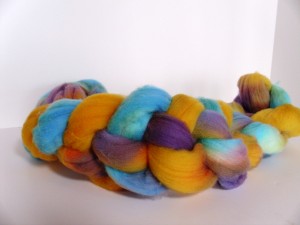
Some pictures of new items in the shop.

I almost forgot the contest but since only my friend Penny commented all week she wins it. Congrats Penny!!!!!

Tags: , , , , , , , , , , , , ,