Deyaneria on May 27th, 2011

The weather around here has been hazy. We had some sun yesterday and I’m kicking myself for not mowing the lawn as it rained hard last night and is threatening more today.
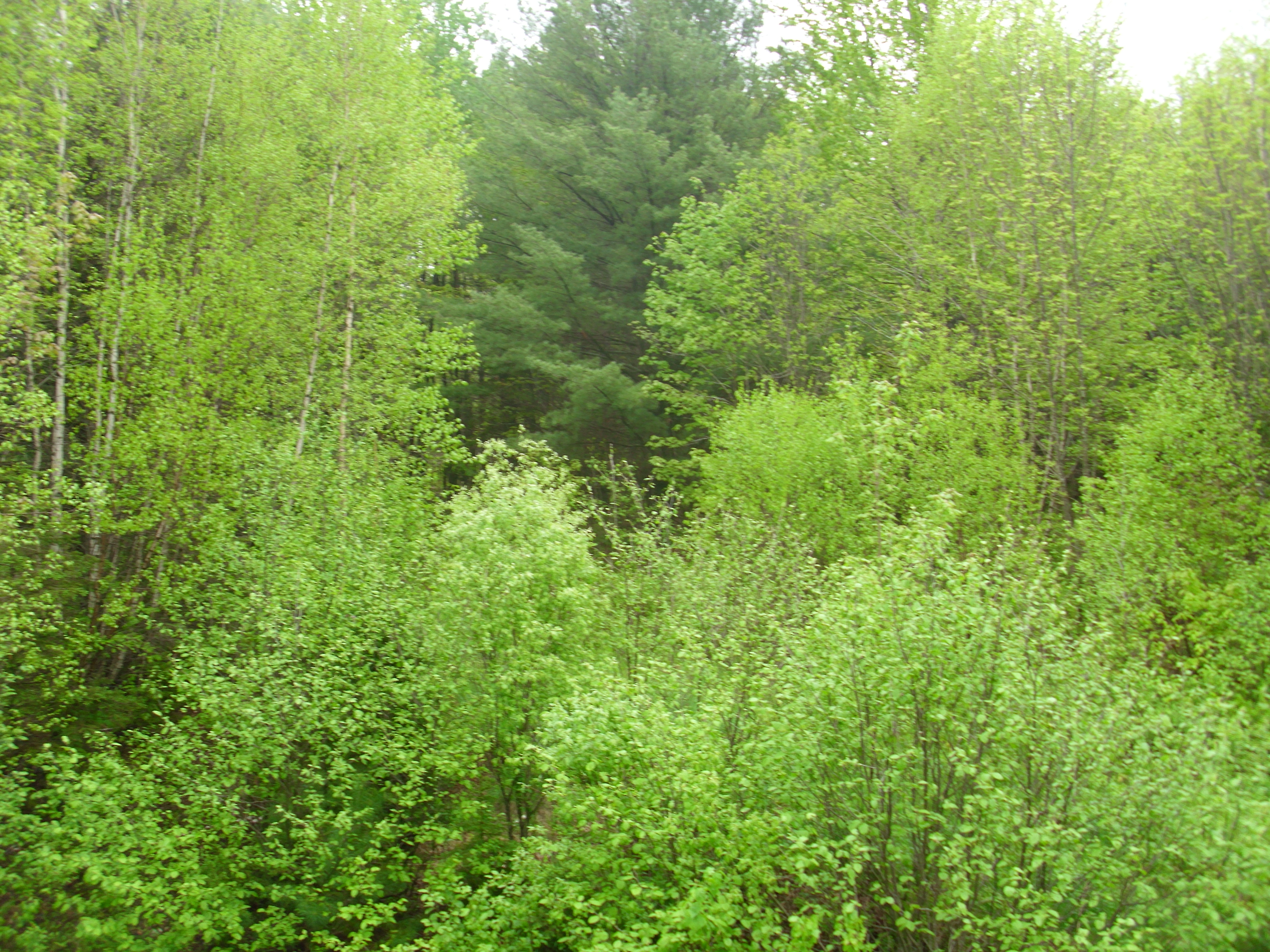
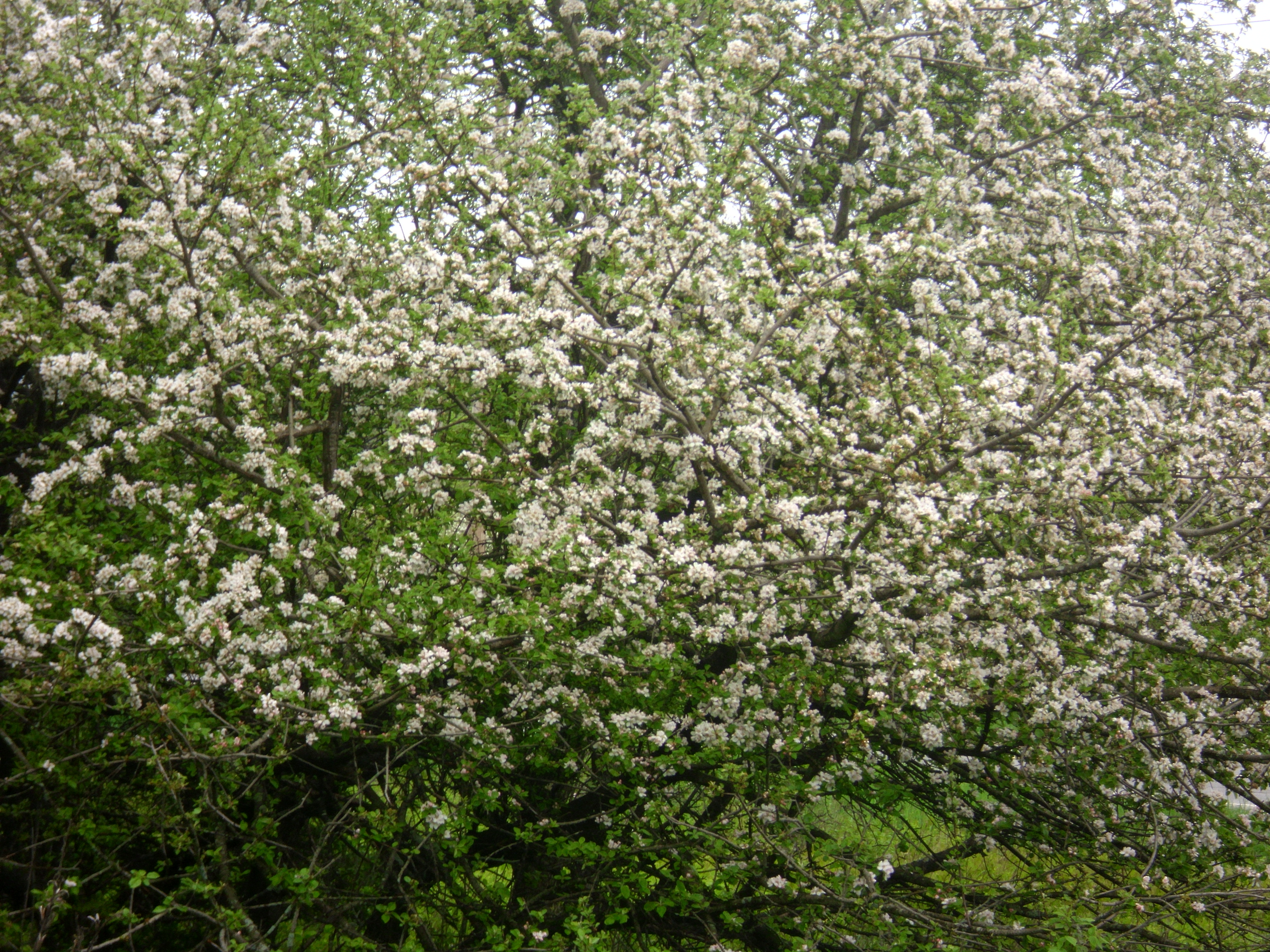
We finally have leaves and blossoms hurray!
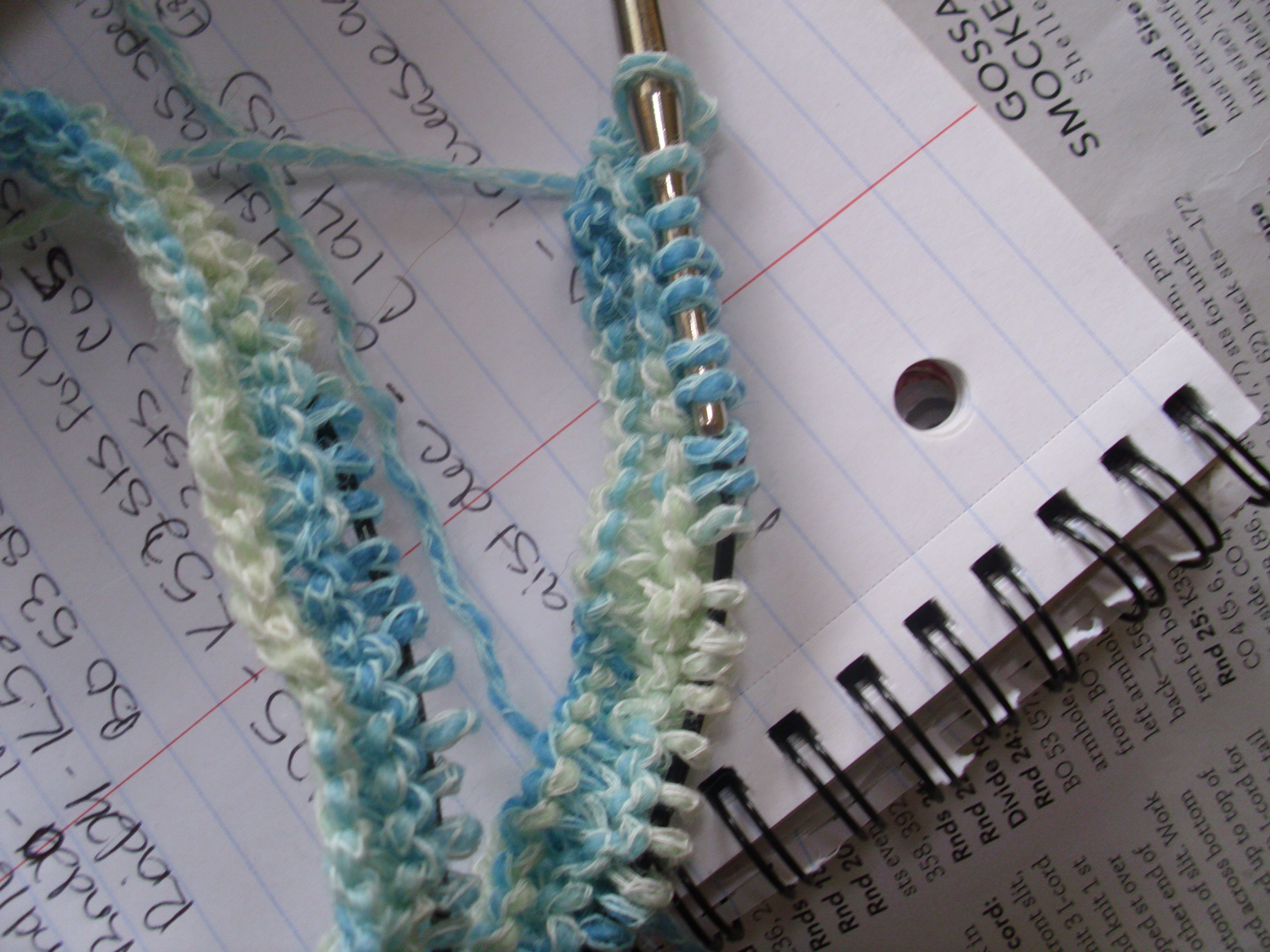
I’m gonna go on a rant about something. I’m a bit of a tight knitter. I didn’t think it was a huge problem until I wanted to make myself a sweater. I’m not even sure why I would want to do this again as the first 5 sweaters I attempted were an abomination to knitting.
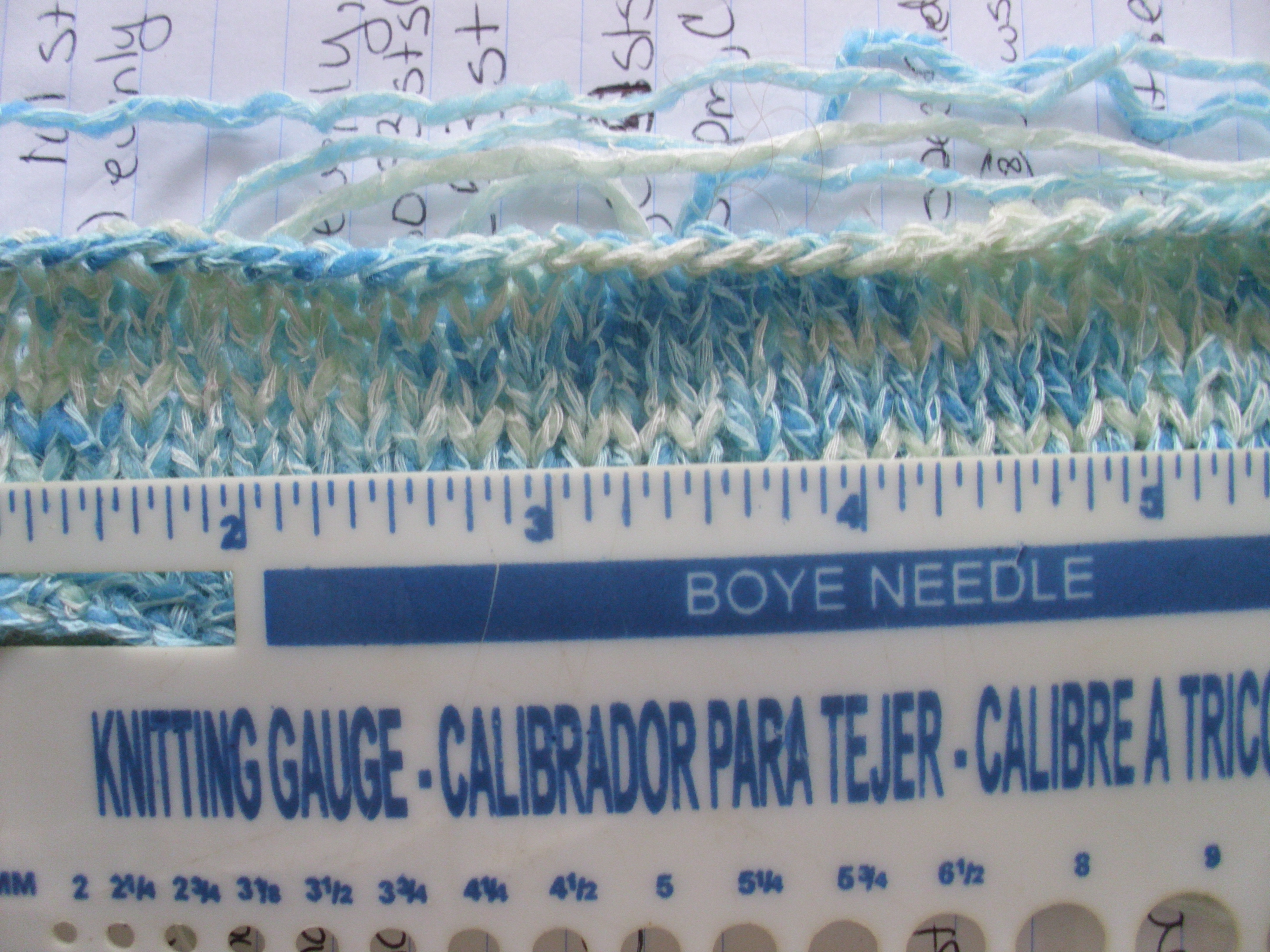
This point aside I decided I wanted to make a light spring sweater. I found a great pattern I had a the right weight yarn (in the right amount) so I set to making a swatch. I think I swatched 5 times, washing the swatch letting it dry and carefully counting my stitch count as a conscientious knitter would. I could not get gauge if my life depended on it.
I took the yarn in question to my local fiber group after looking at the fiber the ladies agreed it was not the weight it was advertised to be. Bear in mind that the knitters in the group have never used a pattern so as far as gauge was concerned I was on my own (they laugh in the face of gauge, and snicker  at the fact I was so bent out shape about gauge).  So I scrapped the pattern and found another one that would use the actual weight of this yarn.
Now bear in mind that most patterns I’ve found I pretty much have to rewrite to fit me due a plus sized bosom and a normal sized body. This new pattern was no different so after taking gauge into account and rewriting the pattern to fit me. I was pretty confident I could get gauge. I ignored my  sense I should go up 3needle sizes and swatched in the needle called for in the pattern.  I washed, dried and carefully measure my swatch and found I still had too many stitches than what the gauge called for. After tearing out the gauge swatch for a 1000th time. I wondered to myself if I should even be attempting this. Would I even want to wear it after I was done or would I look at it and want to throw it into a bonfire laughing maniacally?I did one last swatch last night in the needle size my gut told me washed it and waited till this morning for it to dry.  I set to measureing this morning. Lo and behold!!! The stitch count was correct. I didn’t even try to go for row count as this is much easier to compensate for. So I set in and started the neckline.
I still don’t know if I will even want the sweater when it is done. I have a funny feeling if it doesn’t come out right the bonfire will start. I think it may be cathartic at that point but the Knitter in me still has to try. I love knitting although some parts of it make me want to stab myself repetitively with size one dpns.
I would love to hear some comments on your success and failures with gauge. Let me hear your stories.
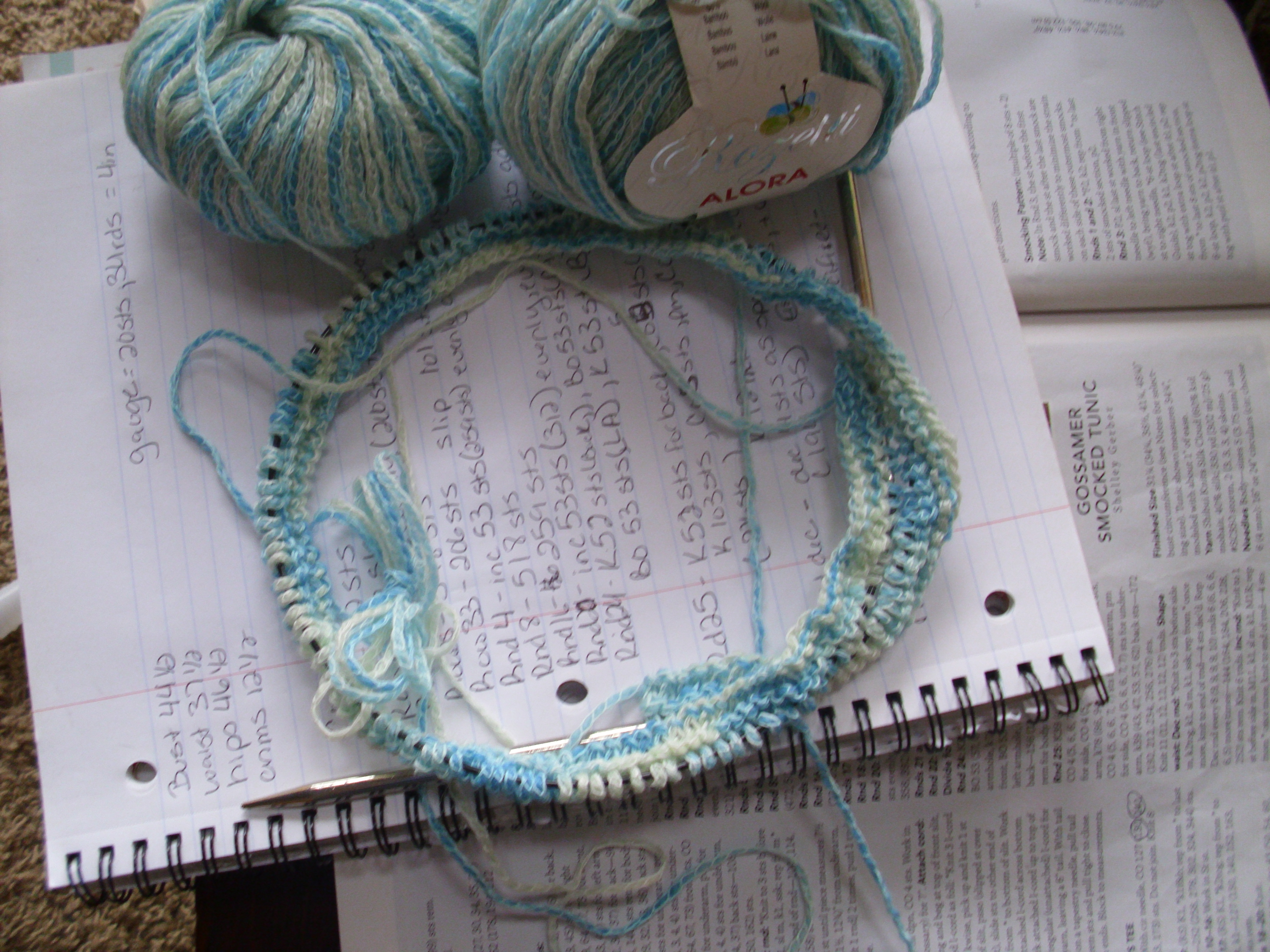
I guess I will be brave enough to show the pattern I started this morning. It is the Ruched Yoke Tee by AnneLena Mattison in Interweave Knits spring 2011 edition.


Tags: , , , , , , , ,

Deyaneria on May 25th, 2011

Margaret Donnelly, a jute mill landowner in Dundee in the 1800s, set up the first jute mills in Bengal. In the 1950s and 1960s, when nylon and polythene were rarely used, one of the primary sources of foreign exchange earnings for the erstwhile United Pakistan was the export of jute products, based on jute grown in then East Bengal now Bangladesh. Jute has been called the “Golden Fibre of Bangladesh.” However, as the use of polythene and other synthetic materials as a substitute for jute increasingly captured the market, the jute industry in general experienced a decline. I guess jute growing was quite lucrative at one time.

Jute has entered many diverse sectors of industry, where natural fibres are gradually becoming better substitutes. Among these industries are paper, celluloid products (films), non-woven textiles, composites (pseudo-wood), and geotextiles. Who knew something so simple could have so many uses.

Raw Jute Fiber


How jute is produced. Jute matting being used to prevent flood erosion while natural vegetation becomes established. For this purpose, a natural and biodegradable fibre is essential.Jute is a rain-fed crop with little need for fertilizer or pesticides. The production is concentrated in Bangladesh and some in India, mainly Bengal. The jute fibre comes from the stem and ribbon (outer skin) of the jute plant. The fibres are first extracted by retting. The retting process consists of bundling jute stems together and immersing them in low, running water. There are two types of retting: stem and ribbon. After the retting process, stripping begins. Women and children usually do this job. In the stripping process, non-fibrous matter is scraped off, then the workers dig in and grab the fibres from within the jute stem. This reminds me of how flax is processed.
Jute is the second most important vegetable fibre after cotton; not only for cultivation, but also for various uses. Jute is used chiefly to make cloth for wrapping bales of raw cotton, and to make sacks and coarse cloth. The fibres are also woven into curtains, chair coverings, carpets, area rugs, hessian cloth, and backing for linoleum.

Jute fabric

While jute is being replaced by synthetic materials in many of these uses, some uses take advantage of jute’s biodegradable nature, where synthetics would be unsuitable. Examples of such uses include containers for planting young trees, which can be planted directly with the container without disturbing the roots, and land restoration where jute cloth prevents erosion occurring while natural vegetation becomes established.

The fibres are used alone or blended with other types of fibre to make twine and rope. Jute rope has long been popular in Japan for use in bondage. Jute butts, the coarse ends of the plants, are used to make inexpensive cloth. Conversely, very fine threads of jute can be separated out and made into imitation silk. As jute fibres are also being used to make pulp and paper, and with increasing concern over forest destruction for the wood pulp used to make most paper, the importance of jute for this purpose may increase. Jute has a long history of use in the sackings, carpets, wrapping fabrics (cotton bale), and construction fabric manufacturing industry.

Diversified jute products are becoming more and more valuable to the consumer today. Among these are espadrilles, floor coverings, home textiles, high performance technical textiles, Geotextiles, composites, and more.

Jute has many advantages as a home textile, either replacing cotton or blending with it. It is a strong, durable, color and light-fast fibre. Its UV protection, sound and heat insulation, low thermal conduction and anti-static properties make it a wise choice in home décor. Also, fabrics made of jute fibres are carbon-dioxide neutral and naturally decomposable. These properties are also why jute can be used in high performance technical textiles.

Moreover, jute can be grown in 4–6 months with a huge amount of cellulose being produced from the jute hurd (inner woody core or parenchyma of the jute stem) that can meet most of the wood needs of the world. Jute is the major crop among others that is able to protect deforestation by industrialisation.

Thus, jute is the most environment-friendly fibre starting from the seed to expired fibre, as the expired fibres can be recycled more than once.

Jute is also used to make ghillie suits, which are used as camouflage and resemble grasses or brush.

I am amazed that Jute is used for so many things. I think I have a bit more respect for the jute plant.

 It’s a gorgous day here the sun is finally back out I had to share with you.

chicken sunbathing

Tags: , , , , , , , , , , , ,

Deyaneria on May 23rd, 2011

Jute is a long, soft, shiny vegetable fibre that can be spun into coarse, strong threads. It is produced from plants in the genus Corchorus, which has been classified in the family Tiliaceae, or more recently in Malvaceae.

Jute is one of the most affordable natural fibres and is second only to cotton in amount produced and variety of uses of vegetable fibres. Jute fibres are composed primarily of the plant materials cellulose (major component of plant fibre) and lignin (major components of wood fibre). It is thus a ligno-cellulosic fibre that is partially a textile fibre and partially wood. It falls into the bast fibre category (fibre collected from bast or skin of the plant) along with kenaf, industrial hemp, flax (linen), ramie, etc. The industrial term for jute fibre is raw jute. The fibres are off-white to brown, and 1–4 metres (3–12 feet) long.

Jute needs a plain alluvial soil and standing water. The suitable climate for growing jute (warm and wet climate) is offered by the monsoon climate during the monsoon season.

White jute (Corchorus capsularis)Several historical documents (including, Ain-e-Akbari by Abul Fazal in 1590) state that the poor villagers of India used to wear clothes made of jute. Simple handlooms and hand spinning wheels were used by the weavers, who used to spin cotton yarns as well. History also states that Indians, especially Bengalis, used ropes and twines made of white jute from ancient times for household and other uses.

Jute matting being used to prevent flood erosion – US Department of Energy photo

         For centuries, jute has been an integral part of culture of Bengal, in the entire southwest of Bangladesh and some portions of West Bengal. During the British Raj in the 19th and early 20th centuries, much of the raw jute fibre of Bengal was carried off to the United Kingdom, where it was then processed in mills concentrated in Dundee. Initially, due to its texture, it could only be processed by hand until it was discovered in that city that treating it with whale oil, it could be treated by machine. The industry boomed (“jute weaver” was a recognised trade occupation in the 1901 UK census), but this trade had largely ceased by about 1970 due to the appearance of synthetic fibres.

Jute is a very adaptable fiber easily mixed with synthetic and other natural fibers.

Unfortunately, I was unable to get my hands on a spinnable jute fiber. I will not be able to give any description on dyeing it or spinning it.

I will be starting a wool series in about mid-june. Subscribe to the blog and newsletter for updates.

Romeo is trying to fly the coop for the freshly mown grass.

Tags: , , , , , , , , ,

Deyaneria on May 20th, 2011

It has been a very dark and rainy week. My daughters softball has been cancelled a few times. The grass is high but can’t be mowed until it dries out some and the rain has made it too wet to till my garden.

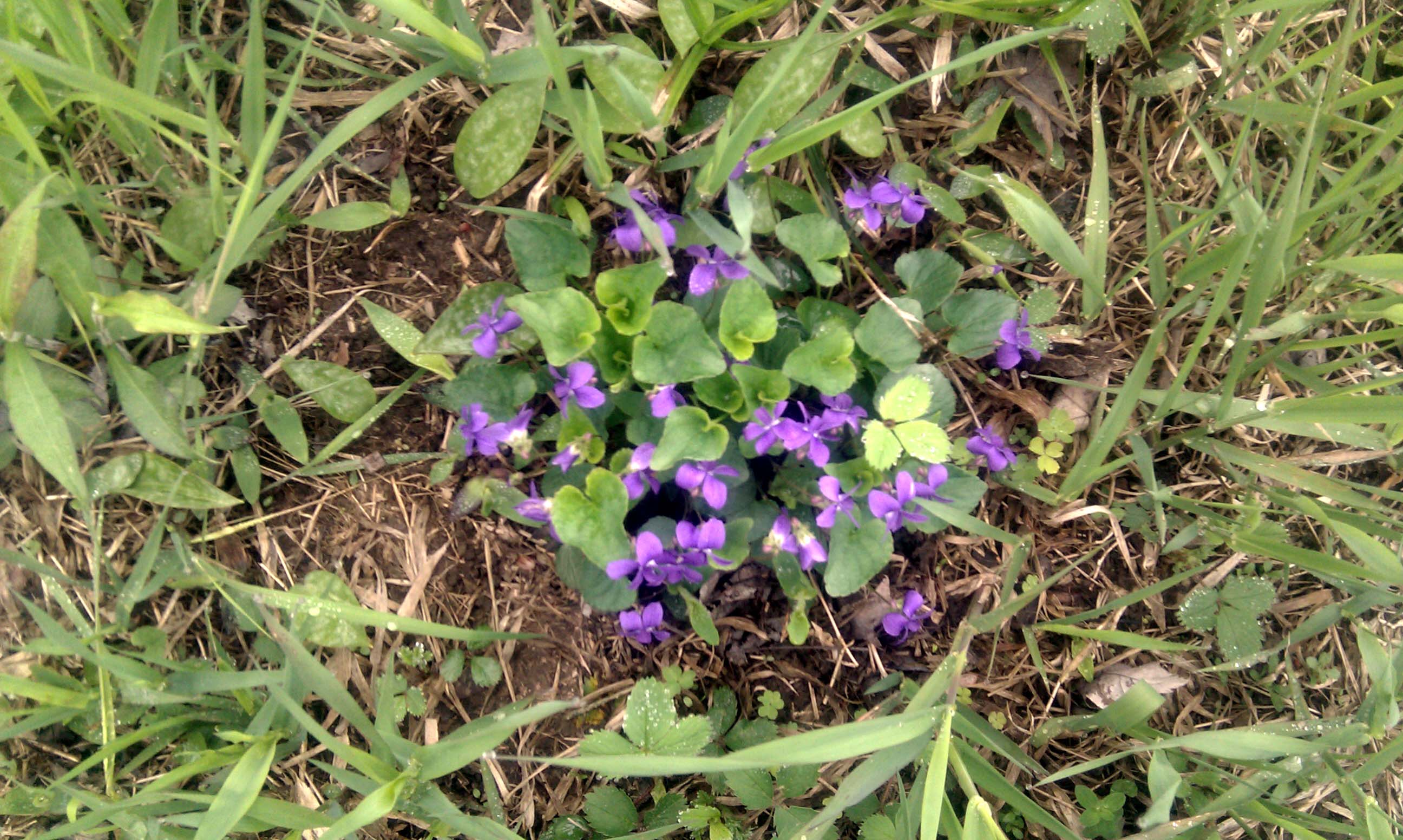
violets out by the river

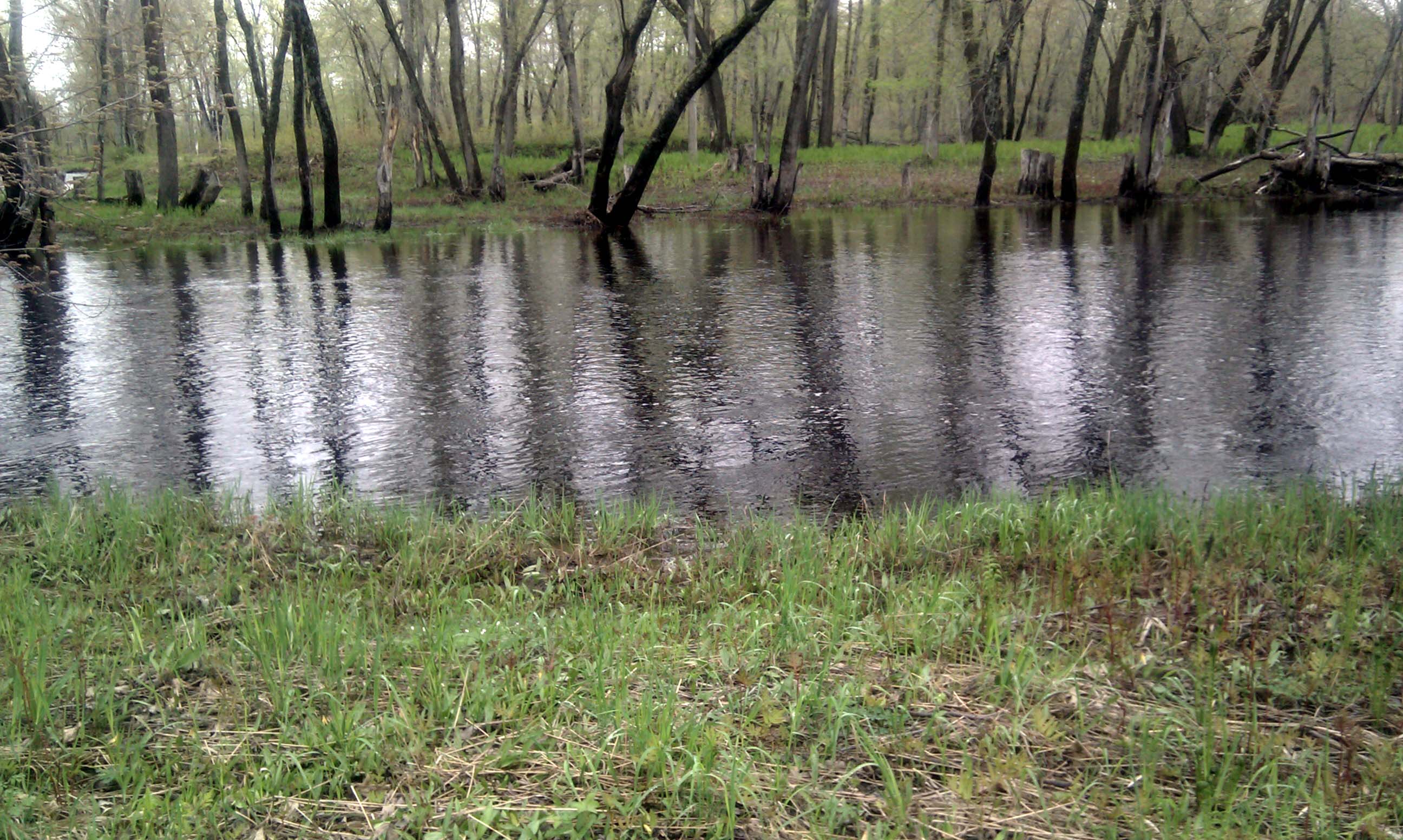
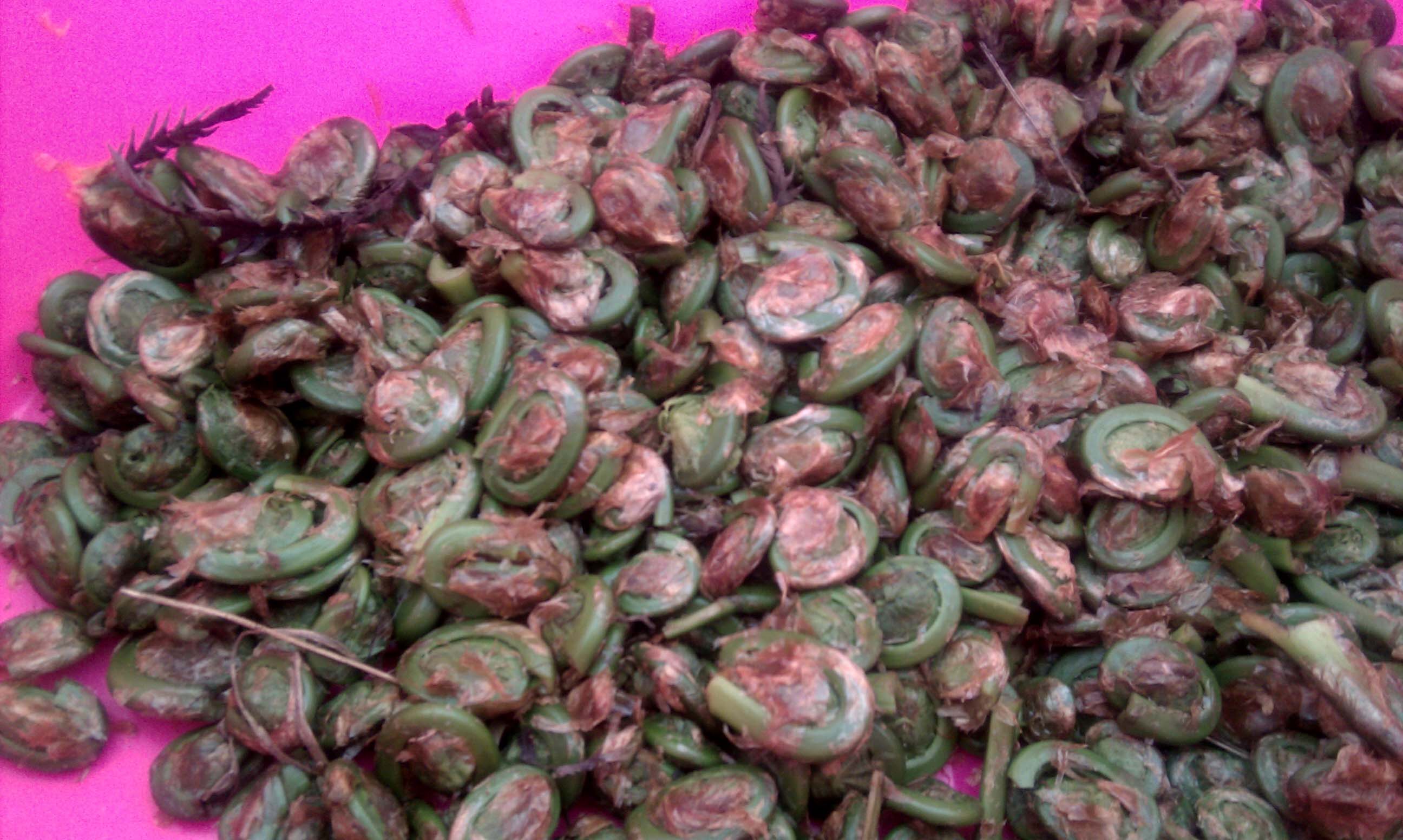
However yesterday it let up enough to go pick some fiddleheads. For those unfamiliar with fiddelheads. They are a fern that is edible and delicious. I had never heard of them until I moved to Maine.  The river ( Milo is a town were 3 rivers meet) where we were picking was just gorgeous and I couldn’t resist taking a few pictures with my phone.

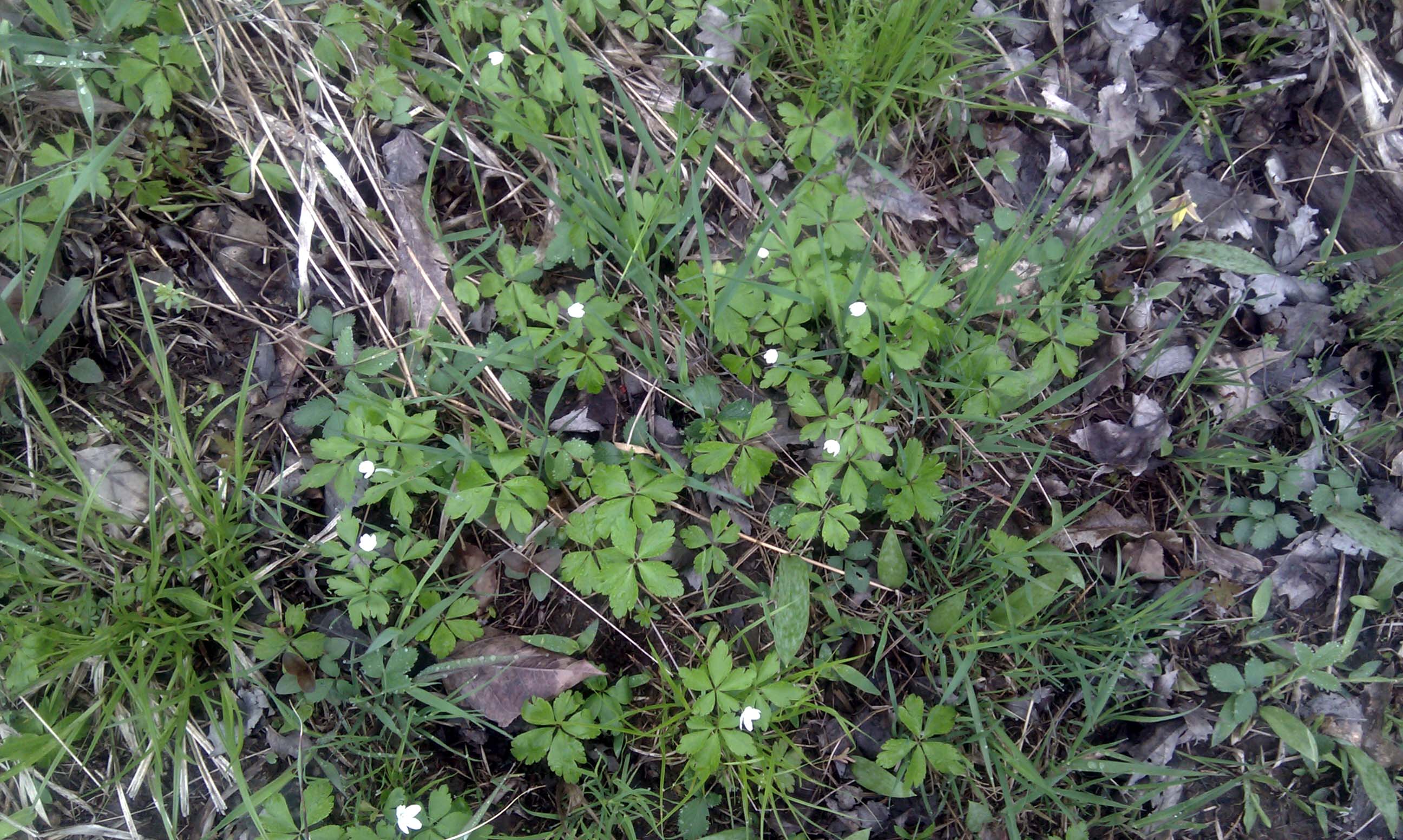
Unknown white flowers by the river

The Pleasant River

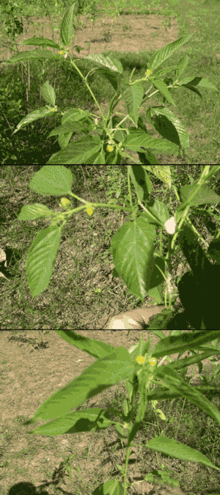
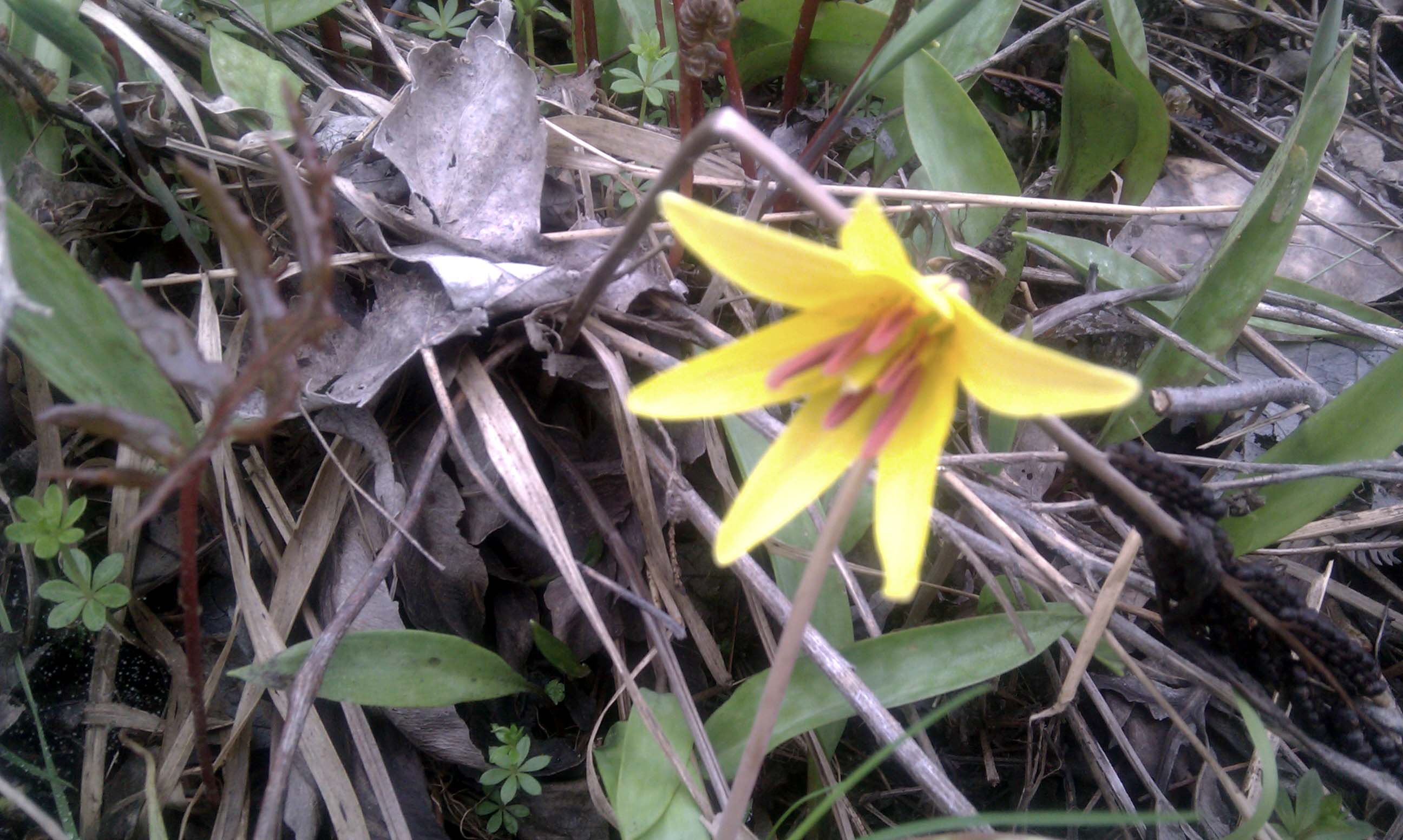
Beautiful yellow flowers out by the river

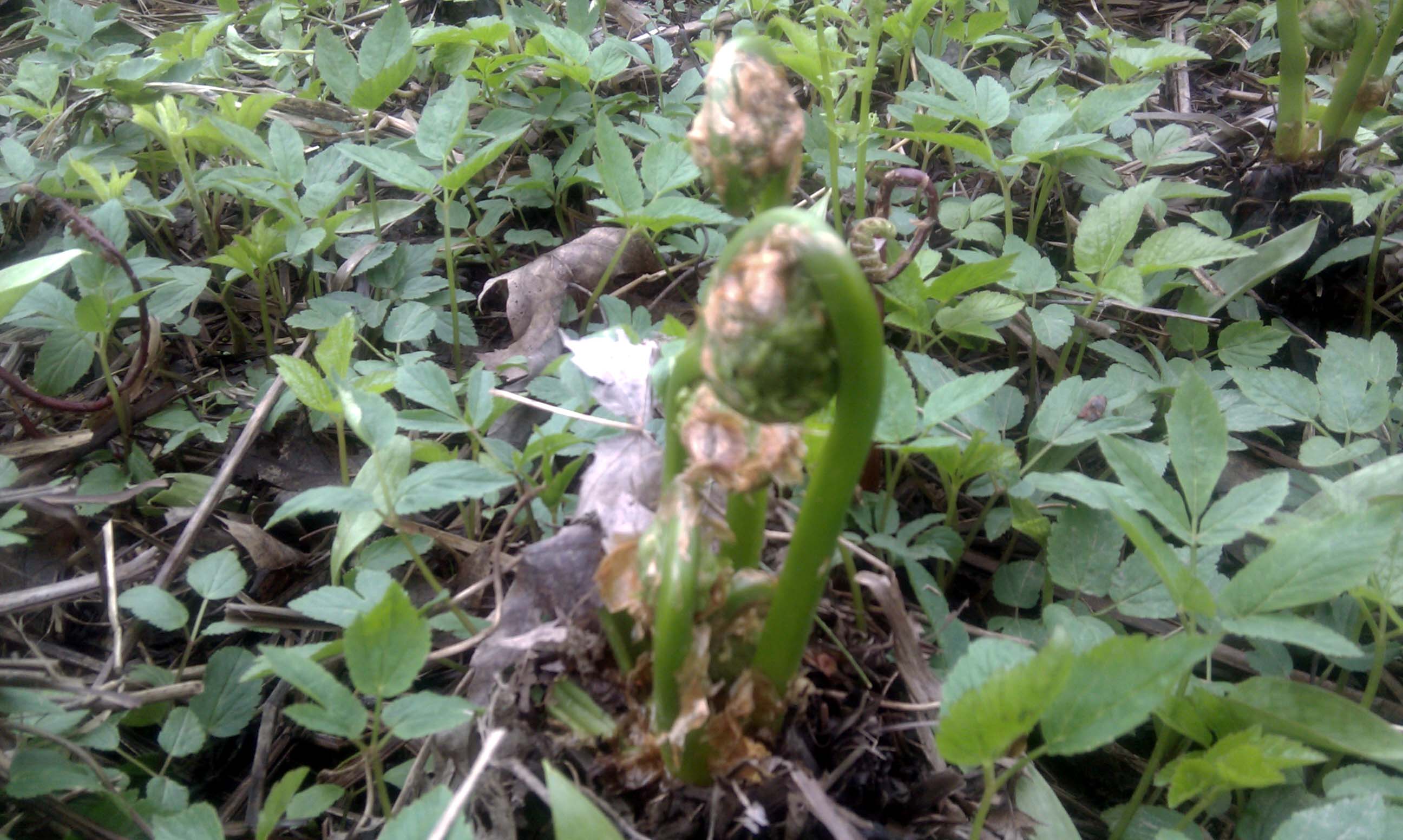
Fiddleheads

Fiddlehead cradle the really tender ones.

My picked fiddleheads

I had never picked fiddleheads before so one of my friends took me out to show me what to pick and what to look for because there are many types of fern. I took them home to wash the brown paperish covering off of them. I ended up freezing some and setting some aside for dinner. They are eaten much like an other green. I like them best with butter, salt and pepper roasted in the oven. Delicious!!!!

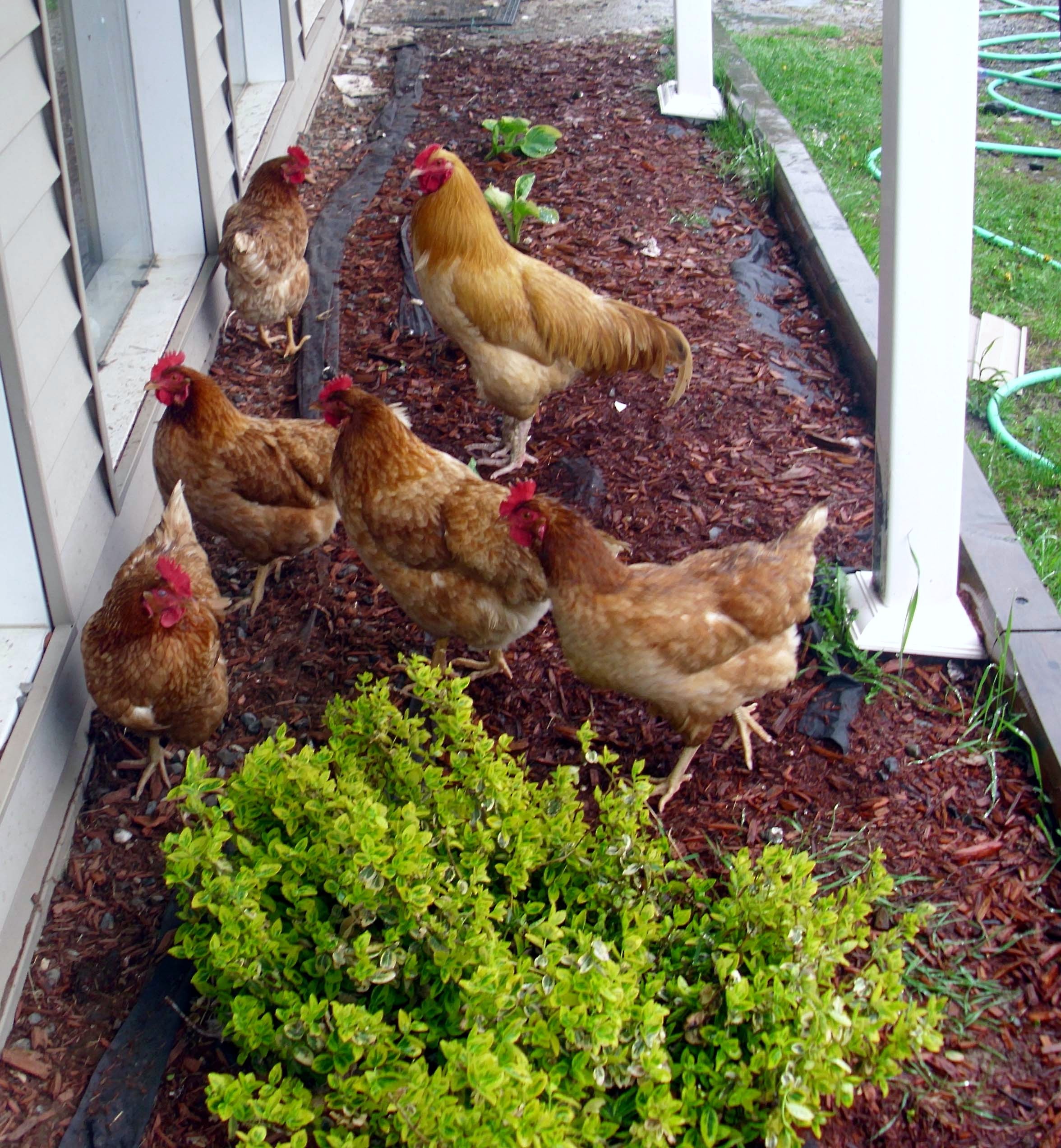
Here is a good pick of my chickens taking a break from free-ranging, they love the rain. You will notice poor Don Juan’s (the rooster) comb has not grown back from his bout with frostbite this winter. Oh well he is still handsome anyway.

My chickens enjoying the weather.

Tags: , , ,

Deyaneria on May 18th, 2011

Ramie is one of the oldest fiber crops, having been used for at least six thousand years, and is principally used for fabric production. It is a bast fiber, and the part used is the bark (phloem) of the vegetative stalks. Ramie is normally harvested two to three times a year but under good growing conditions can be harvested up to six times per year. Unlike other bast crops, ramie requires chemical processing to de-gum the fiber.

Harvesting is done just before or soon after the beginning of flowering. It is done at this time because at this stage there is a decline in plant growth and the maximum fiber content is achieved. Stems are harvested by either cutting just above the lateral roots or else bending the stem. This will enable the core to be broken and the cortex can be stripped from the plant in situ.

After harvesting, stems are decorticated while the plants are fresh. If this is not done while the plants are still fresh the plants will dry out and the bark will be hard to remove. The bark ribbon is then dried as quickly as possible. This will prevent bacteria and fungi from attacking it.

The extraction of the fiber occurs in three stages. First the cortex or bark is removed; this can be done by hand or by machine. This process is called de-cortication. Second the cortex is scraped to remove most of the outer bark, the parenchyma in the bast layer and some of the gums and pectins. Finally the residual cortex material is washed, dried, and de-gummed to extract the spinnable fiber. I did try to find out how the fiber is degummed and most companies want to keep this a trade secret. However I did find an abstract of a different chemical process for degumming ramie( which would take a chemist to understand).

Enough of that lets get to the fun stuff:

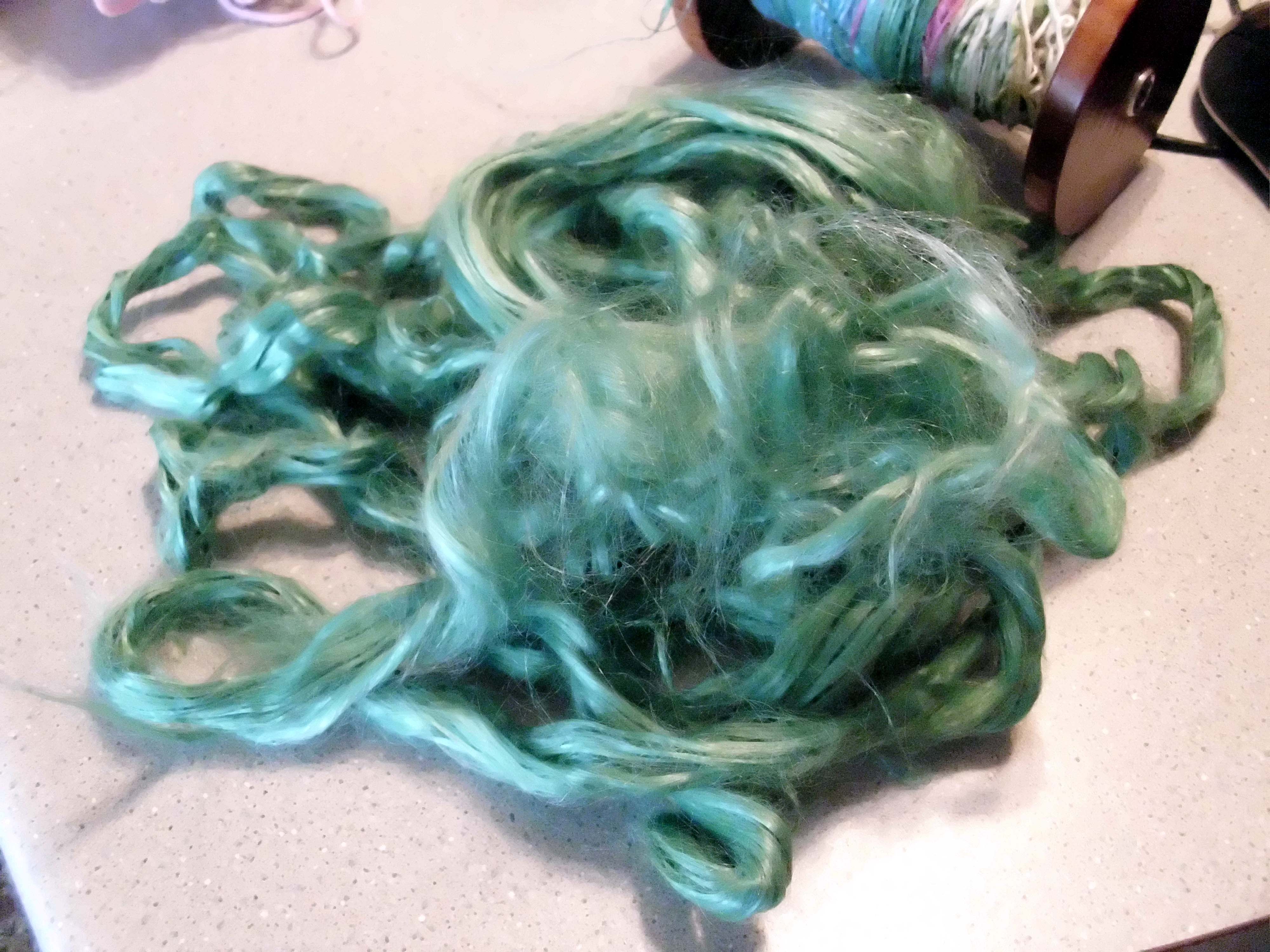
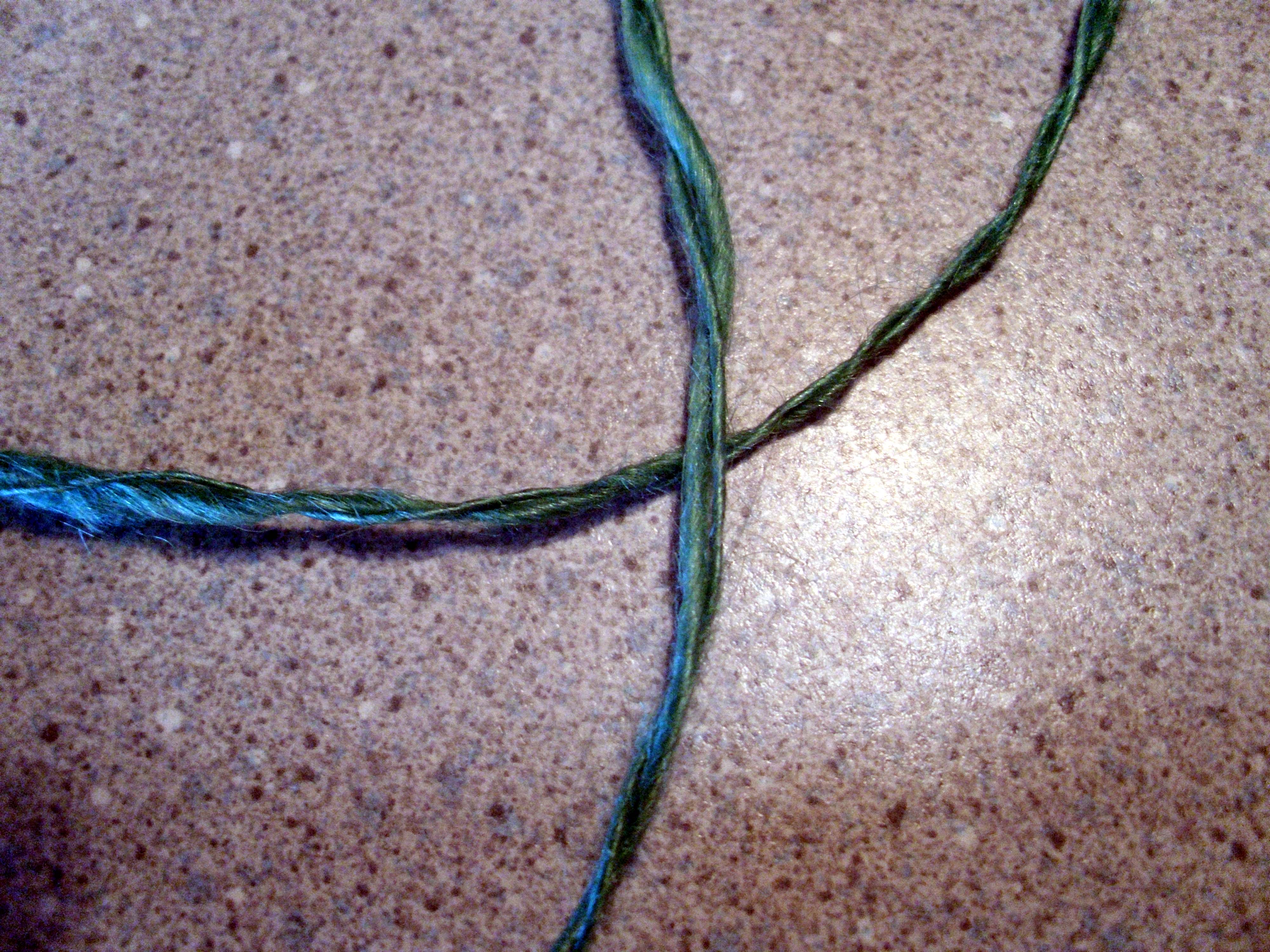
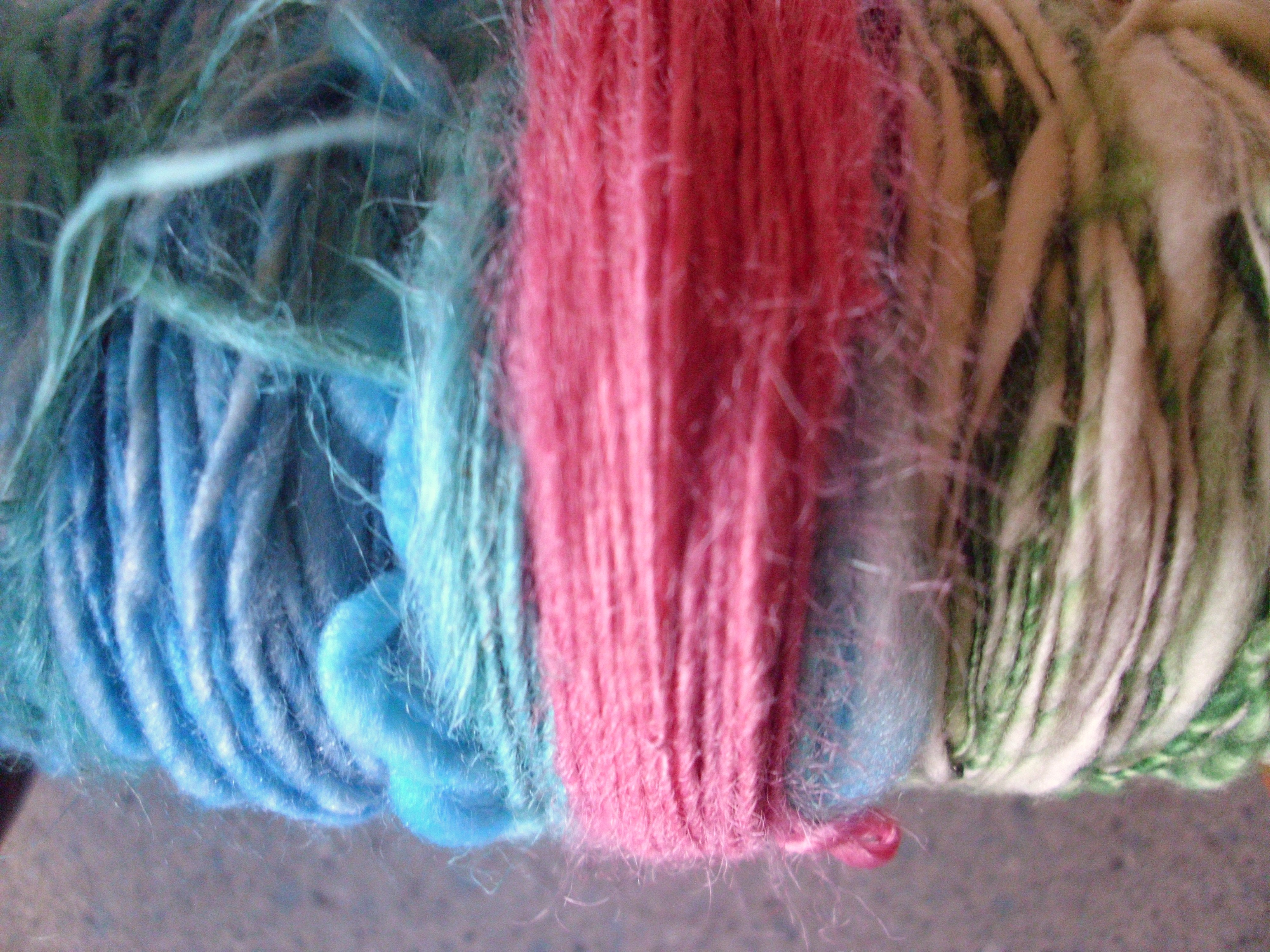
I dyed my ramie in a blend of cushing’s dyes in turquoise, bright green, and green. This was the gorgeous result.

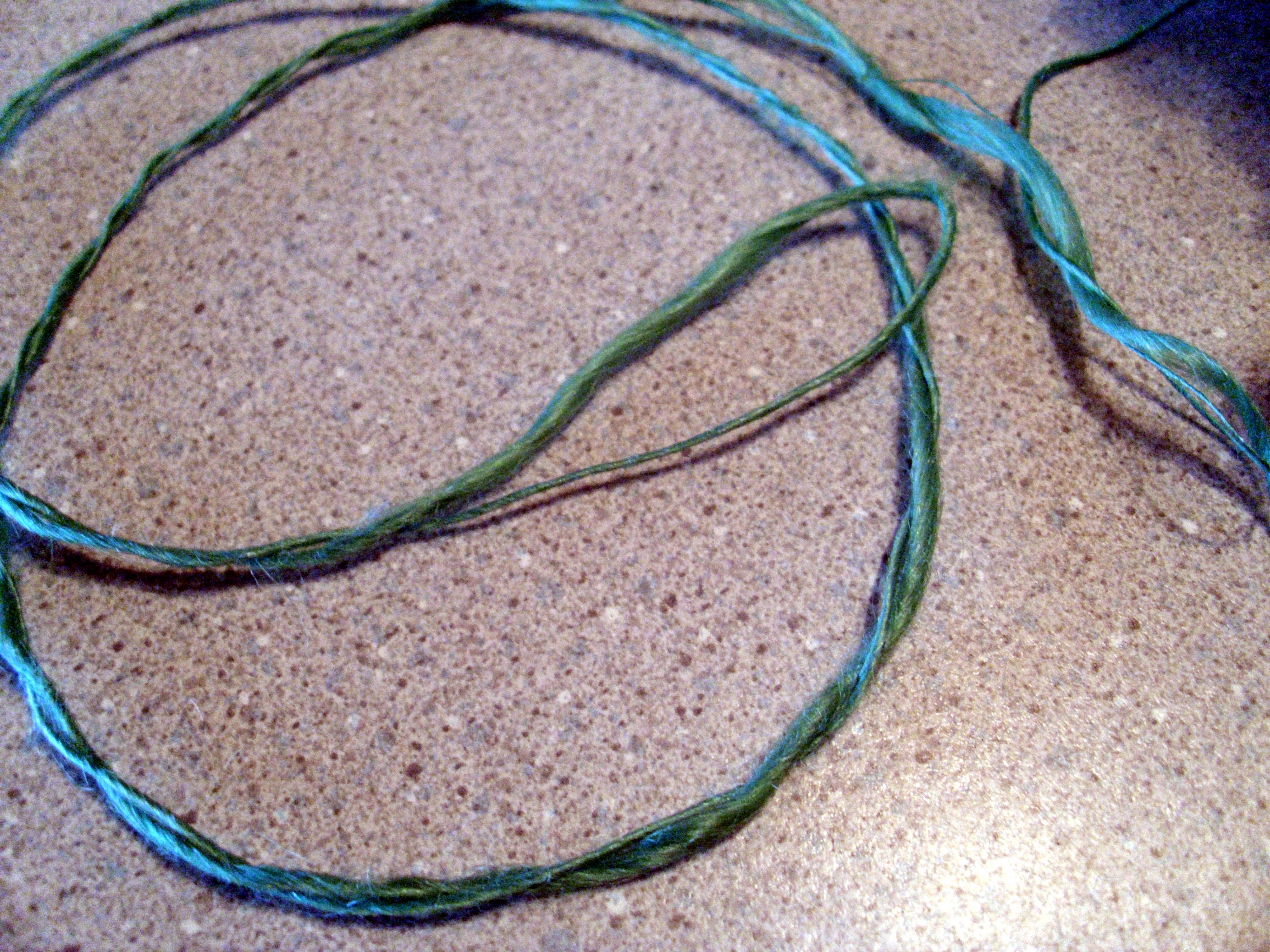
Here it is all spun up.

I found ramie to softer than flax but harsher than cotton. It took the dye really well even though I was told it wouldn’t take dye well. I spun mine dry but ramie can spun wet or dry.

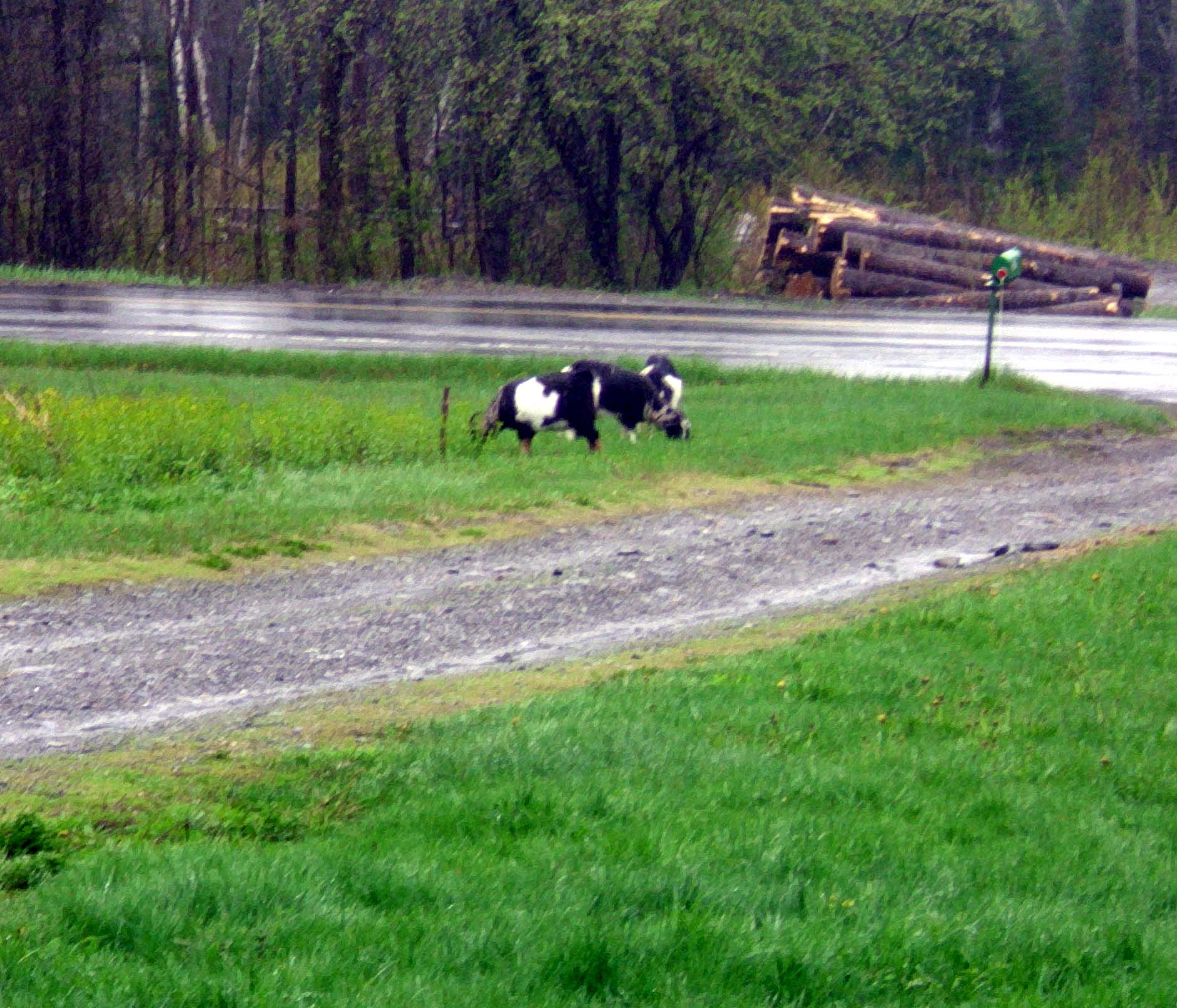
Here’s a great pic of my goats enjoing the rain.

Tags: , , , , , , , , ,

Deyaneria on May 16th, 2011

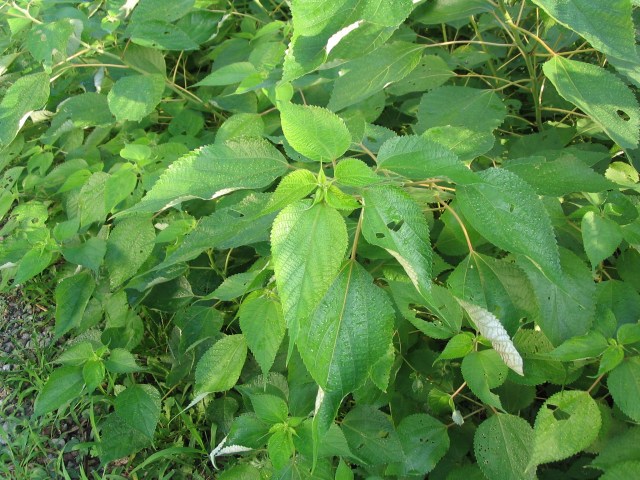
 Ramie (Boehmeria nivea) is a flowering plant in the nettle family Urticaceae, native to eastern Asia.  The true ramie or China Grass also called Chinese plant or white ramie is the Chinese cultivated plant. A second type, is known as green ramie or rhea and is believed to have originated in the Malay Peninsula.

Ramie Plant

Ramie has been around for so long that it was even used in mummy cloths in Egypt during the period 5000–3300 BC and has been grown in China for many centuries. In the study of the “Lazarus” mummy, three types of textiles were found. The outermost cloth was heavy and coarsely woven; the innermost was the lightest and most tightly woven. The outer cloth appeared to be ramie (which Wiseman notes “contains non-fibrous material that is toxic to bacteria and fungi”—in other words, an ideal textile for mummymaking). Farmers in ancient China are also known to have used the fiber to weave clothing.

Ramie was used to produce an open weave fabric called mechera, used for shirts and dressing gowns suitable for warm climates. Brazil began production in the late 1930s with production peaking in 1971. Since then, production has steadily declined as a result of competition with alternative crops, such as soybeans and the important synthetic fibers.

Ramie is one of the strongest natural fibers. It exhibits even greater strength when wet. Ramie fiber is known especially for its ability to hold shape, reduce wrinkling, and introduce a silky lustre to the fabric appearance. It is not as durable as other fibers, and so is usually used as a blend with other fibers such as cotton or wool. It is similar to flax in absorbency, density and microscopic appearance. However it will not dye as well as cotton. Ramie can be still and brittle and lacks elasticity. It will break with repeat folding in the same place.

Despite its strength, ramie has had limited acceptance for textile use. The fiber’s extraction and cleaning are expensive, chiefly because of the several steps—involving scraping, pounding, heating, washing, or exposure to chemicals. Some or all are needed to separate the raw fiber from the adhesive gums or resins in which it is ensheathed. Spinning the fiber is made difficult by its brittle quality and low elasticity; and weaving is complicated by the hairy surface of the yarn, resulting from lack of cohesion between the fibers. The greater utilization of ramie depends upon the development of improved processing methods. So far it seems to be a pretty green fiber.

Ramie is used to make such products as industrial sewing thread, packing materials, fishing nets, and filter cloths. It is also made into fabrics for household furnishings (upholstery, canvas) and clothing, frequently in blends with other textile fibers (for instance when used in admixture with wool, shrinkage is reported to be greatly reduced when compared with pure wool.) Shorter fibers and waste are used in paper manufacture.

For the 2010 Prius, Toyota began using a new range of plant-derived ecological bioplastics made from the cellulose in wood or grass instead of petroleum. One of the two principal crops used is ramie.

Ramie is also used as an ornamental plant in eastern Asia.

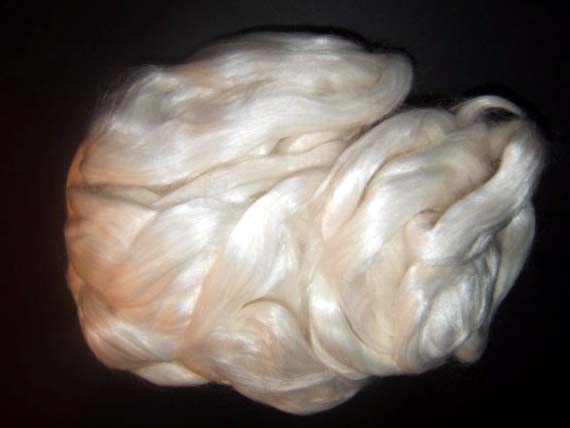
Here is some undyed ramie fiber. I wonder if it will take well with my direct dyes?

Sign up for a weekly newsletter and get the scoop on what is up and coming in the store, healthy recipes and more.

Tags: , , , , , , ,

Deyaneria on May 14th, 2011

I find myself posting on saturday again due to my children’s dental appointments and softball. I reviewed 2 books this week. Parisian Fashion Knits from Laines du Pingouin(originally published 1936 republished 2011) and Picturesque Hats in Hand Crochet by Bramcost Publications(originally published 1939 republished 2011).

Both books sent you back in time showing what fashion was like in the 30’s and showcased some of the beautiful handiwork of that time. In Picturesque Hats there were snoods lots of snoods some attached to beautiful hats some not. I remember look for snood patterns when my hair was long (i even made one). I found they are a lovely way to get hair off the neck on a hot day without pins or elastics (no pulling on the scalp), quite comfortable without being hot as a hat may have been.

In Parisian Fashion Knits they really brought out the styles of the time. I found the stitches and textures fascinating. The cape on page 8 is a definite knit. I can’t wait to try some of these stitches this book really grabbed my creative side and I would like to try some other things with the textures. Bramcost also sent a few wonderful pages on how to convert knitting to crochet and changing basic sizing of vintage garments and how to take measurements for vintage patterns. Quite helpful for knitting vintage garments.

I really enjoyed reviewing these books and sharing them with my weekly fiber group. They were excited to try a few of the patterns.

I also purchased a new magazine. Actually I purchased every knitting and crochet magazine I could find in my local area. I’m not a big magazine subscriber but Knitting Traditions by Interweave really caught my interest. I read this magazine for a week straight and enjoyed it each time. I love reading and possibly knitting in new ways from different cultures. The articles are great and there are quite a few techniques I would love to try. This one is definitely a keeper.

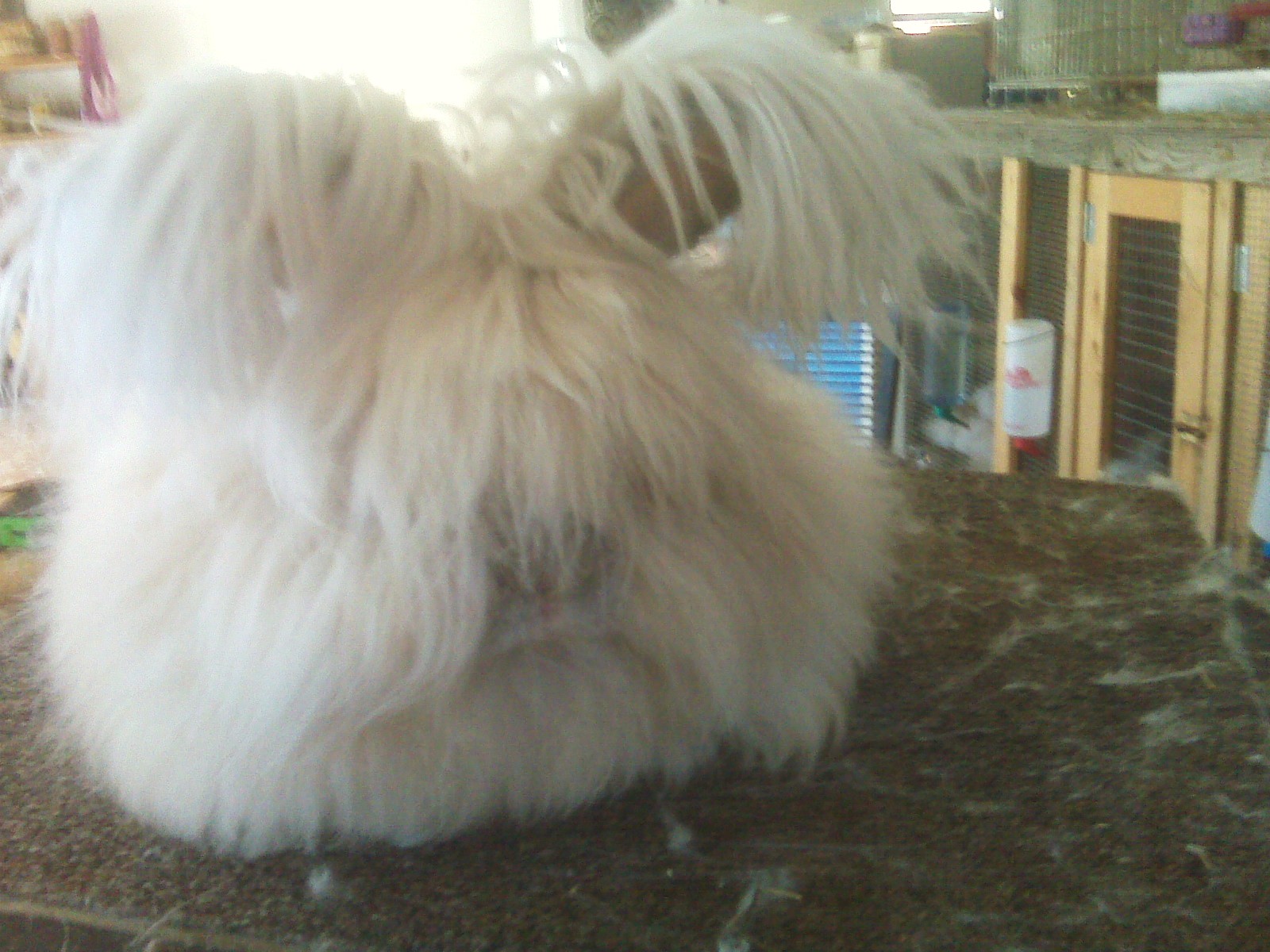
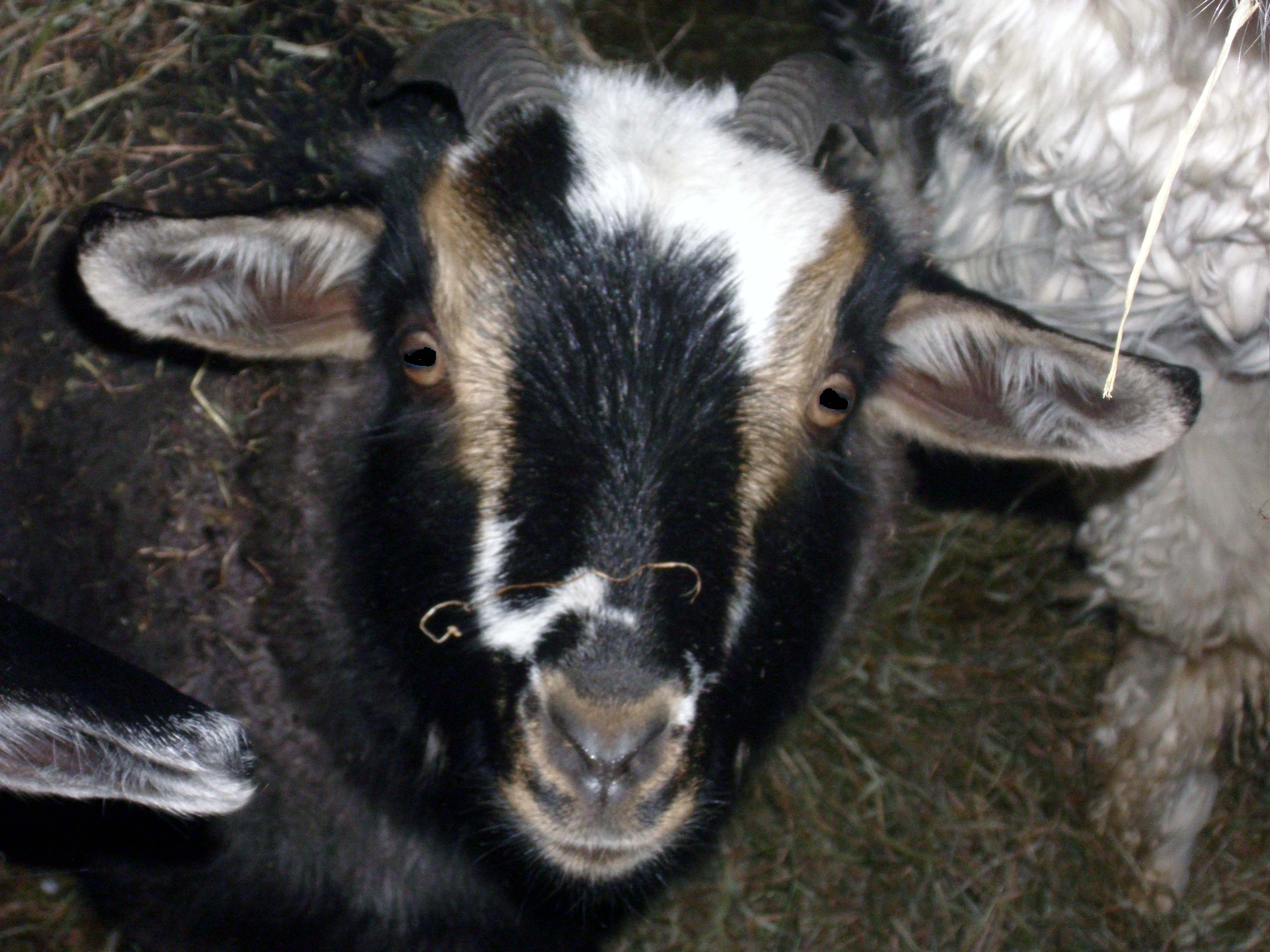
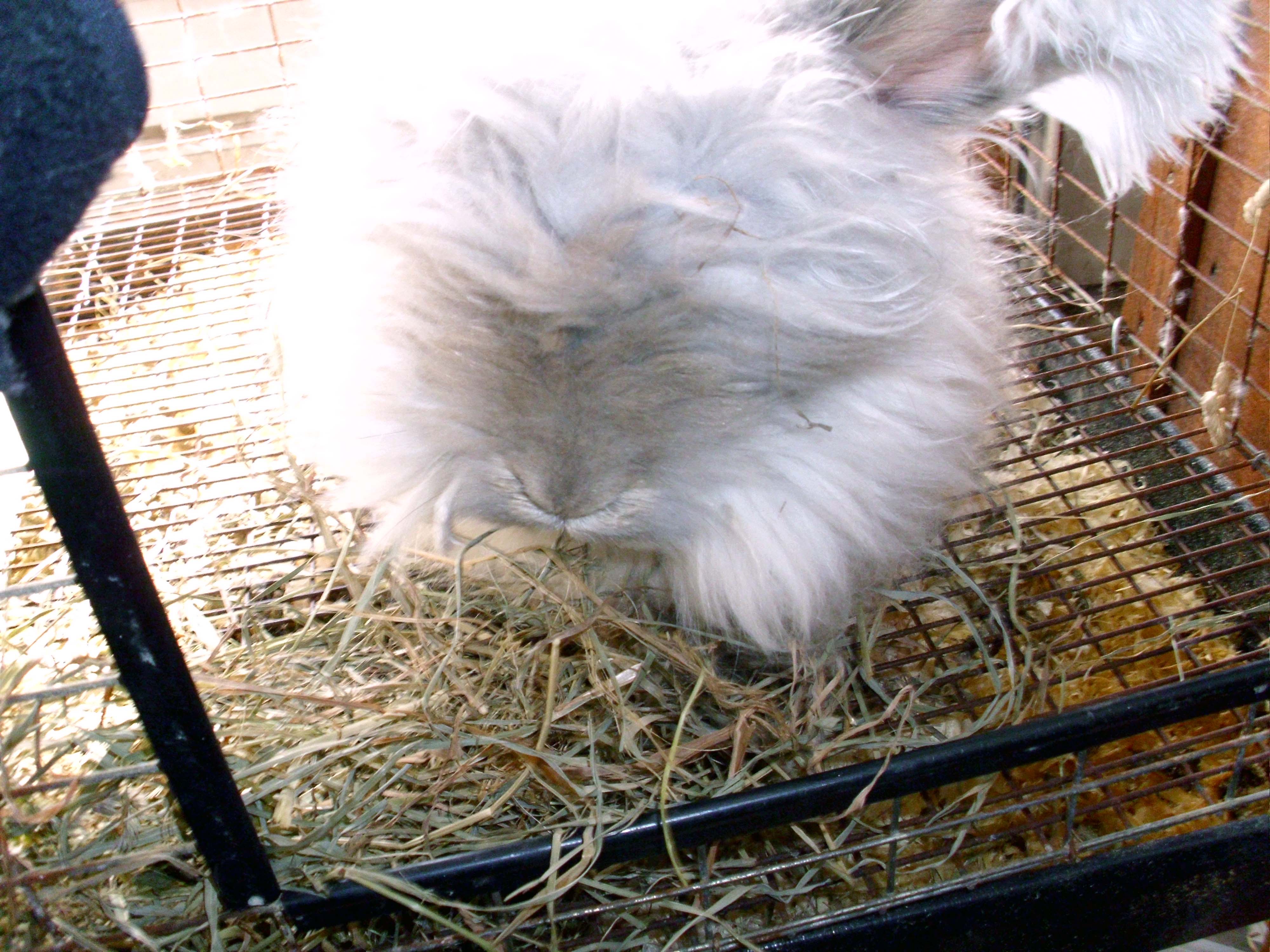
This week on the farm was interesting because I had fence fixing to do. The goats and alpacas got out. My fence had actually detached itself from the barn. The goats usually squeeze out on a regular basis and it’s not a big deal because they won’t go far from the rest of their herd(the alpacas).  However the alpacas get out and it completely changes the game plan. I was ready for an hour or 2 of coaxing with food, chasing etc. I couldn’t believe my eyes. I fixed the fence opened the gate and alpacas just walked right in. I had to seriously wonder if they weren’t ill. It’s almost time to collect fiber from bunnies again a new crop will be in soon.

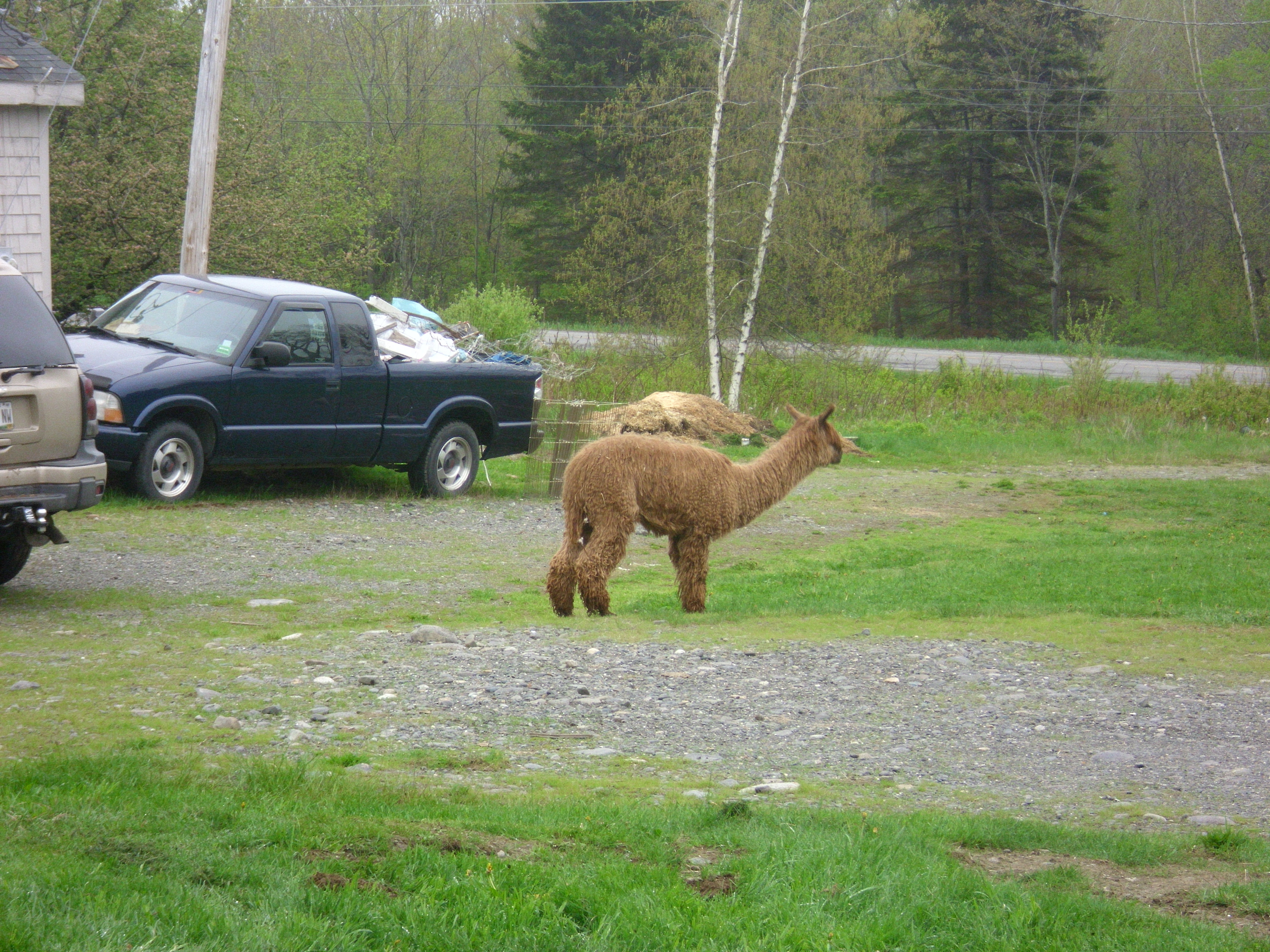
Here are some great pictures of my little fuzzies.

Tags: , , , , , ,

Deyaneria on May 11th, 2011

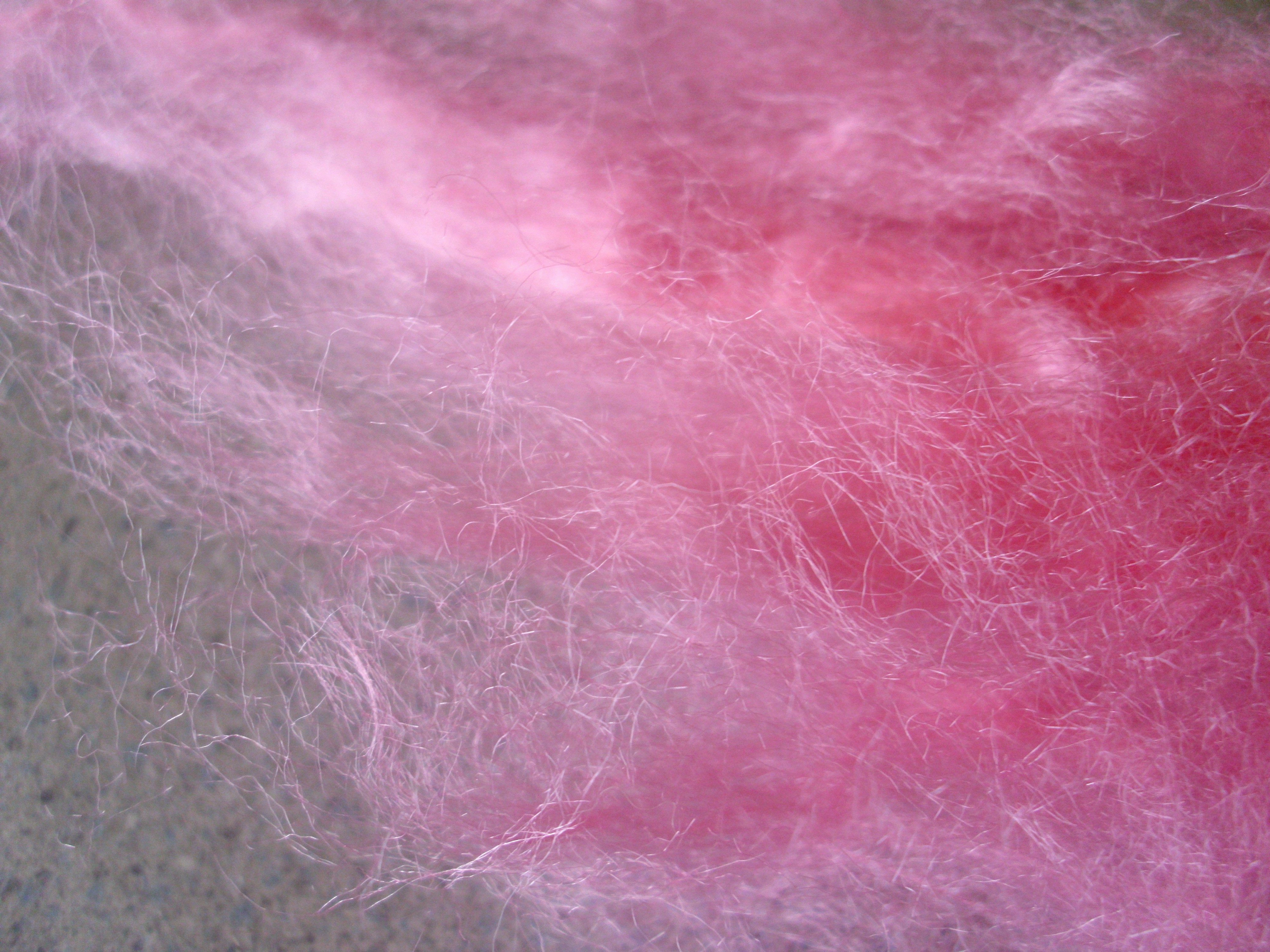
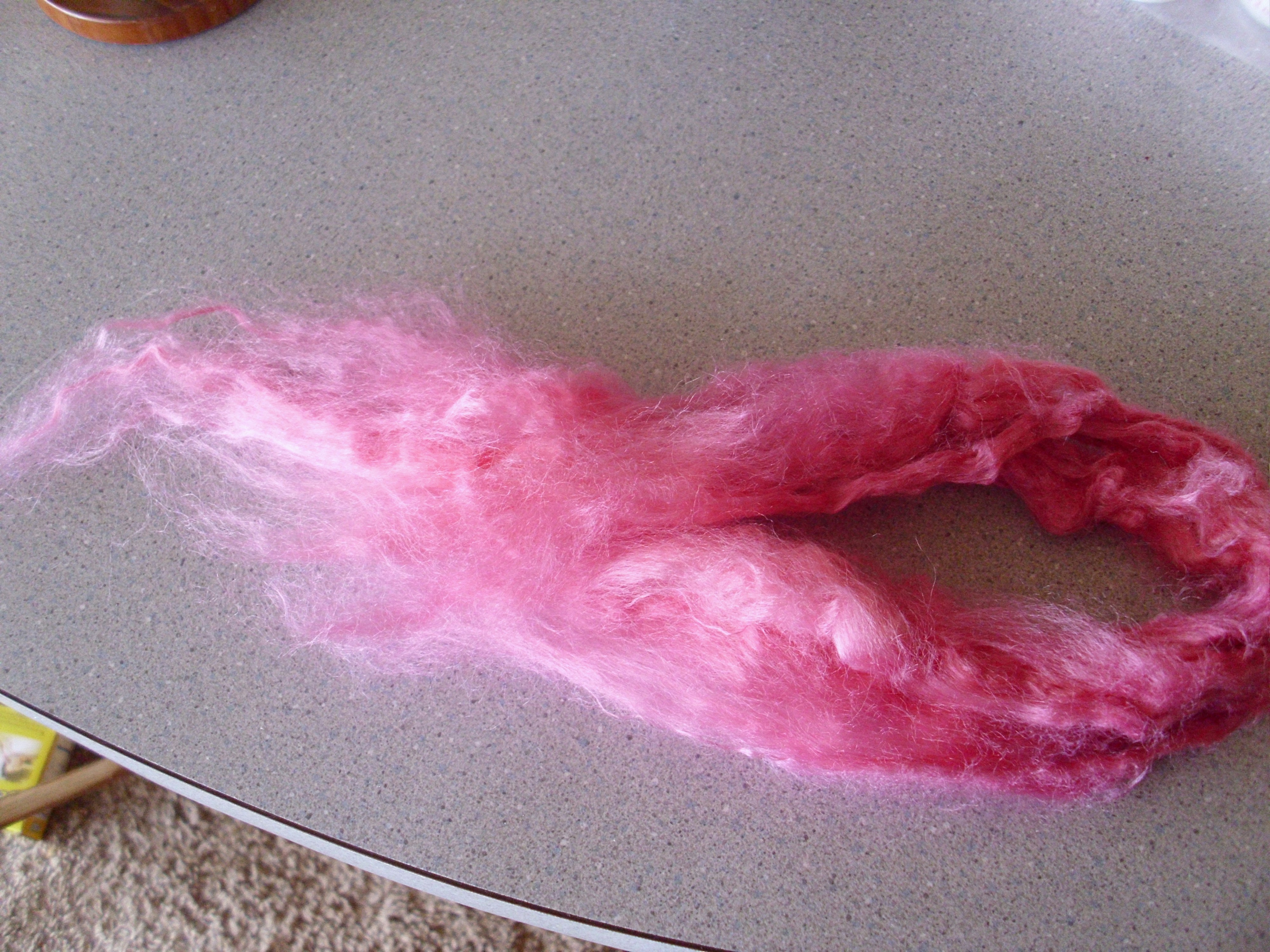
I found out some interesting things after I dyed my soy silk fiber. Soy fiber is suppose to be dyed with acid dyes like wool. However, I dyed mine, before I got the memo, with direct dyes and they took really well with very little washing out of the dye. In fact it almost exhausted the dyebath(which has never happened with direct dyes) I took some and washed it to see what would happen. It lost none of it’s color and looks fantastic.  I used cushings direct dyes in wild rose.

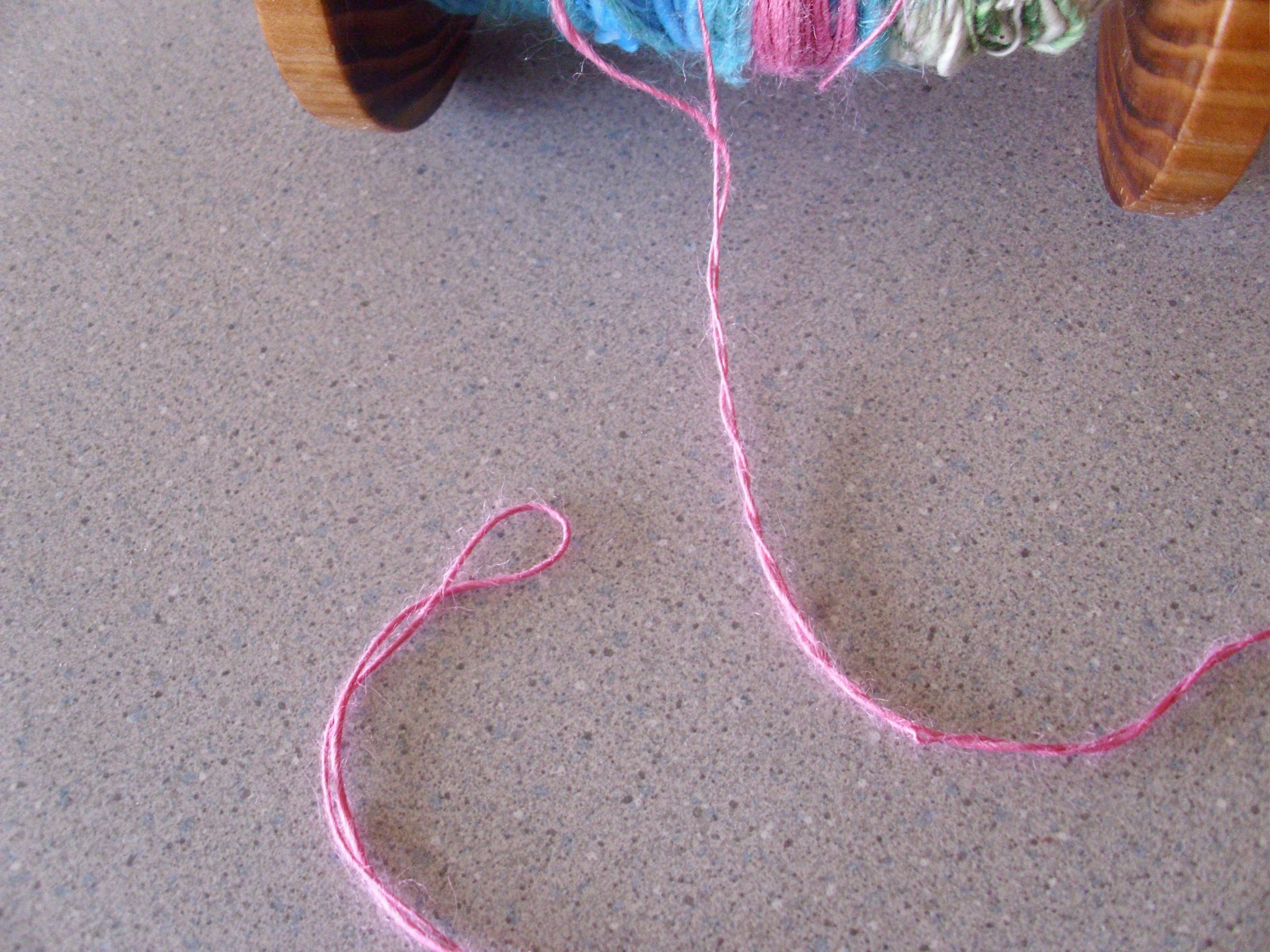
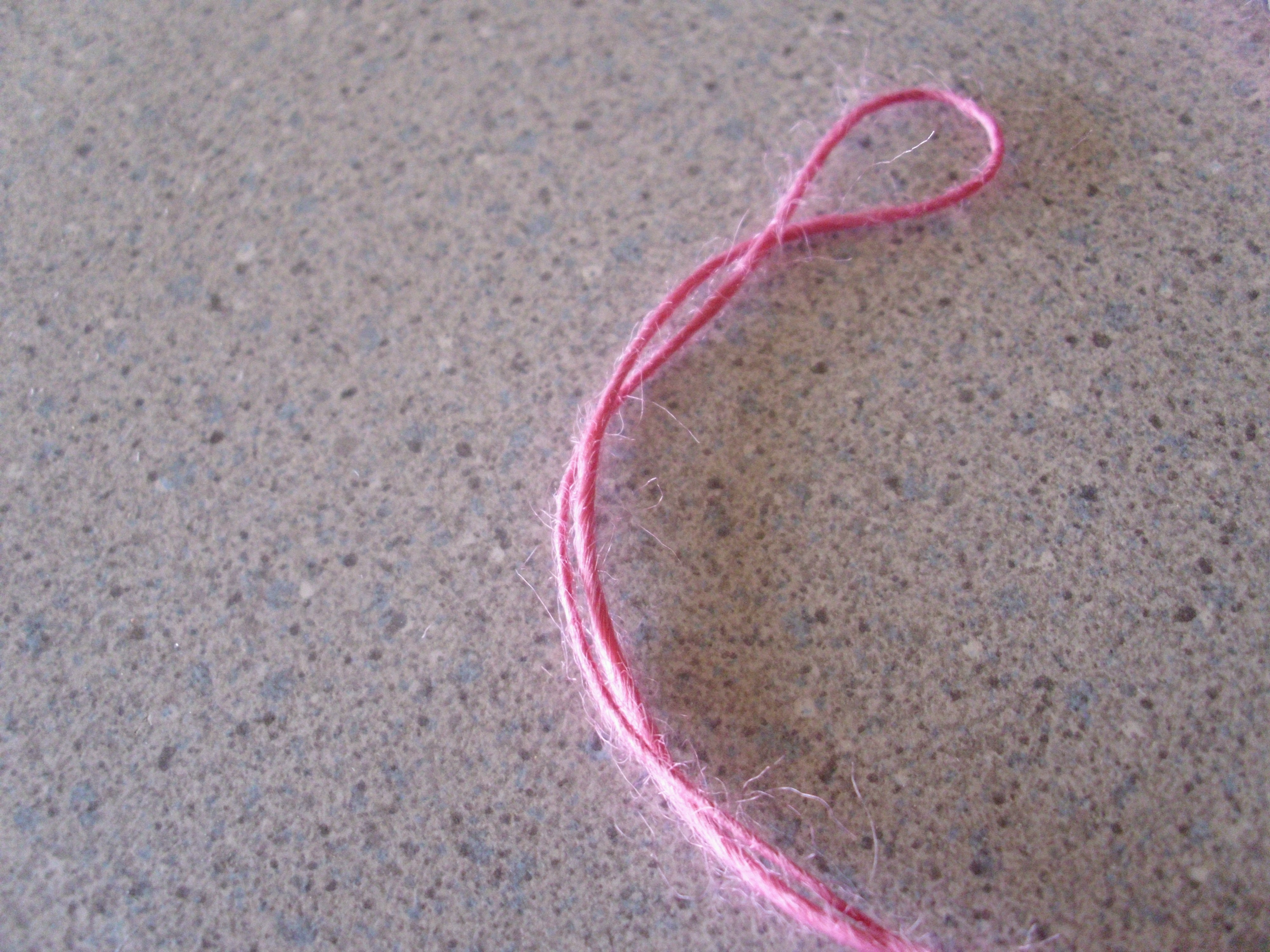
Spinning this fiber was sooo easy. It really does spin like buttah. I may have to get some more of this fiber to blend I think it will blend beautifully.

Get your fiber fix, sign up for the Fiber Fanatic Files delivered bi-weekly to your inbox.


Tags: , , , , , , , , , , , , , , ,

Deyaneria on May 9th, 2011

One of the first things I learned about this fiber commonly called Soysilk is that Soysilk is a name brand of soy fiber. However Soy Silk can be used(i think). Anyway onto the good stuff.

Henry Ford had a great interest in the soybean as the next great crop that would bring industry and farmers together(little did he know how right he was). Much of his food and fiber, and  soy ideas were laughed at. He became famous for cars but his interest in soy fiber carried into the vehicles(seat coverings etc). Robert Allen Boyer worked with Ford to help produce and refine the fiber. Two acres of land will produce 400 pounds of soybean protein.” Boyer’s fiber resembled a soft wool; it was loose and fluffy, white to tan in color with medium luster, and had a soft, warm feel, natural crimp, and high degree of resilience. It had 80% the strength of wool, took the same dyes, had good elongation, and did not wet as easily as wool. It could be used for upholstery in cars, filling in felt hats, or clothing. At the New York World’s Fair in 1939, Ford had a display featuring a machine spinning soy protein fibers. (Note that term “spinning” is used by the textile industry for production of synthetic fibers like rayon; actually it is an extrusion/coagulation process.) By 1938 Ford sported a necktie (his favorite 75th birthday present) in which half of the material was soybean “wool.” Three years later he made a public appearance in his treasured “soybean suit” (made of 25% soybean “wool” and 75% sheep’s wool) with which, reported the Detroit Times (1941), he was “as delighted as a boy with his first long pants,” Both he and soybeans garnered huge amounts of free publicity from the event. Boyer had made his wife a coat of the same material in 1940. In that same year Boyer, only 31, headed a staff of 25 research assistants whose average age was only 24. For his many outstanding achievements, the US Chamber of Commerce voted Boyer the Outstanding Young Man of 1940 (Garfield 1941).

However, problems with production, costs and a lack of commercial interest did not make it a viable alternative. With so many more easily available fabrics on the market no serious interest was taken in creating soy clothing, until Mr Li Guanqi of China.

In 1999, Mr Li was successful in creating a soft, smooth, drapy, comfortable fabric similar in feel to cashmere. In fact it is often referred to as vegetable cashmere. Soy silk is an eco-friendly fiber made from tofu manufacturing waste. The fiber is made entirely of soy protein (which is a by-product from the manufacture of tofu).

They take these cakes called Okara and add  bioengineered polymers( not sure what they mean by that)

quick detour: bio engineering-is any type of engineering–for example, mechanical engineering–applied to living things.

Polymer-A substance that has a molecular structure built up chiefly or completely from a large number of similar units bonded together.

I couldn’t seem to find anything on what exactly the bioengieered polymer was.

After the soy is liquid it is put thru spinnerets and dried. That  is how they make it into natural colored fiber for dying and spinning.

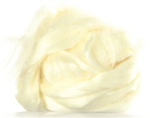
Here is some soy fiber.

Tags: , , , , , , , , , , ,

Deyaneria on May 7th, 2011

The last 2 weeks have been insanely busy. My daughter is playing softball and my son has friends he likes to spend time with. I’ve been feeling a bit of burnout as well. I’ve been working way to hard and needed a bit of a break. I’ve been trying to quit a 20yr smoking habit.  I decided to join the YMCA and get some exercise. I think it would be good for me. I’ve decided to revamp my crazy schedule a bit and take more time for creative design and me. Until now I had been getting up at 4 am to start carding fiber for the store working until 3pm with store pursuits and pictures. From 3 till 6 was kids homework, running around and dinner then back to the grind until about 10 pm. I was enjoying it but working too hard. I had been reading 60+ blogs a week and scouring the internet on ways to improve the blog and my store. Quite frankly I fell hard. I’ve gone almost 2 weeks without getting behind the computer except to post to the blog and check e-mail. No twitter, no facebook, plurk or digg, I just needed a break. I sat and crocheted or knitted. I’m starting to get back into the swing of things again. I am wondering if anyone else, has ever fallen this hard. I would love to hear your stories and recovery techniques.

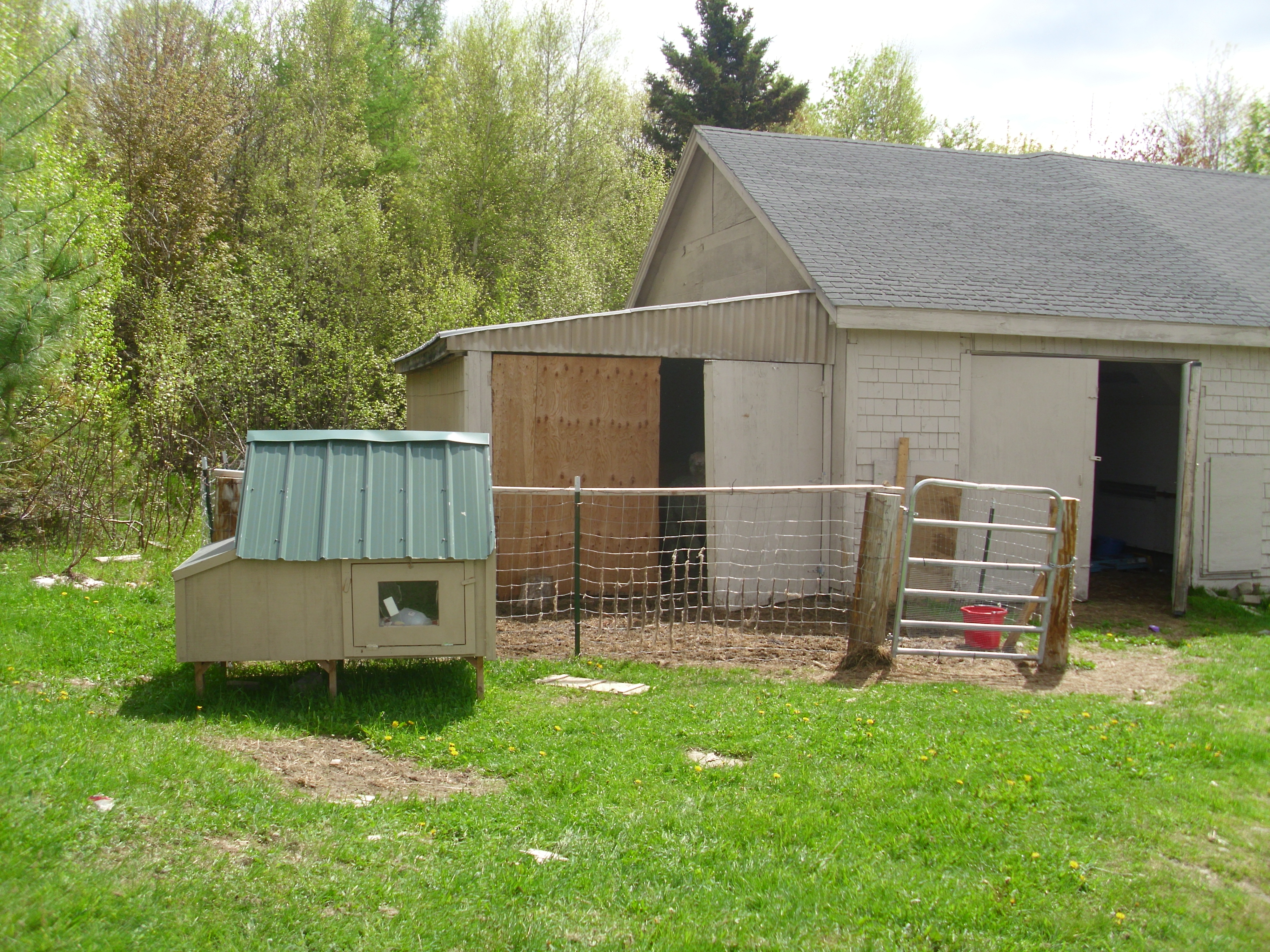
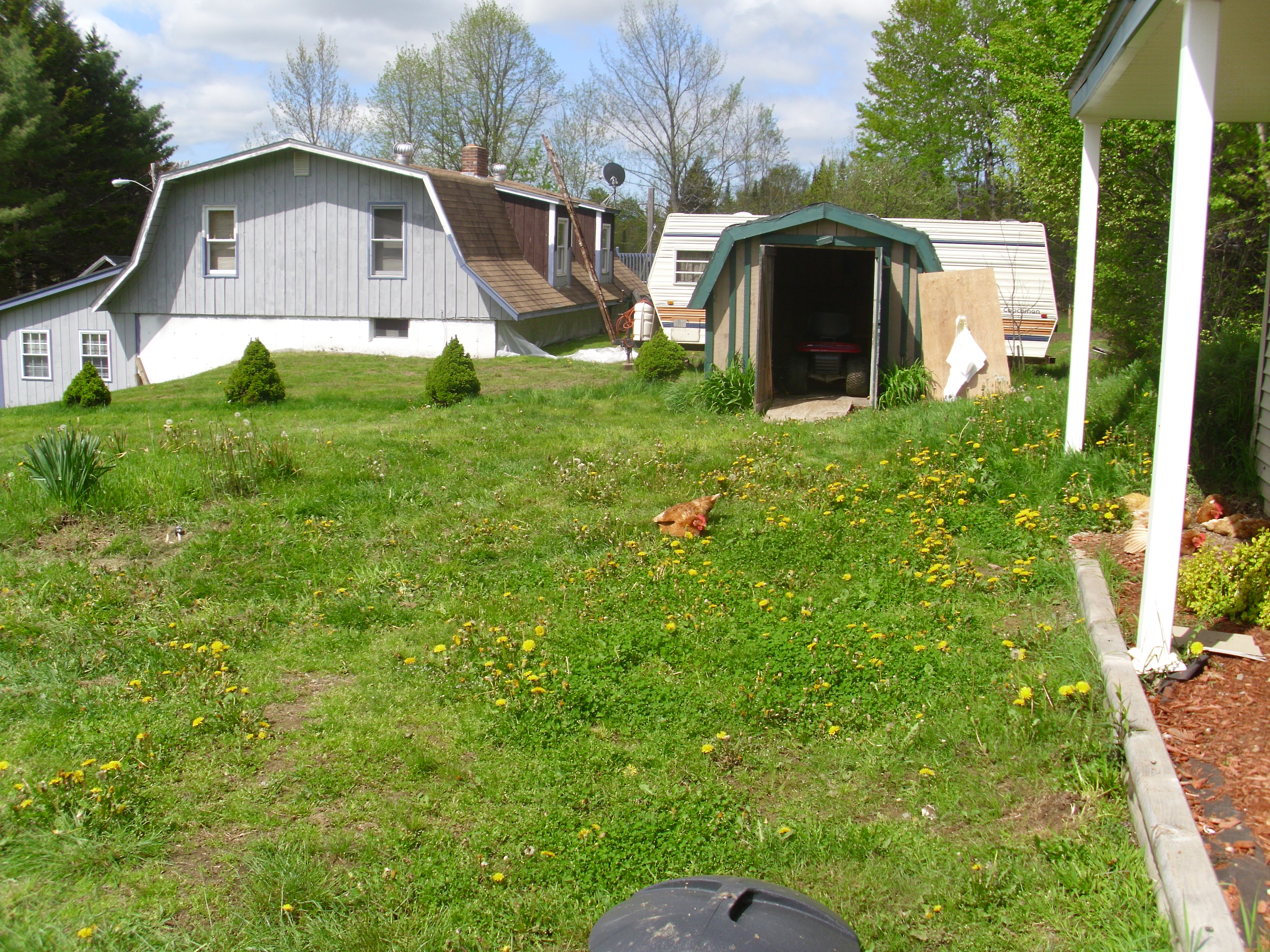
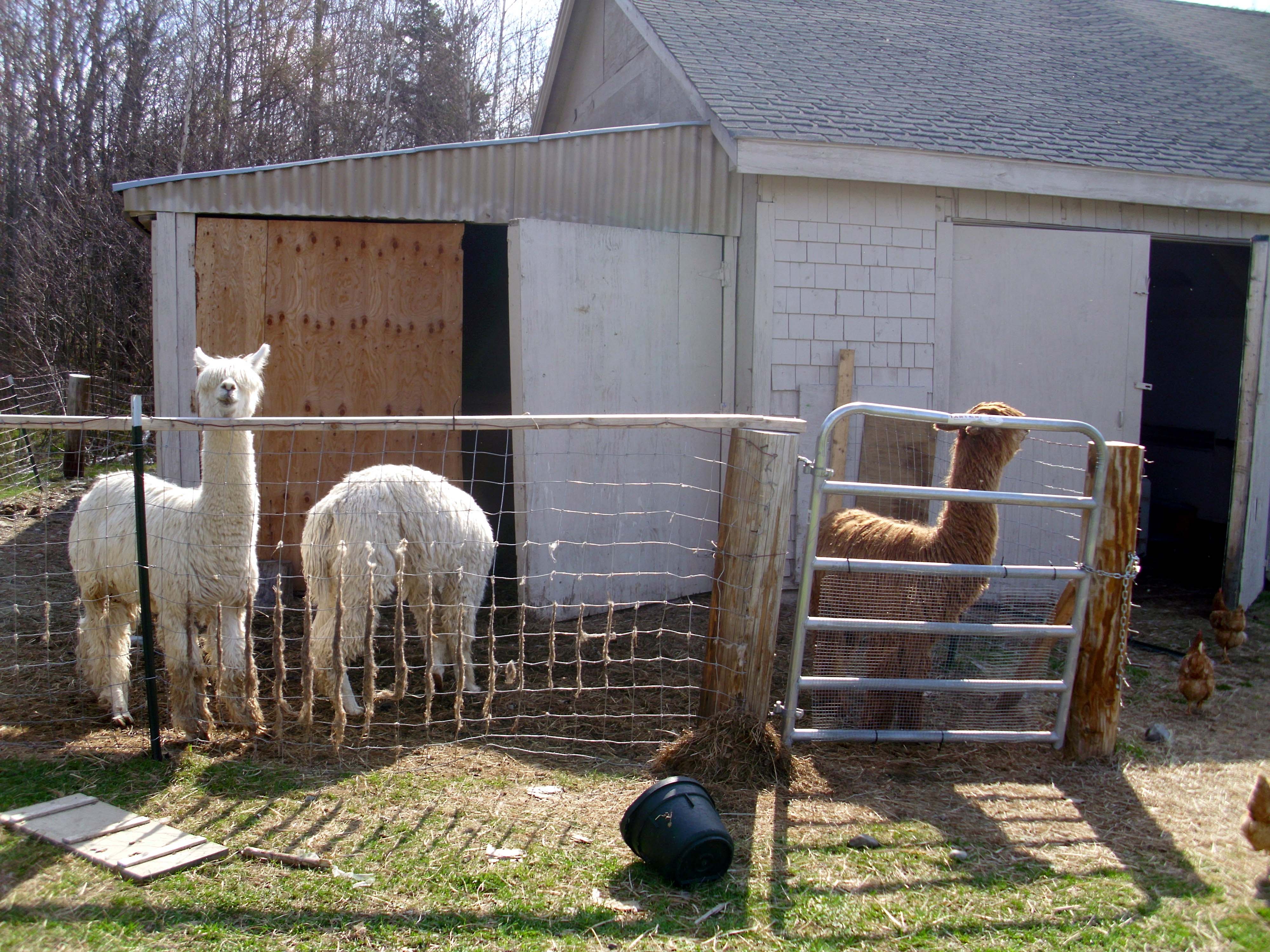
And because I think every post should have pictures, here are a few gratuitous farm pics.

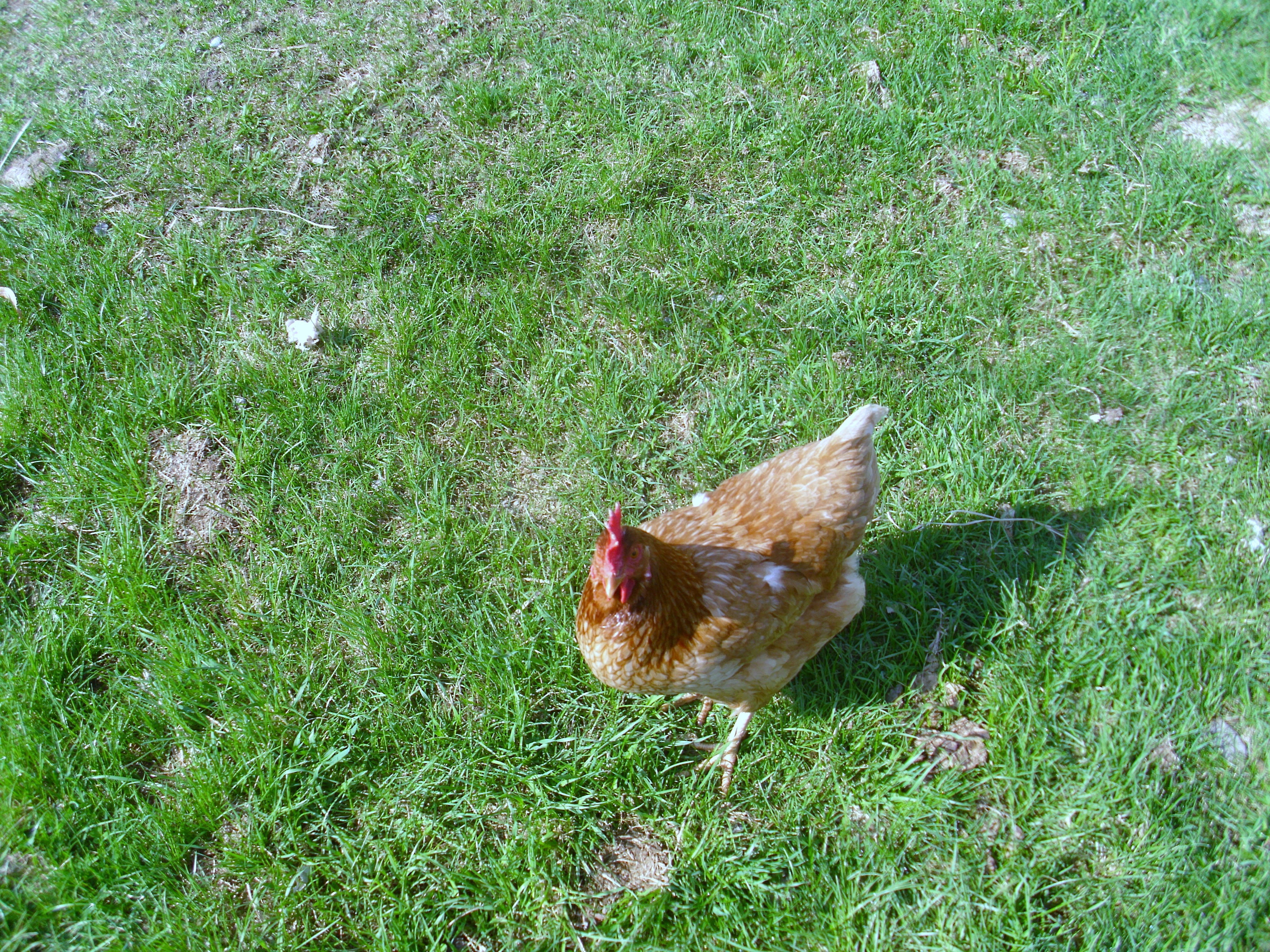
Henny Penny

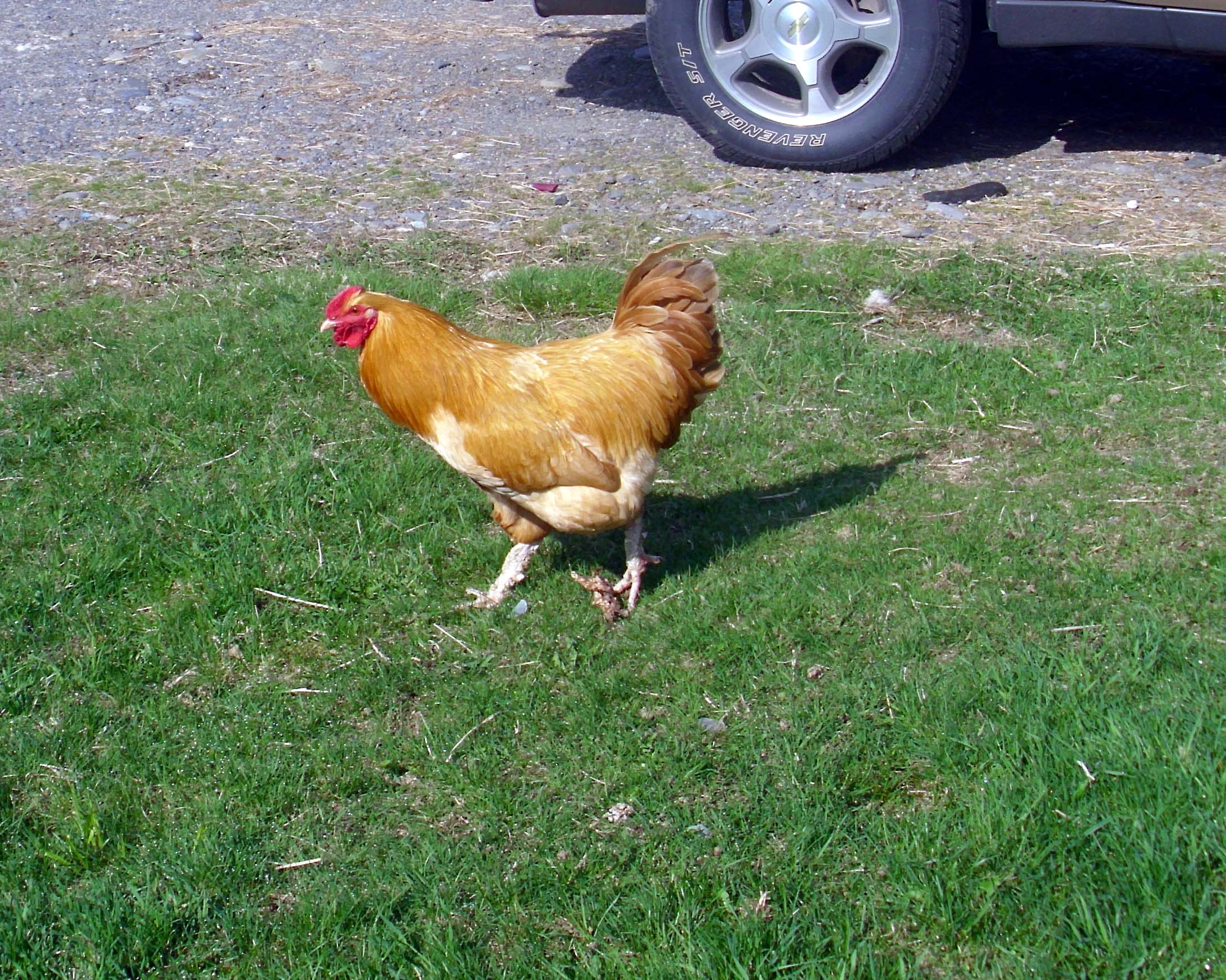
Don Juan


Gavin,Francois, and Romeo